A brand may pay the store before its new product has sold at all
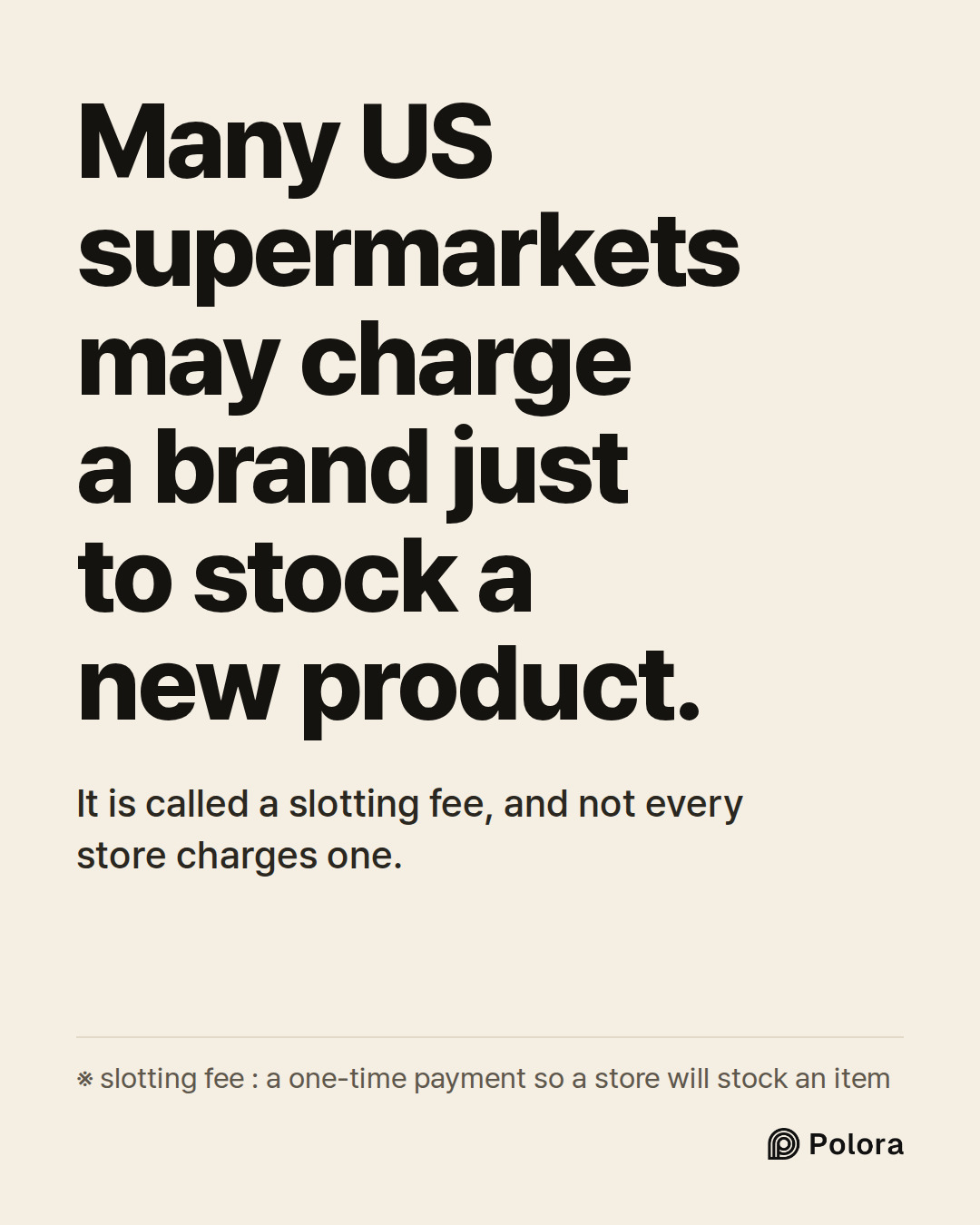
At many American supermarket chains, a brand that wants a new product on the shelf may have to pay the store first. The payment has a name in the trade : a slotting fee, or slotting allowance. It is a one-time payment a supplier makes so that the store will carry the item and give it a place on the shelf or in its warehouse.
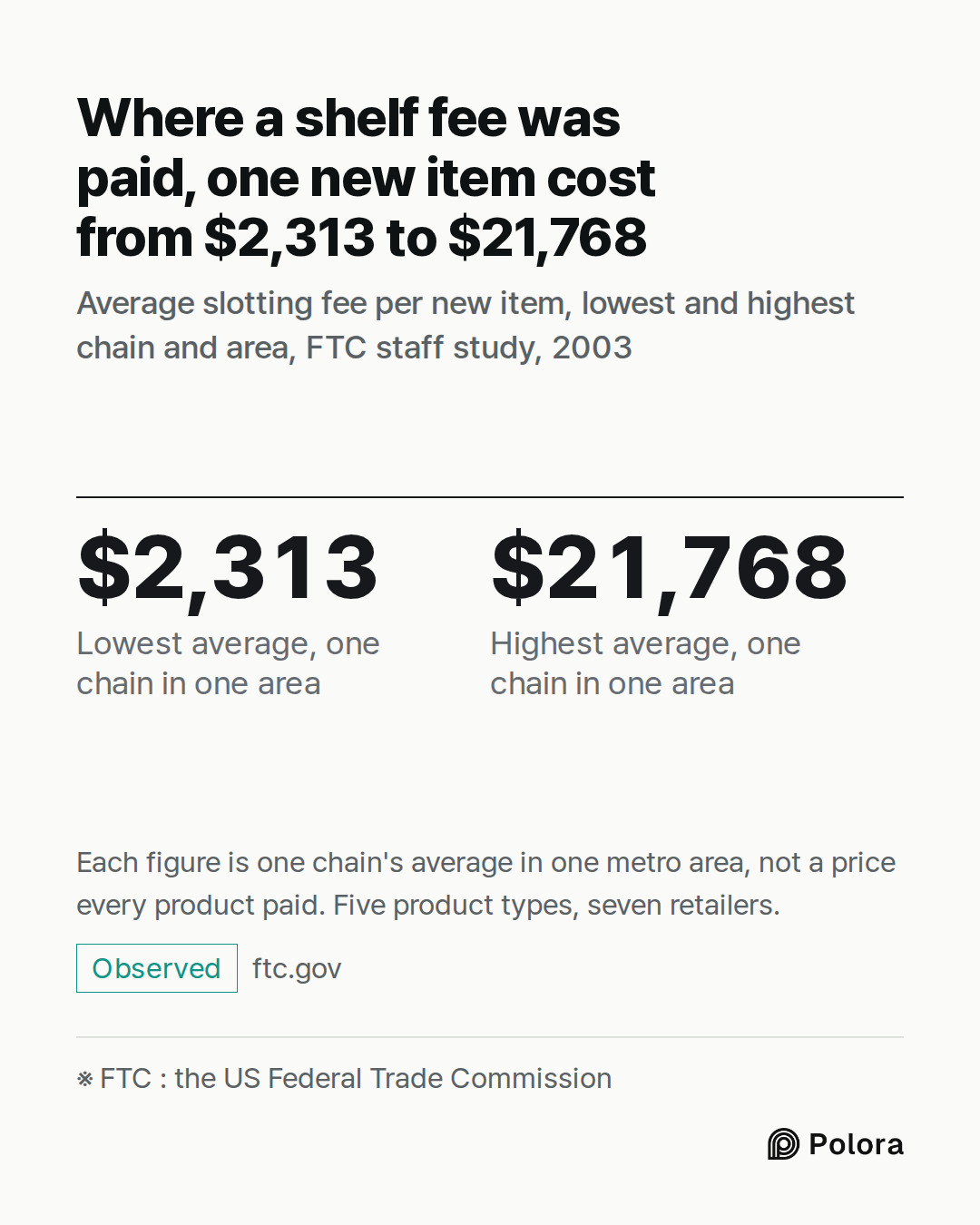
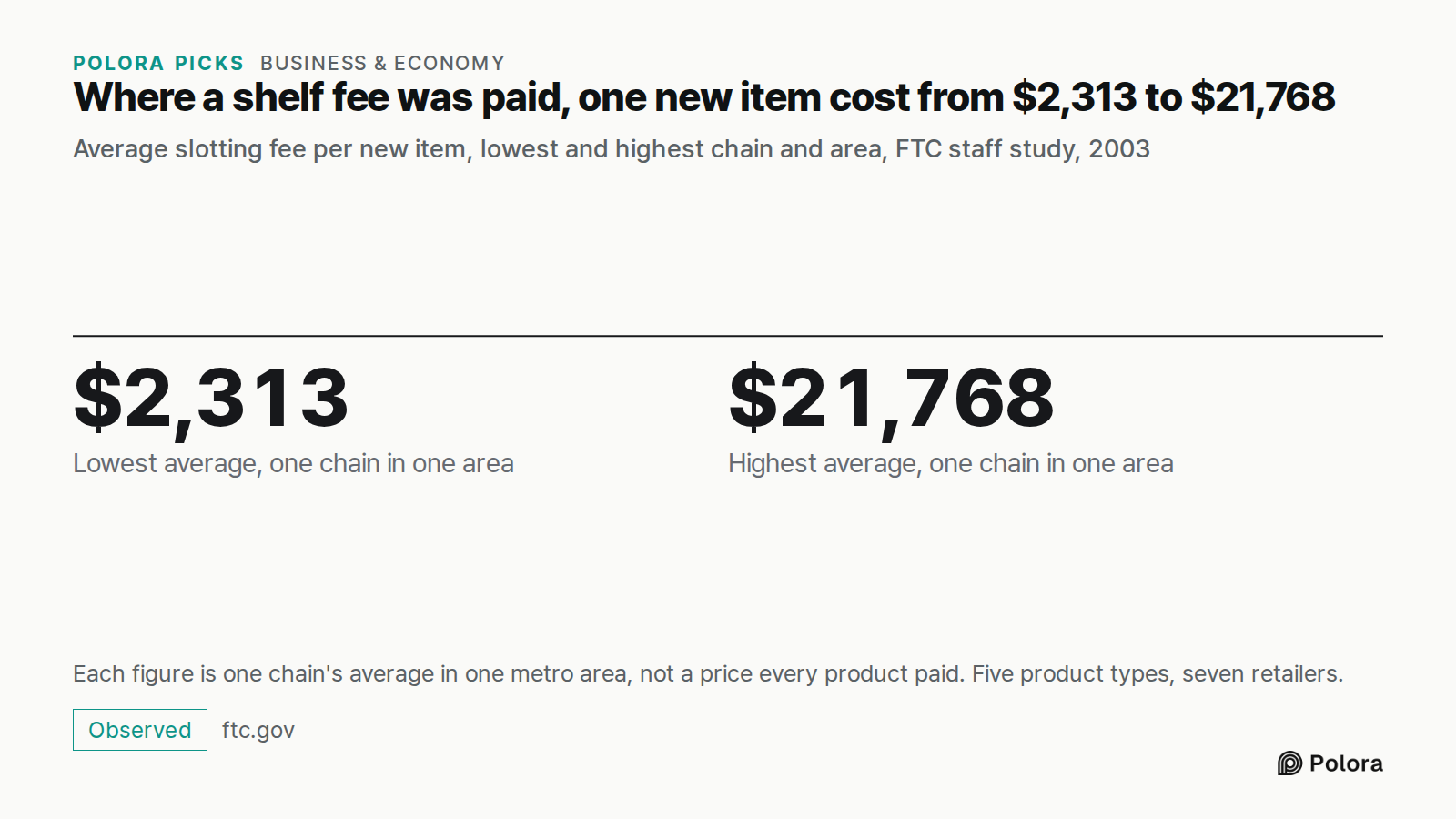
The most detailed public look at the amounts is still a study the US Federal Trade Commission's staff published in 2003. It followed five kinds of product : fresh bread, hot dogs, ice cream and frozen novelties, dry pasta and bottled salad dressing. Where fees were paid, the average per item ran from $2,313 to $21,768, depending on the chain and the metropolitan area. Each figure is the average for one chain in one area, not a price every product paid. Most of the suppliers interviewed estimated that launching a new grocery product nationwide would take $1.5 to $2 million in slotting fees alone. That was their estimate, not a measured bill.
Those numbers come with limits the FTC stated itself. It asked nine retailers and only seven supplied data, the study may not represent all US retailers, and the agency called its results "suggestive, not probative". The figures are also more than twenty years old. What they show is that the practice existed and roughly how large it was, not how often it happens or what any product pays today.
Why a store charges for its own shelf
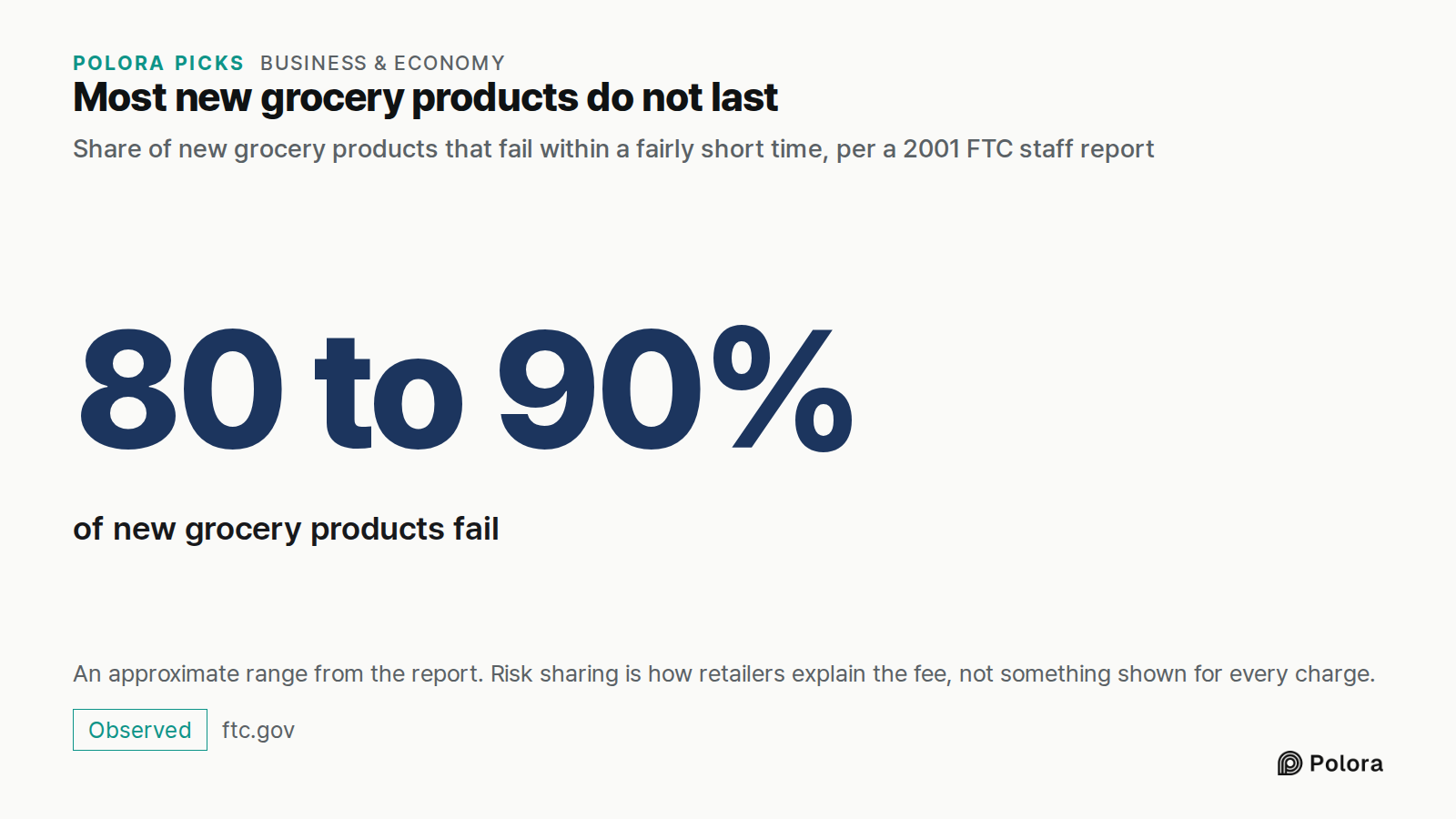
A store's shelf is finite, and most new products do not last. An FTC staff report from 2001 put the share of new grocery products that fail within a fairly short time at about 80 to 90 percent. Taking a new item means making room for it and carrying the risk if it does not sell. Retailers describe the fee as the brand sharing that risk.
The 2003 study found the pattern that view would predict. Ice cream and hot dogs, the frozen and refrigerated categories, had the highest average fee per item, and suppliers said cold shelf space costs more because it is harder to add. Products that a supplier delivers straight to the store, skipping the chain's warehouse and often stocking the shelf itself, paid fees less often and paid less.
Risk is not the whole story, though. Within the same chain and the same category, some new items paid and others did not, and the amounts varied widely. Most suppliers in the study doubted that the fees exist mainly to cover the store's costs. Risk sharing is how retailers explain the fee, not something the study showed for every charge.
The entry fee is the small part
Getting onto the shelf is only the start. Once a product is stocked, its brand may keep paying the store : funding temporary price cuts, end-of-aisle displays, in-store tastings and spots in the weekly flyer. The industry calls all of this trade spending.
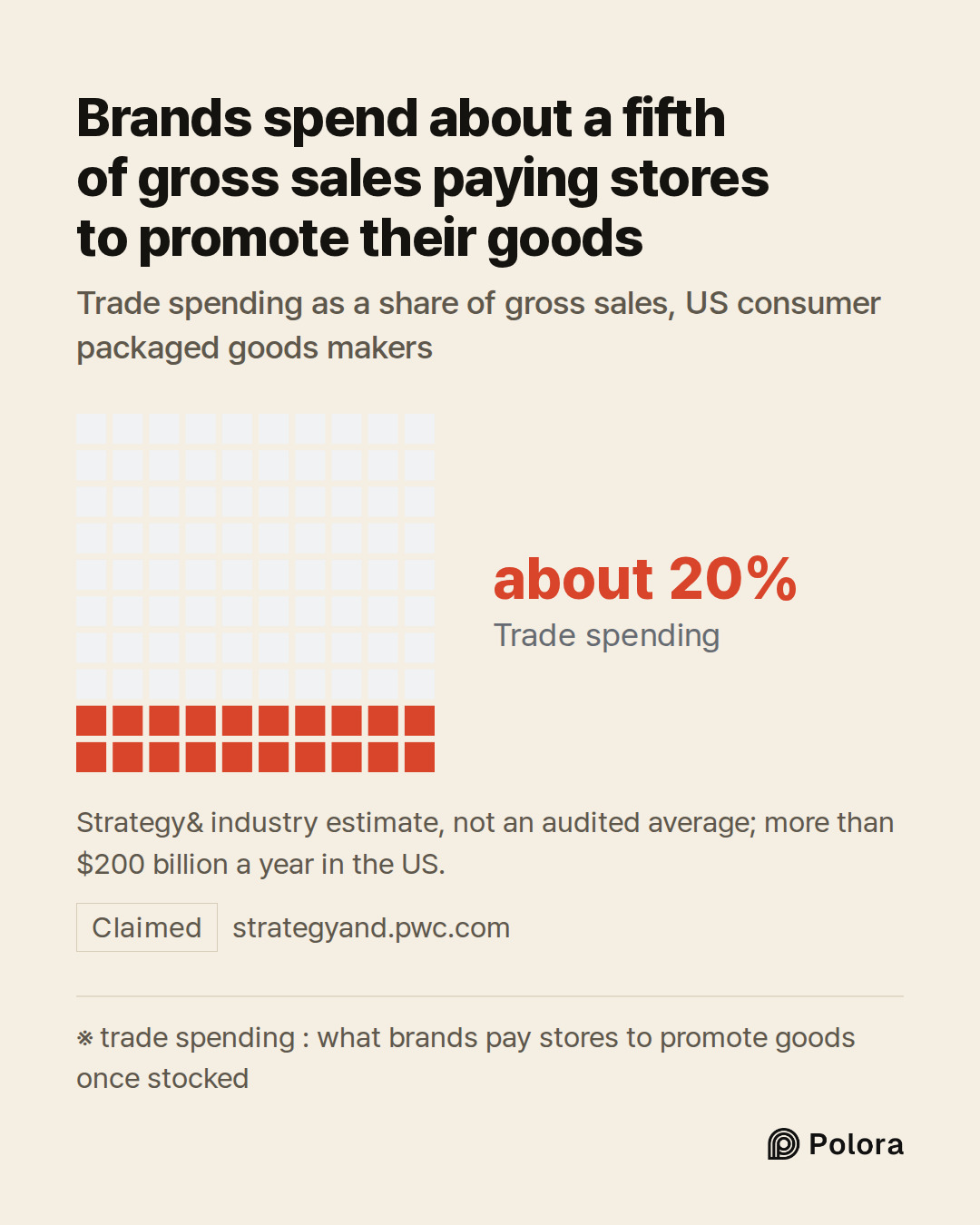
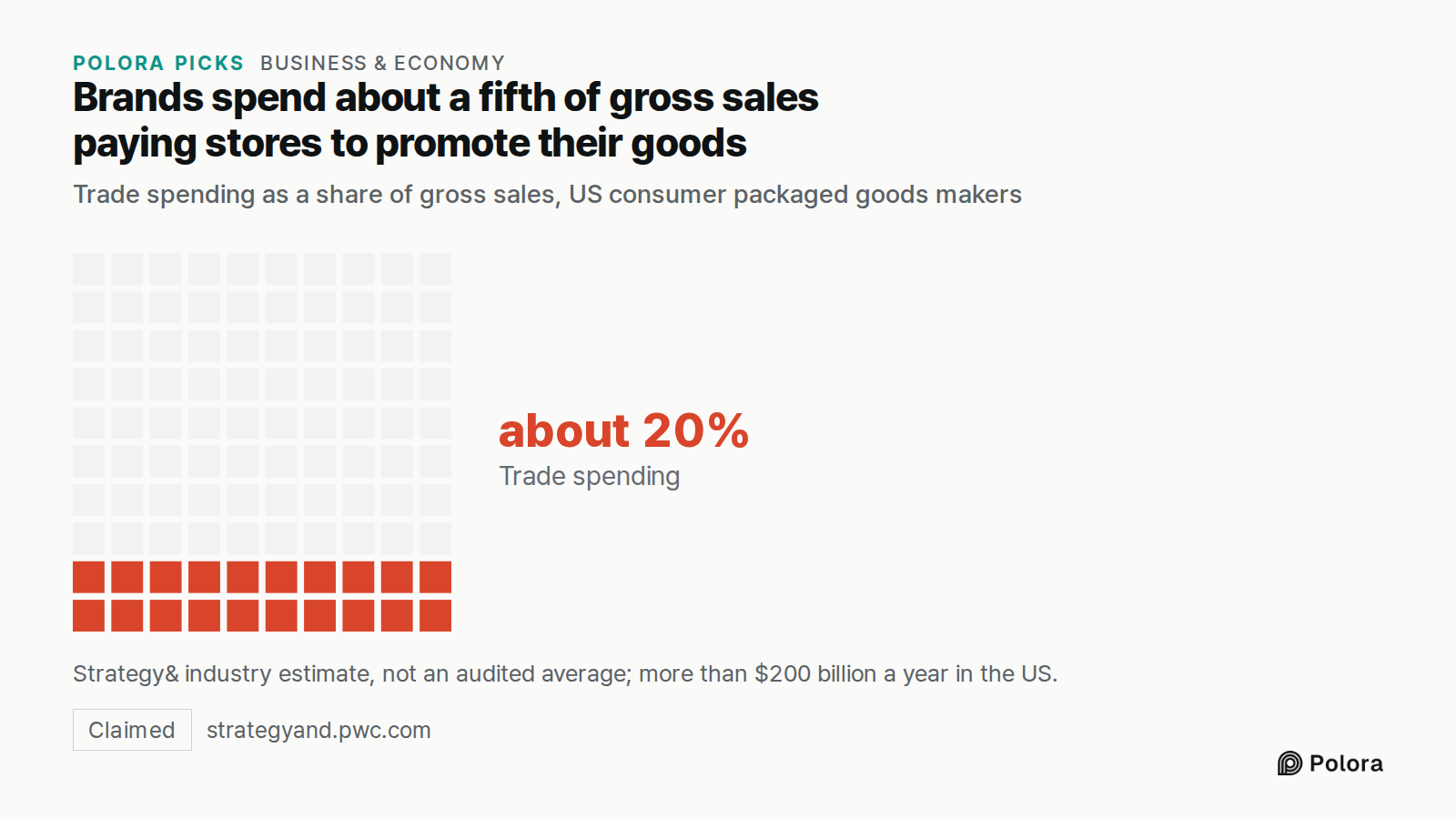
For consumer packaged goods makers in general, not food makers alone, the consultancy Strategy& puts trade spending at about 20 percent of gross sales, more than $200 billion a year in the US. It describes it as typically the second-largest line on these companies' accounts, after the cost of making the goods. That is an industry estimate, not an audited average. Even so, it suggests that a large share of what these companies spend to sell their goods goes to stores, in ways shoppers rarely see.
The FTC's 2003 study saw the same mix from inside the negotiation. Retailers and suppliers said that around a new product they bargain over the slotting fee together with advertising allowances, per-unit introductory discounts, marketing funds and money for displays and demonstrations. A 2024 letter from members of Congress lists "display", "promotional", "end cap" and "pay to stay" fees alongside slotting. So the price tag that says a product is on sale this week is sometimes a discount the brand is paying for.
Sometimes a brand helps arrange the whole aisle
Some chains go further and ask one supplier to advise on an entire category, such as soups or snacks. The FTC's 2001 report describes this "category captain" as an outside firm, commonly a large supplier, that the retailer turns to for advice on what to stock, where and how to promote it. In the 2003 study, five of the seven retailers said they used category captains to some degree, and two said they did not.
How much say the captain has depends on the store. According to the 2001 report, some retailers let the captain make all the decisions for a category, while others review its advice and decide themselves. The 2001 workshop agreed the practice can be efficient, and also listed what to watch for : a captain seeing rivals' confidential plans, or tilting its advice against competitors' products. How common the arrangement is today is not well measured.
What this means for a small brand
For a large company, a slotting fee is a cost of doing business spread over many products. For a small one, it can be the whole launch budget. Small manufacturers at the FTC's 2000 workshop called the fees "a major stumbling block" to entering large chains, and the 2001 report records the concern that fees raise the cost of entry for smaller, thinly funded firms.
It is not a wall for everyone. In the 2003 study some retailers said they sometimes waive the fee for smaller suppliers, especially when their products meet a demand the store's shoppers have. Even then, a newcomer may find itself next to established brands whose discounts and displays are funded week after week.
Stores that say they take no shelf fee
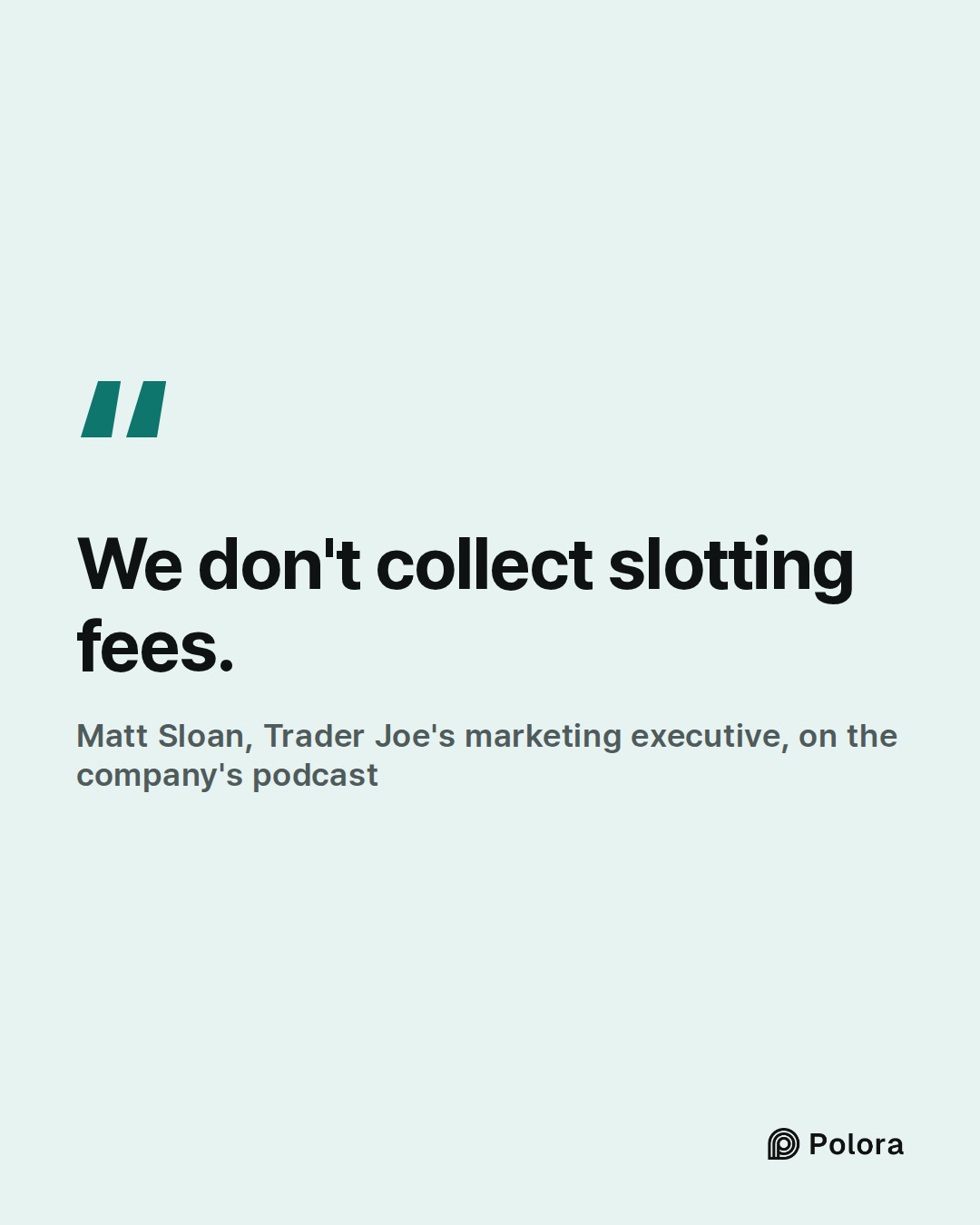
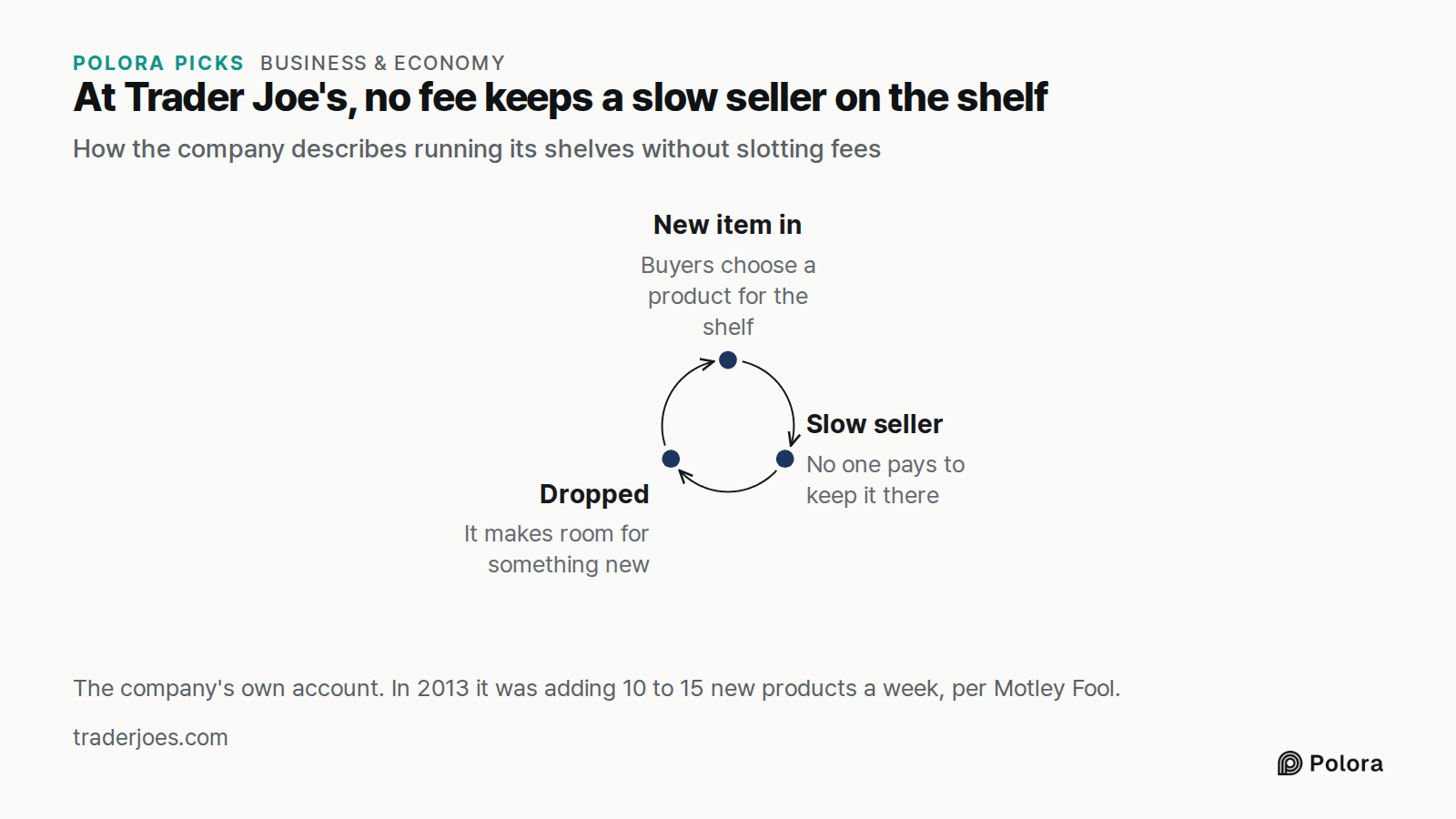
Not every chain works this way. On its own podcast, Trader Joe's marketing executive Matt Sloan said : "We don't collect slotting fees. We don't have the producers of the stuff that we sell pay for privileged space or any space in our stores." The company ties that to how it runs its shelves : with no one paying to keep an item there, a slow seller is dropped to make room for something new. A 2013 Motley Fool article reported that it was then adding 10 to 15 new products a week and dropping about as many. That was the pace in 2013, not necessarily today.
That model leans on a small, buyer-chosen range, most of it sold under the store's own label, which is a story of its own. Industry commentary often names other chains as charging little or no slotting fee, but the sources behind this article include no statement from those companies confirming it.
Has Washington looked at this lately?
The 2003 study is the most recent major FTC data study of slotting fees that turned up in checking this article, though that search was not exhaustive. Since then the pressure has come from lawmakers. In March 2024, Senator Elizabeth Warren and other members of Congress urged the FTC to examine whether discriminatory slotting fees break US price-discrimination law. On April 13, 2026, six senators, including Warren and Chuck Schumer, wrote to the FTC and the Justice Department about food prices and consolidation in the food supply chain. Among their requests, they asked the FTC to pursue rulemaking and enforcement against exclusionary contracting by dominant firms, naming slotting fees, category captain arrangements and volume-based rebates as examples.
Those are requests, not findings. What holds in the meantime is the plain answer : brands can and do pay US supermarkets to get a product stocked and to fund how it is shown and discounted. How often that happens today, and for how much, is something no recent public data measures.