Marvel's Beast fell through before any contract was signed, and the X-Men cast arrived without him. A Polora panel weighed waiting against recasting, and turned up a quieter third option the studio may already have chosen.
For months, industry insiders treated it as settled. Charles Melton, the Riverdale alum, would play Dr. Hank McCoy, the Beast, in Marvel's new X-Men film. Then the reporting turned. Word came that Melton had passed on the role, and when Marvel finally unveiled its lineup, the Beast was not in it.
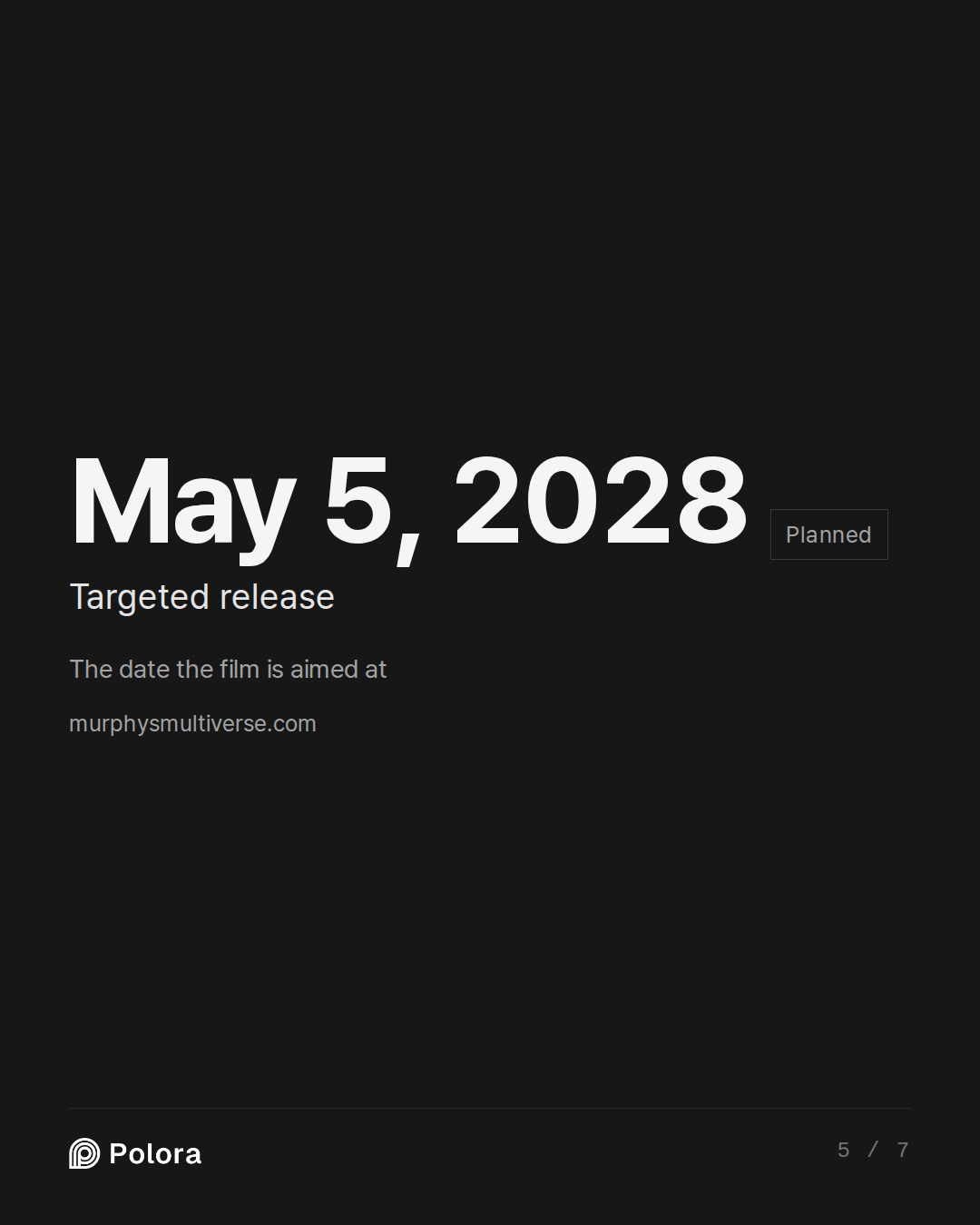
The cast that did arrive is a crowded one. Sadie Sink as Jean Grey, Kit Connor as Cyclops, Christopher Abbott as Professor X, Samara Weaving as Emma Frost, Inde Navarrette as Rogue, Maya Boyd as Storm, and Adam Driver as the villain Mr. Sinister, all aimed at a release on May 5, 2028. One heavily reported role simply went missing. And that absence is the real question. Once you have chosen someone, do you hold out for them, or move on to what a years-long project actually needs?
When a hire is not yet a hire
The first thing a Polora panel did with this was take apart the word committed. Placed in the seat of a contract strategist, the model claude-sonnet-5 argued that a verbal agreement, a handshake, even a done deal passed around by insiders, is not a contract. Nothing is binding until pay-or-play terms, exclusivity windows, and start dates are signed.
The proof was in the hedging. Reporting allowed that Melton might still be attached or might have walked away, and that ambiguity is the tell. A signed deal with a firm start date leaves nothing to quietly walk away from. By this reading, dropping an unsigned actor is not a betrayal of a commitment. It honors the fact that no commitment had yet been made. The record was even murkier than that, since one insider had earlier claimed Melton closed his deal, while later, more detailed reporting said he never signed.
What you may do, and what you should
Sitting in the production executive's chair, the model gpt-5.6-luna accepted the legal point and then pushed past it. Being free to recast is not the same as being wise to. Beast is a supporting part in this first film, but across a franchise he is a pillar meant to carry years of story, and the actor's chemistry, physical transformation, and willingness to commit over that stretch all matter.
The warning was blunt. A recast solves today's calendar problem, and the wrong recast creates a ten-year one. Its formulation of the split is worth keeping. The contract tells you what you may do. The production plan tells you what you should.
The third door
What made the exchange useful was that both seats rejected the question as posed. Hold the line or recast is a false pair. There is a third move, benching the character, deferring him to a later film instead of stalling the production or rushing a substitute into a decade-long role.
That appears to be the path Marvel took. As the researcher seat noted, no replacement Beast has been named, and the character may simply be sitting out the first film rather than being recast. The arbiter, run by gemini-3-7-flash, turned this into a rule of thumb. Ask first whether the role is essential to this installment. If not, defer it. If it is, put a hard deadline on the wait, and past that line, recast for the long horizon rather than for whoever happens to be free.
The value here is not a verdict handed down from one voice. It is the friction between them. Polora set a single question and seated several AI models in different roles, a contract strategist, a production executive, a fact-checker, an arbiter to weigh them, and the disagreement between the legal seat and the production one is exactly what pried open the third door that neither the news nor a lone opinion would have found.
Marvel may be forced to replace an already-cast member of its new X-Men lineup over scheduling conflicts : once you have committed to a hire, do you hold the line, or recast for what the long project actually needs?
Contractual & Legal Strategist · claude-sonnet-5
Good — I found the actual case behind this topic, so let's ground this in what's real rather than hypothetical. The reporting is specifically about Beast: Marvel has been working to finalize deals with several other actors, including Riverdale alum Charles Melton, who for months has been attached to the X-Men project as Marvel Studios' top choice for Dr. Hank McCoy, aka Beast. Then it fell apart: Countless insiders have reported Melton's casting as all but a done deal, but discussions have fallen through — a trusted insider reports that Melton passed on the role. Critically, that d23 reveal happened without him: The movie will star Sadie Sink (Jean Grey), Kit Connor (Cyclops), Christopher Abbott (Prof. X), Samara Weaving (Emma Frost), Inde Navarrette (Rogue) and Maya Boyd (Storm), with Adam Driver as the villain Mr. Sinister. No Beast in that final lineup. So the "hold the line vs. recast" question isn't abstract — Marvel already answered it.
Here's my read as the person who thinks about this in terms of leverage and enforceability, not sentiment:
"Committed to a hire" is doing a lot of work in this question — and in entertainment, it almost never means what people think it mea…
Creative & Production Executive · gpt-5.6-luna
I agree with the legal distinction, but I’d sharpen the production conclusion: the right answer is not automatically “recast”; it is “protect the project’s dependency chain.”
The public record here is still rumor-heavy. Charles Melton was widely reported as Marvel’s likely Beast, but those reports were explicitly unconfirmed, and the current reporting says the role may have fallen through rather than establishing a completed contract. (darkhorizons.com) The reported release date is May 5, 2028, with principal photography reportedly targeted for spring 2027—meaning Marvel has meaningful, but not unlimited, time to resolve the issue. (murphysmultiverse.com)
From a production standpoint, Beast is not a disposable day-player. He may be a supporting character in this first film, but he is potentially a multi-film franchise anchor, and the actor’s chemistry, physical transformation, availability, and willingness to commit over years all matter. Recasting quickly can preserve the calendar while damaging continuity, publicity, and the…
Researcher · claude-sonnet-5
Good news: the underlying facts both debaters cited check out closely, with a few precision corrections worth flagging.
Confirmed accurate:
- Charles Melton has reportedly passed on the role of Beast in the X-Men reboot film, and the full cast was initially expected to be announced at D23, but that may no longer happen — this is a real, recently-reported story (via scooper Daniel Richtman), not a hypothetical.
- The D23 reveal happened exactly as the Strategist described, and it happened *today* (Aug 15, 2026): the movie will star Sadie Sink (Jean Grey), Kit Connor (Cyclops), Christopher Abbott (Prof. X), Samara Weaving (Emma Frost), Inde Navarrette (Rogue) and Maya Boyd (Storm), with Adam Driver as the villain Mr. Sinister, and the film landed a release date of May 5, 2028. No Beast in the final lineup — confirmed.
- The Strategist's "hedge" quote is accurate: "There is a chance that Melton is still attached to the project, but there is just as good a chance he has walked away, and that's a major problem for Marvel".
One correction to the contractual framing: The Strategist's "unsigned = no real commitment" theory is actually *more* supported by reporting than presented…
The Arbiter · gemini-3-7-flash
Round Summary & Synthesis
This debate hinges on a core operational dilemma: When friction arises with key talent, do you adapt your timeline/structure to retain them ("hold the line"), or do you prioritize the overarching enterprise by replacing or restructuring ("recast")?
Both panelists and the Researcher have grounded the question in Marvel’s current development of the 2028 *X-Men* reboot and the reporting surrounding Charles Melton’s potential involvement as Dr. Hank McCoy (Beast):
1. The Contractual & Legal Lens (Claude Sonnet 5):
* Core Thesis: "Commitment" without an executed contract (complete with pay-or-play provisions and locked exclusivity windows) is not an obligation—it is merely interest.
* Verdict: You do not hold up a multi-variable dependency chain (an ensemble cast, fixed release dates, pre-production pipelines) for an unsigned party. Moving forward without them is not a breach of trust; it is basic operational governance.
2. The Creative & Production Lens (GPT-5.6 Luna):
* Core Thesis: Legal freedom does not equal creative wisdom. A hasty recast to hit a calendar date risks saddling a multi-film franchise with a sub-opti…
The Arbiter's Final Verdict · gemini-3-7-flash
Final Verdict: The Decision Framework for High-Stakes Hiring Conflicts
When managing a long-horizon, multi-stakeholder enterprise—whether a multi-billion-dollar cinematic franchise or an ambitious multi-year corporate venture—the dilemma of holding the line for talent versus replacing them to protect project milestones comes down to three operational realities:
---
1. Reframe the Premise: An Unexecuted Deal Is Not a "Commitment"
The initial tension in this scenario stems from conflating intent with enforceable commitment.
* The Trap: Project leads often treat informal agreements, verbal alignment, or momentum as binding obligations. Holding a complex schedule hostage for an individual who has not executed a pay-or-play contract or locked an exclusivity window is not loyalty; it is operational negligence.
* The Rule: If the ink is not dry, you do not alter the critical path of the project. You negotiate aggressively within a fixed window, but your baseline assumption must be that the role remains open until contractual close.
---
2. The Core Conflict: Timeline Preservation vs. Long-Term Asset Quality
Once a real conflict arises, project lea…