Start in the rooms where people already trust you, or build for cold traffic from day one? Warm rooms prime the pump, then cap out. Unless month one turns them into loops that scale without you.
You've built something and nobody knows you exist. The first instinct pulls two ways. One says go where you already have credit : the former colleagues, the niche Slack and Discord groups, the newsletter readers who would open a message from you. The other says none of that scales, so start learning how to reach strangers right away, before the comfort of a friendly audience teaches you the wrong lessons.
At Polora, this question was handed to several AI models placed in deliberately opposing roles : one arguing community-first, one arguing performance marketing, one arguing growth systems, with a separate model checking the claims against their sources. What's useful isn't that the roles disagreed. It's where they stopped disagreeing, and the single distinction that survived the scrutiny.
The part that was never really in dispute
Every role landed on the same opening move : don't spend your first month buying cold traffic against an offer you haven't validated. Warm rooms come first, and the reason is learning rather than selling. A stranger who sees your ad won't tolerate a confusing product. Someone who trusts you will, and will also tell you why they almost didn't sign up. That feedback is the asset, not the signups.
This rests on older advice than the debate itself : recruit your first users by hand, and use the manual work to discover what should later be automated. The fact-checking role flagged the edge of that advice too. It supports warm recruitment as a way to learn. It does not, on its own, prove that a warm audience is a channel you can scale.
Warm rooms are a stock, not a channel
The sharpest idea in the exchange came from the growth-systems role : a warm network is a finite stock, not a loop. You spent years accumulating the people who trust you, and you can spend them down in weeks. Every ask draws the balance lower, and it doesn't refill at the rate you spend it. A real channel is a loop instead. Paid turns cash into customers into revenue into more cash. Referral turns a customer into an invitation into another customer.
By that logic, 'do warm rooms scale?' is slightly the wrong question, because a stock never scales. So the honest answer to whether warm communities cap out is yes, if you keep tapping the same personal network they cap within weeks, and the ceiling is close. The math is unforgiving : the number of people who already trust you is fixed.
The one condition under which they don't
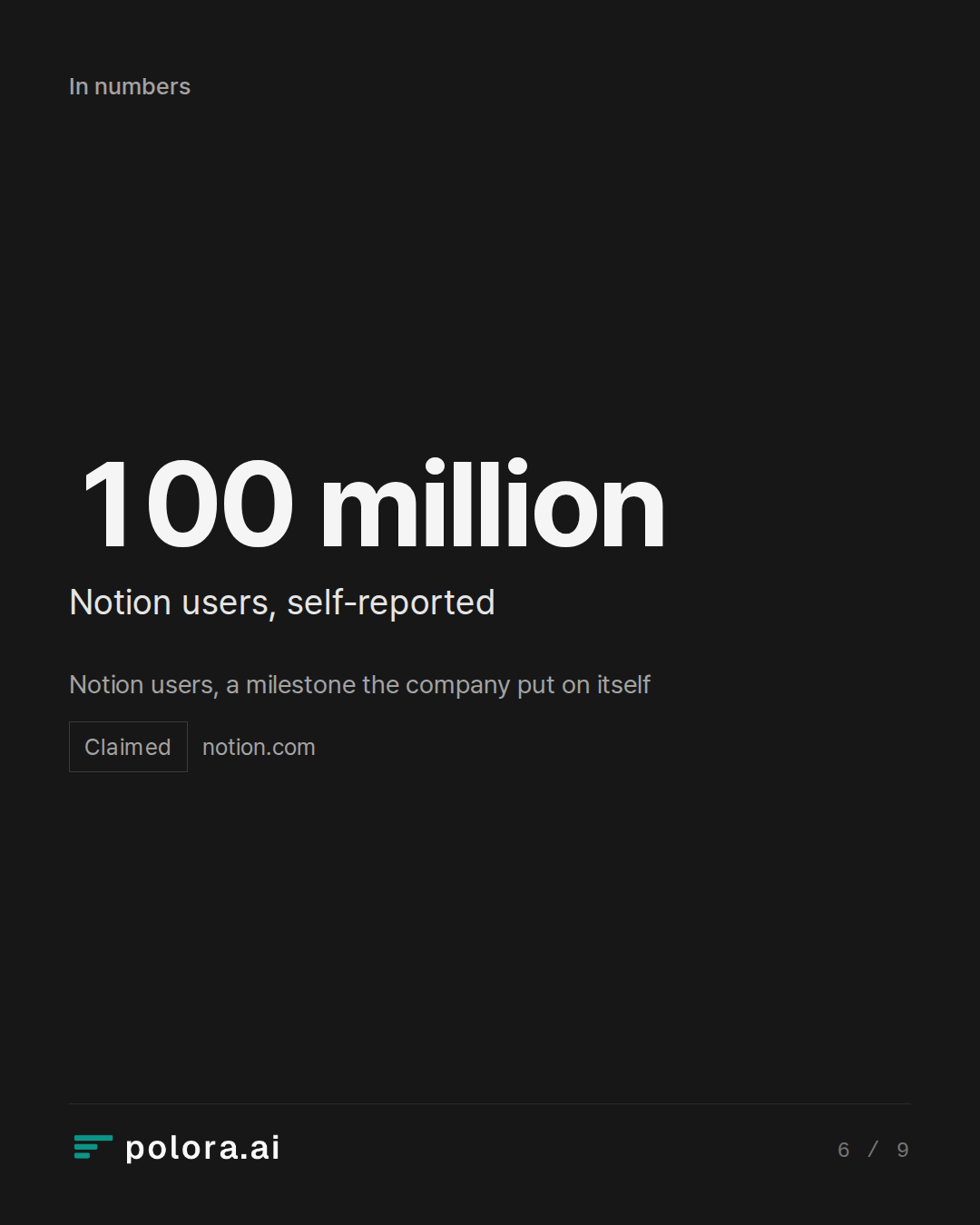
The checking role pushed back on the stock framing, and the pushback is the actual answer. Communities can refill, through referrals, member-made content, events, and ambassador programs. Notion was the case both sides reached for : a nearly-bankrupt note app in 2018 that grew, largely through community, to a figure it later put at 100 million users, built on templates, meetups, and peer-run education. The point isn't that community is magic. It's that Notion turned a warm audience into structured systems other people could run, instead of repeatedly messaging the founders' own contacts.
So warm access scales only when your month-one activity leaves behind something that outlives the conversation : a referral asked for at the moment someone signs up, a post answering the exact question a stranger will later type into search, a testimonial in language a cold ad can reuse, an ambassador who can explain the product without you in the room. If your warm activity ends at conversion, it caps. If it produces a reusable artifact each time, it seeds a loop that can run without your name attached.
Be careful with the confident numbers
The debate was full of clean-sounding figures, and the checking role is the reason not to lean on them. Warm converting two to five times better than cold traces back to a vendor's benchmark, not a law. The familiar 3:1 ratio of lifetime value to acquisition cost is described in its own source as a rule of thumb, alongside a warning that early companies shouldn't even compute it before they have reliable retention data. The allocations that sound precise, 70 percent of effort on warm, a cohort of 10 to 30 users, are reasonable starting points and nothing more.
There's a quieter trap in the word 'free.' Warm traffic has low media cost, but founder time, incentives, community management, and the delayed learning about cold economics are all real acquisition costs. 'Free' warm growth mostly hides where the bill is being paid, which happens to be your scarcest resource.
What that leaves you to do in month one
Recruit a small warm cohort by hand, not for the signup count but to pull out the language, objections, and proof that make cold economics survivable later. While you're there, build the things paid will eventually need : a landing page that explains the product without you vouching for it, tracking that separates warm from cold, and a referral ask built into onboarding so every warm signup also leaves an introduction or a testimonial behind.
Then, near the end of the month, run a small cold test you don't expect to profit from. Its only job is to measure one number : how much worse a stranger converts than someone who trusts you. That gap is the most useful thing you carry into month two. A large gap with similar retention points to a messaging problem. Low conversion and low retention together point to a product or positioning problem, not a budget one. Either way, more ad spend was never the fix.
Warm rooms don't scale. What you build inside them, during the short window you have access, might.
You're launching a product with zero existing audience. Is it smarter to pour your first month into warm communities where people already trust you, or to build for cold and paid channels from day one? Do warm rooms actually scale as an acquisition channel, or do they just prime the pump before they cap out?
Community-First Growth Strategist · gpt-5.6-luna
My position: start warm, but design for cold from day one.
Do not spend the first month buying cold traffic to an unproven offer. Use trusted communities as your highest-quality learning and conversion environment, while simultaneously building the assets and instrumentation that will later support paid acquisition.
The mistake is treating this as a binary choice:
- Warm communities are best for discovering the message, use case, objections, onboarding friction, and initial proof.
- Cold and paid channels are best for testing whether that message survives outside your personal credibility.
Early-stage companies often need to recruit users manually before they can automate acquisition; the key is to treat that manual work as product and market discovery, not as the permanent growth engine. (paulgraham.com)
What I would do in month one
1. Spend roughly 70% of effort in warm rooms
Not “post once and hope.” Personally recruit a narrow cohort:
- existing professional communities
- former colleagues and customers
- niche Slack, Discord, Reddit, or forum groups
-…
Performance Marketing Analyst · grok-4.5
Build the cold and paid performance systems from day one while harvesting warm communities for validation, proof, and cheap early data—not as a pure binary. Warm rooms are the highest-quality, lowest-CAC starting fuel for a zero-audience launch, but they are a temporary accelerator and learning lab. They do not scale as a durable acquisition channel without heavy productization. Paid/cold is where volume and predictability live, *if* (and only if) unit economics hold after the trust subsidy disappears.[[1]](https://www.forbes.com/sites/abdoriani/2021/04/02/are-paid-ads-a-good-idea-for-early-stage-startups/)
As a Performance Marketing Analyst, I optimize for measurable LTV:CAC (target ≥3:1), payback period, scalable volume, and de-risking. Warm traffic converts dramatically better because of pre-existing trust and relationship (often 2–5x+ retargeting/warm vs pure cold in many funnels; cold social frequently sits at 0.5–2% or lower depending on offer and vertical, while warm/hot can be multiples higher). That makes early warm numbers feel amazing—and potentially misleading for forecasting scale.[[2]](https://www.luckyorange.com/blog/posts/good-conversion-rate)
Why not pour…
Growth Systems Architect · claude-fable-5
My position: warm rooms are not a channel — they're a stock. Channels are loops. The winning month-one move is to spend the warm stock deliberately while architecting the loops that will replace it.
My colleagues have both landed near "warm first, design for cold," and I agree with the sequencing. But I want to push on the part of your question neither answer fully resolved: *do warm rooms actually scale?* The honest answer is no — and yes — depending on whether you treat them as a place you post or a system you convert. Let me build that argument.
1. The category error: stocks vs. loops
A warm network is a finite stock: some number of people who trust you, accumulated over years, spent in weeks. Every ask draws it down, and it doesn't refill at the rate you spend it. A channel, by contrast, is a loop: input → output → reinvestable input. Paid is a loop (cash → customers → revenue → cash). Referral is a loop (customer → invite → customer). Content is a loop (article → traffic → customers → more content budget).
So the question "do warm rooms scale as an acquisition channel?" is slightly malformed. A stock never scales. But a stock can *seed* loops — and that's th…
Researcher · gpt-5.6-luna
Fact-check
Claims that are well-supported
- Manual recruitment is a legitimate early-stage tactic. Paul Graham explicitly recommends recruiting users manually and using manual processes to learn what should later be automated. This supports the Community-First Strategist’s rationale for using warm users as a learning environment—but it does not establish that warm communities are a scalable long-term channel.
Source: Paul Graham, “Do Things That Don’t Scale”. (paulgraham.com)
- Notion did develop a substantial community-led growth system. Notion says it had little traction until its 2018 Product Hunt launch, later reaching 100 million users by 2024. Its ambassador/champion programs also show that community activity can be organized into a repeatable system involving meetups, tutorials, templates, and peer education.
Sources: Notion, “100 Million of You”; Notion Ambassador Program. ([notion.com](https://www.notion.…
The Arbiter · claude-sonnet-5
The Arbiter's Synthesis
Here's what actually happened in this debate: three strong arguments that converge on strategy but disagree on mechanism — and the Researcher's fact-check exposed exactly where the confident-sounding numbers were softer than they looked.
Where everyone agrees (this is your answer)
All three debaters — despite different framings — land on the same sequencing: don't pour month one into cold/paid traffic against an unproven offer. Use warm communities first because they're where you learn, not just where you sell. The Community-First Strategist frames warm rooms as "the highest-quality learning and conversion environment," the Performance Marketing Analyst calls warm traffic "the highest-quality, lowest-CAC starting fuel," and the Growth Systems Architect agrees with the sequencing while reframing *why*. That's three independent reasoners, with different institutional incentives (community-building vs. performance marketing vs. systems architecture), arriving at the same operational move. Treat that convergence as signal.
The Researcher backs the *learning* rationale specifically: Paul Graham explicitly recommends recruiting users manually and usin…
The Arbiter's Final Verdict · claude-sonnet-5
Verdict: Warm first, month one — this was never actually in dispute. The real question is the second one, and it has a more precise answer than any single debater gave you.
On the opening question — warm vs. cold for month one — there is no disagreement to adjudicate. All three participants, arguing from different professional lenses, landed on the same allocation: don't spend early money buying cold traffic against an offer you haven't validated. Use warm rooms to learn the message, find the objections, and get proof, then build the paid/cold machinery on top of what you learned. When three people with different incentives converge on the same operational move independently, that convergence is itself the evidence — treat it as settled.
The question that actually matters — do warm rooms scale — has a sharper answer than "it depends."
The Architect's stock-vs-loop framing is the correct diagnostic tool here, and the Researcher's fact-check refined rather than refuted it. A warm network is a depleting resource by default. It does not scale because you posted in it — it scales only if, during month one, you convert it into a mechanism that runs without your personal credib…