Most of McDonald's money does not come from selling you a burger
When you pay for a Big Mac, the money usually goes to a local business owner, not to McDonald's. About 95% of McDonald's restaurants were run by franchisees at the end of 2025. These are independent operators who use the brand under contract. The company itself ran 2,039 restaurants out of 45,356.
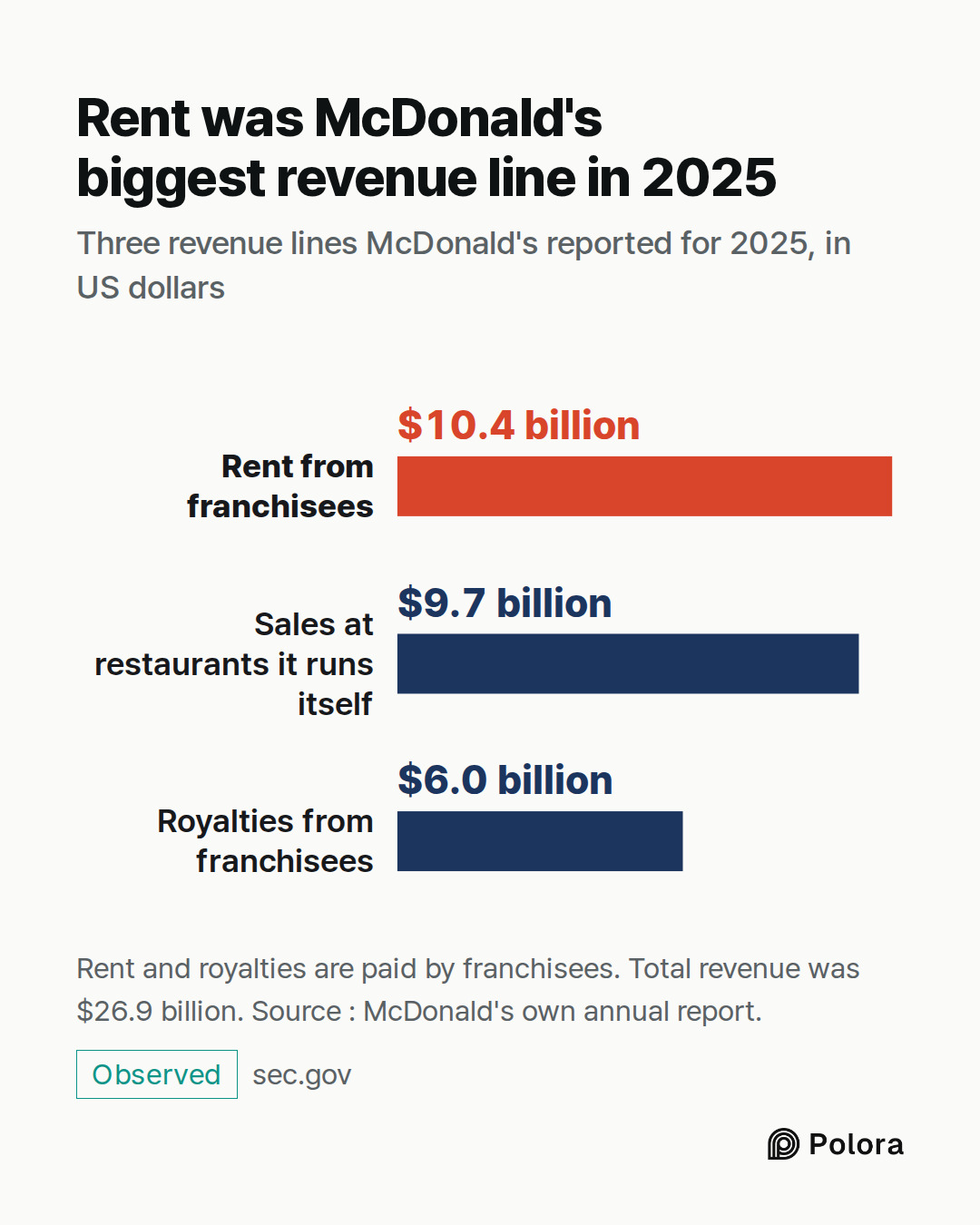
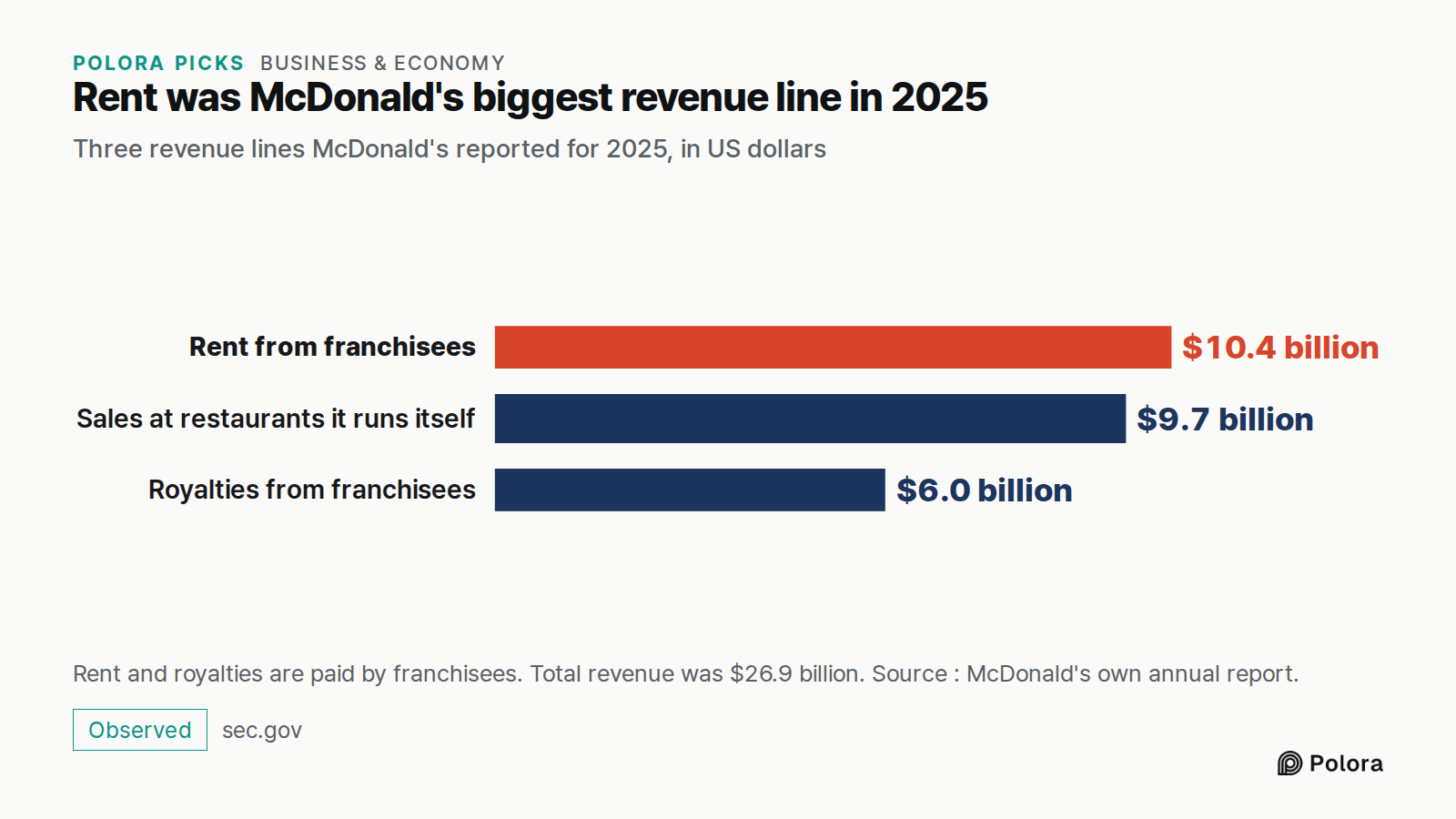
McDonald's own annual report for 2025 shows what the company took in. Its total revenue was $26.9 billion. Sales from the restaurants it runs itself brought in $9.7 billion of that. A larger share, $16.5 billion, came from franchisees in the form of fees.
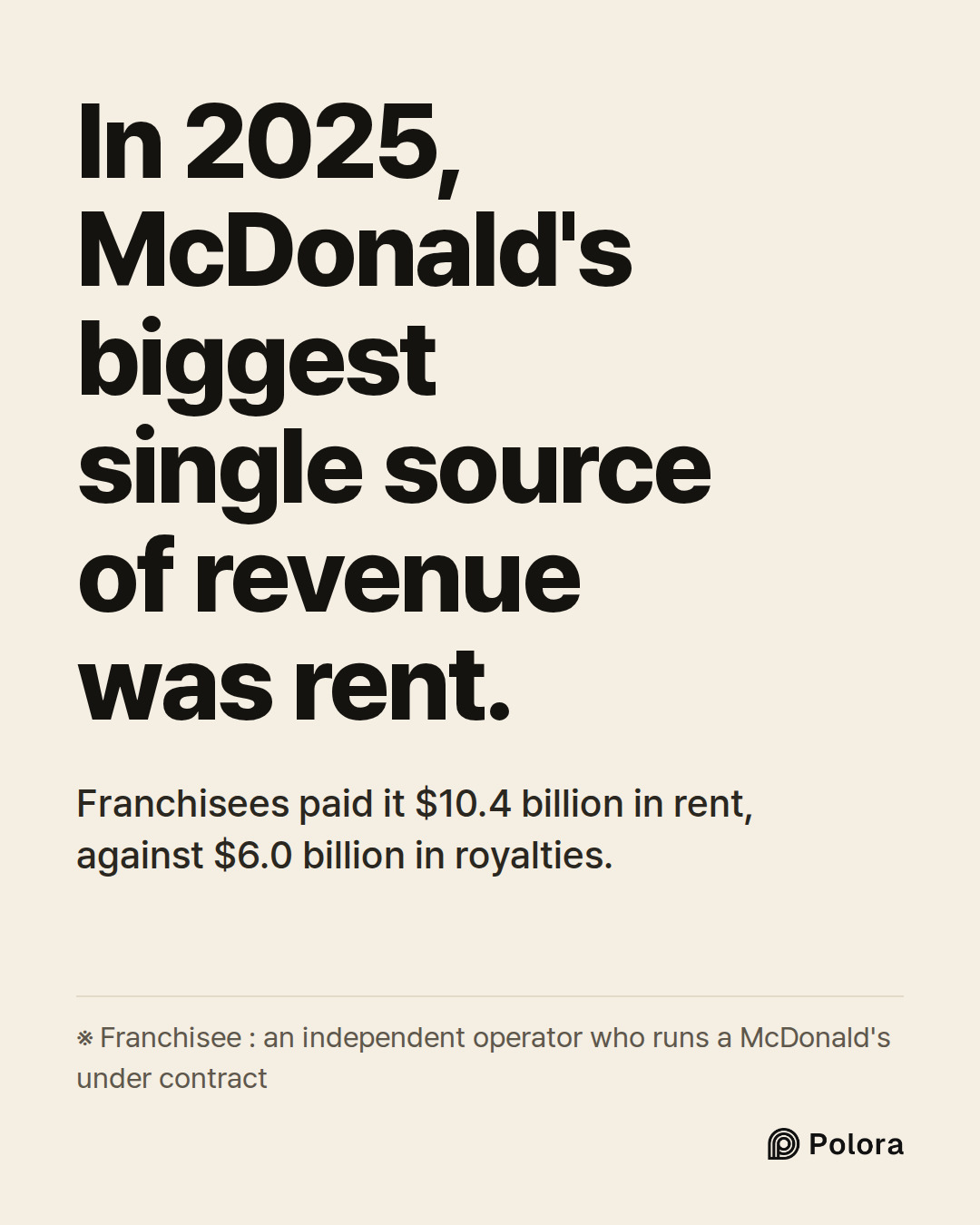
The fee most people would guess is the royalty, a cut of sales paid for the brand and the way of running the restaurant. That came to $6.0 billion. The largest line was something else : rent, at $10.4 billion. Rent was also the largest line in 2023 ($9.8 billion) and in 2024 ($10.0 billion), so 2025 was no one-off. These are the revenue lines the company itself reports in its accounts. In a typical franchised McDonald's, the franchisee is also the company's tenant.
Why does McDonald's charge its franchisees rent?
Under McDonald's standard franchise deal, which the company calls a conventional franchise, the company generally owns the land and the building or holds them on a long lease. The franchisee then pays for what goes inside : equipment, signs, seating and decor. The deal is both a license to use the brand and a lease on the site. The franchisee runs the restaurant in a property McDonald's controls, so the franchisee pays McDonald's rent.
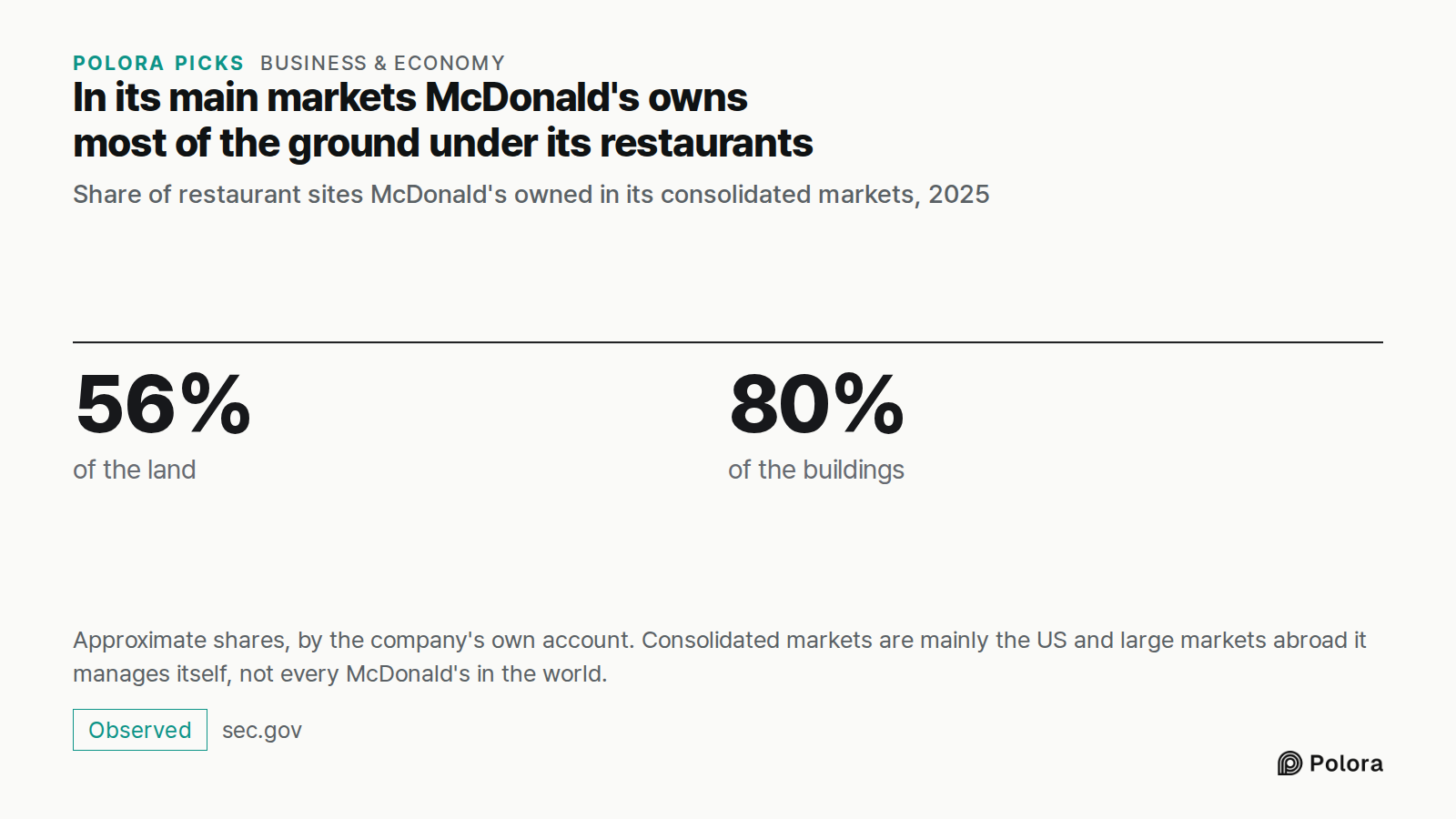
This is a lot of property. In what it calls its consolidated markets, mainly the US and the large markets abroad that it manages itself, the company owned about 56% of the land and about 80% of the buildings its restaurants stand on, by its own account for 2025. These shares do not cover every McDonald's in the world. Where it does not own the site, it leases from other owners and rents on to franchisees. At the end of 2025 the property and equipment McDonald's had under franchise arrangements was valued at $22.8 billion after depreciation, including $7.1 billion of land.
The franchisee carries much of the cost of keeping the site going. The company says franchisees generally pay the property taxes, the insurance and the maintenance.
The rent goes up when burger sales go up
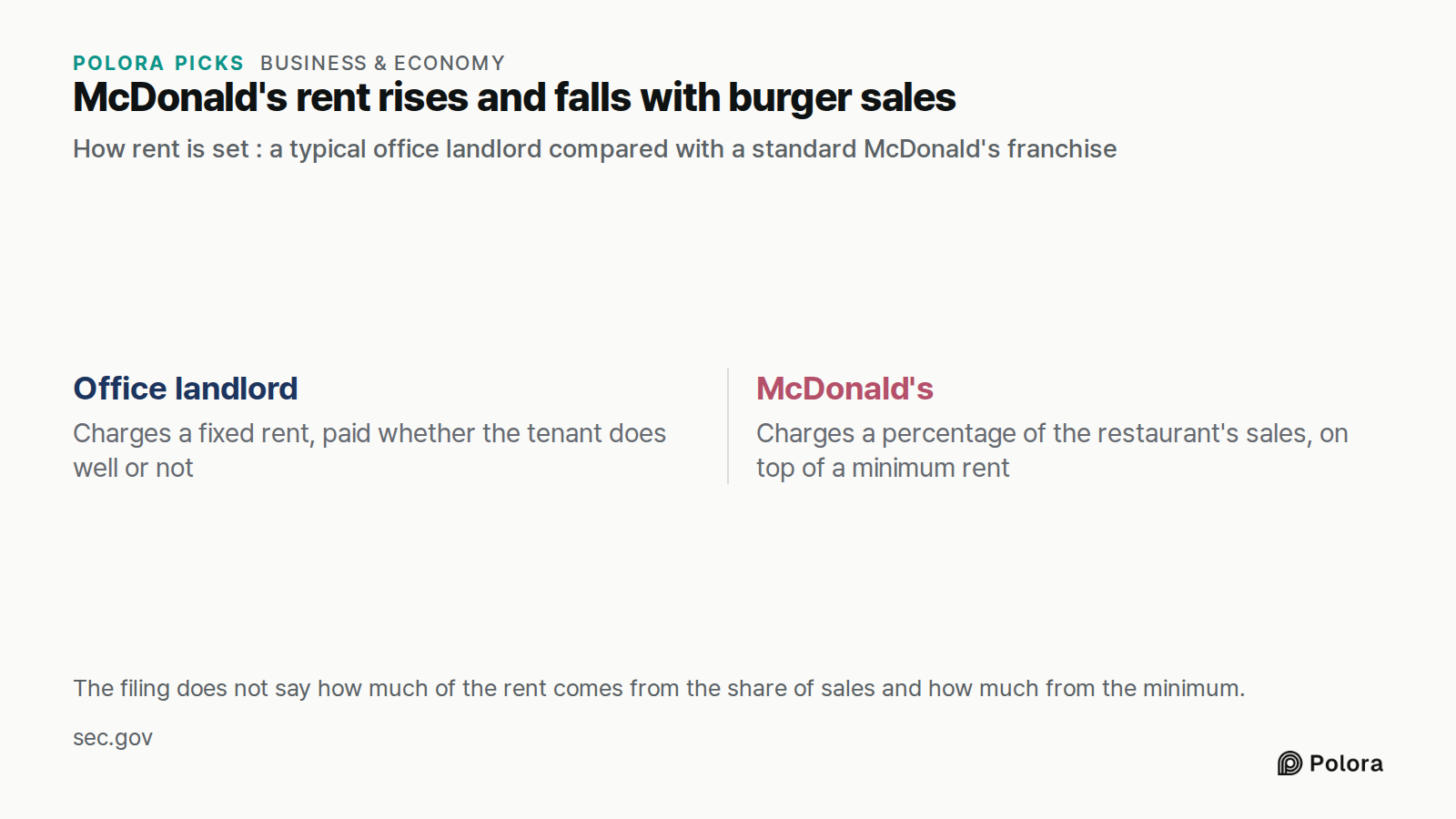
This is where McDonald's stops looking like an ordinary landlord. An office landlord charges a fixed rent and is paid whether the tenant does well or not. McDonald's rent, like its royalty, is based on a percentage of the restaurant's sales. On top of that sits a minimum rent. For sites the company owns, the minimum is based on what McDonald's invested in the site. For sites it leases, the minimum tracks what McDonald's itself pays the owner.
The filing does not say how much of the rent comes from the share of sales and how much from the minimum. It gives one point of comparison. Under contracts in place at the end of 2025, franchisees owed $3.0 billion in minimum rent for 2026, well below the $10.4 billion of rent McDonald's reported for 2025. The two figures cover different years and measure different things, and the minimum-rent figure leaves out contracts signed later, so they cannot tell us what share of the rent moves with sales. They do show that the guaranteed floor sits well below the rent McDonald's has been reporting.
The arrangement also gives the company leverage over time. A franchise generally lasts 20 years. When it ends, McDonald's keeps control of the land and the building. It can sign a new 20-year deal with the same franchisee, give the site to a different one, or close the restaurant.
Most of what McDonald's keeps comes from franchised restaurants
Rent is revenue, not profit, so it is fair to ask what McDonald's keeps. The company reports a margin for each side of its business. For franchised restaurants, the margin is the money from franchisees, royalties as well as rent, minus the company's own lease and depreciation costs on those sites. For the restaurants it runs itself, it is sales minus food, packaging, wages and running costs.
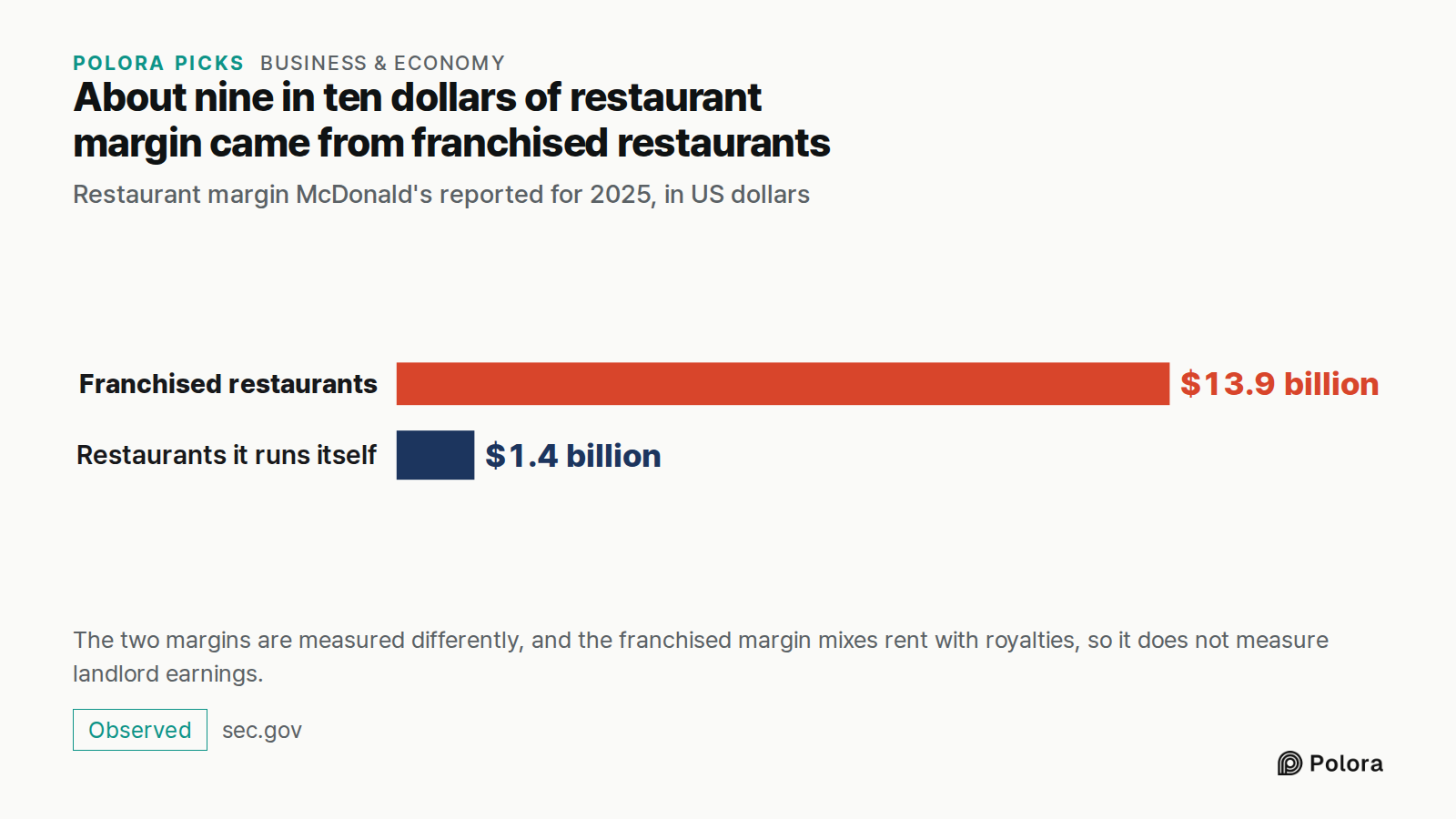
In 2025 franchised restaurants left McDonald's a margin of $13.9 billion. Its own restaurants left $1.4 billion. So about nine dollars in every ten of restaurant-level margin came from franchised restaurants. Running a restaurant means paying for food and staff. Being the franchisee's landlord and brand owner mostly does not.
The comparison has limits. The two margins are measured differently, and the franchised margin mixes rent with royalties, so it is not a measure of what McDonald's earns as a landlord. Nor does it show that running fewer restaurants would earn more. The company says that operating some restaurants itself helps it develop and test the way its restaurants are run.
McDonald's describes the model in its own words. It says its heavily franchised business is designed to generate 'stable and predictable revenue, which is largely a function of franchisee sales.' It also says it believes that 'ownership of real estate, combined with the co-investment by franchisees,' lets its restaurants perform at levels 'among the highest in the industry.' That is the company's claim about itself. The filing does not compare it with other chains.
In many countries McDonald's owns none of the property
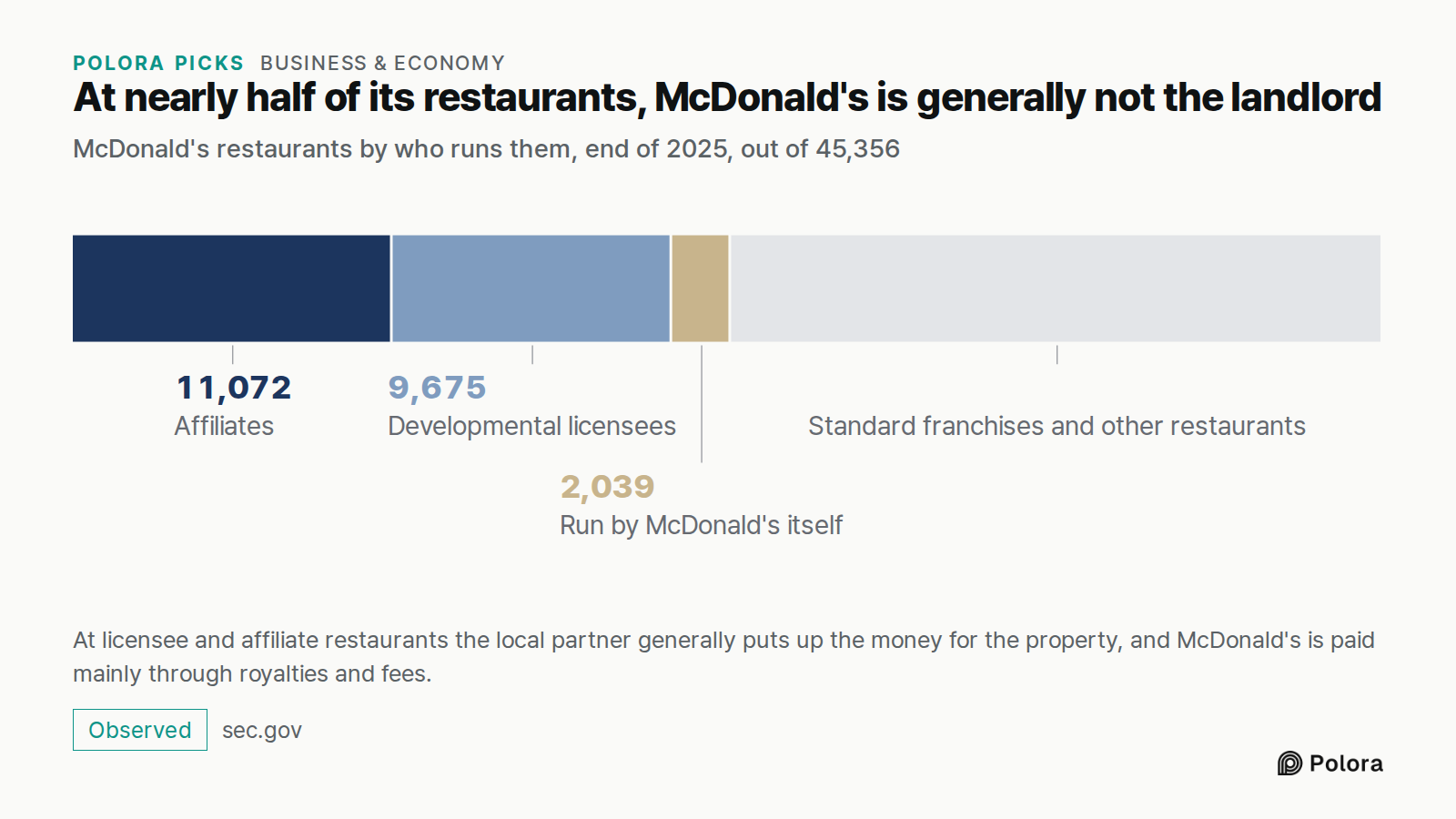
The landlord picture holds where McDonald's uses its standard franchise, mainly the US and a group of large markets abroad that the company manages itself. Elsewhere it mostly works differently. A local partner, called a developmental licensee or an affiliate, puts up the money for the restaurants, including the real estate. McDonald's generally invests no restaurant capital there. It collects royalties based on sales and generally an initial fee, and from affiliates it can also take a share of their earnings. McDonald's groups more than 75 countries into one reporting segment made up mainly of markets run this way. The segment and the model do not line up exactly : some restaurants of this kind sit in the markets the company manages itself.
This affects a lot of restaurants. At the end of 2025, 9,675 McDonald's restaurants were run by developmental licensees and 11,072 by affiliates. Together that is about 46% of the 45,356 in total. The McDonald's businesses in China and Japan, in which the company owns 50% or less, fall into this group. At nearly half of McDonald's restaurants, the company is generally not the landlord at all. It is paid much the way most people imagine a franchisor is paid : for the brand.
So is McDonald's a landlord or a burger company?
On the numbers, McDonald's reports more revenue as a landlord than as a brand. In 2025 rent from franchisees was its single biggest source of revenue, ahead of royalties and ahead of what its own restaurants sold. In its main markets it controls the land and buildings and keeps them when a franchise ends.
But it is not a landlord who gets paid whatever happens. The rent is based on a share of sales, so a McDonald's that sells fewer burgers generally owes less, though it still owes the minimum. The lease and the brand license come as one deal, and the filing does not separate what McDonald's earns from the property from what it earns from the brand. And where McDonald's does not own the property, it is paid mainly as a brand, through royalties and fees.
So the lease is how McDonald's takes much of its cut, and burger sales decide how big that cut is. It is a burger business that gets paid, in large part, as a landlord.