A century of slow drift
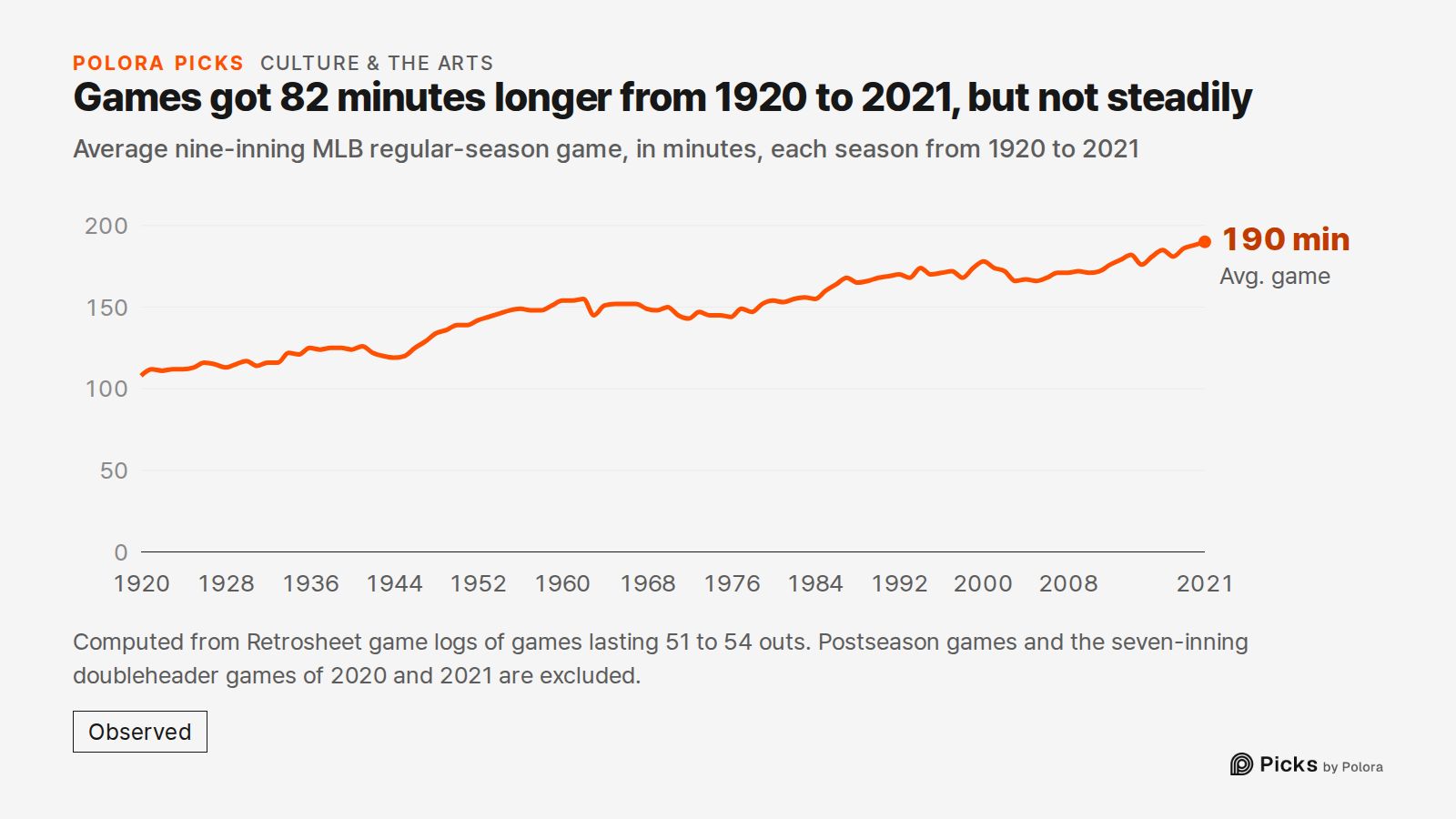
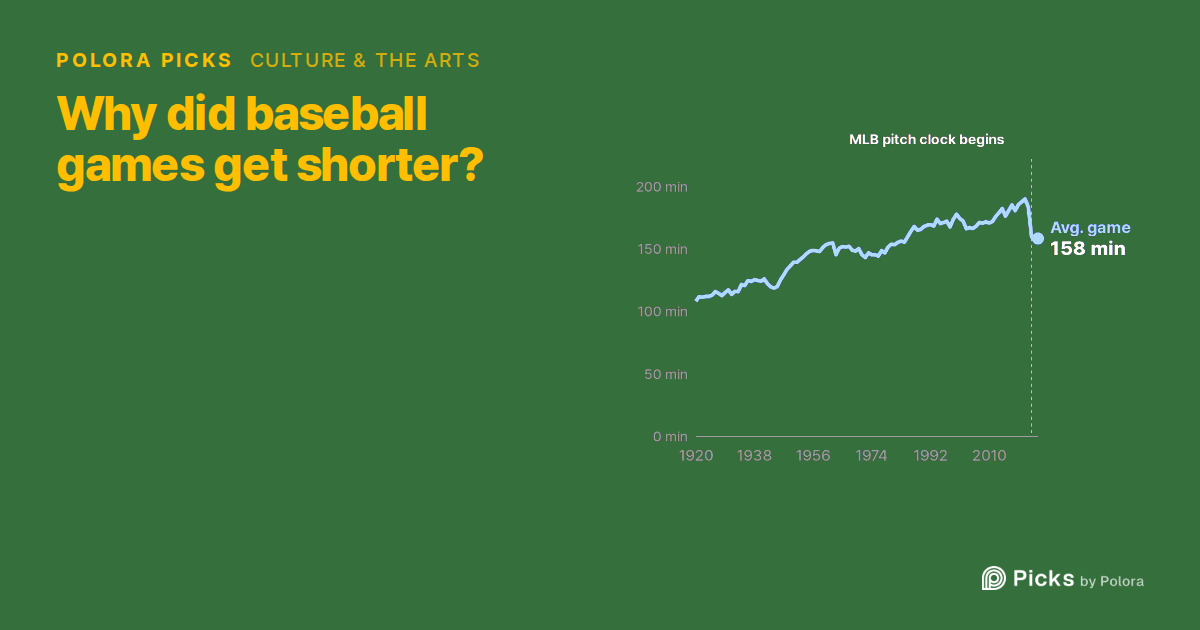
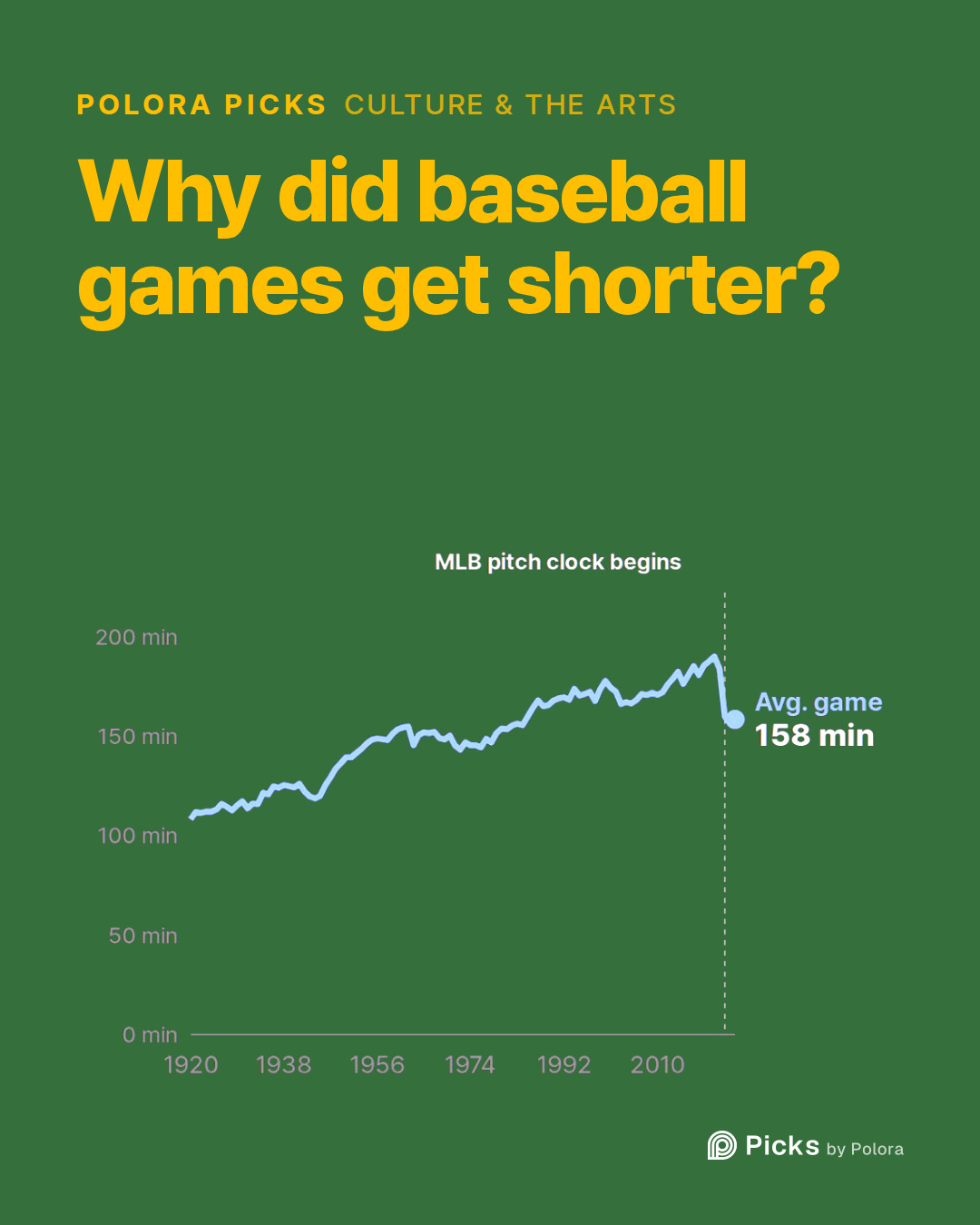
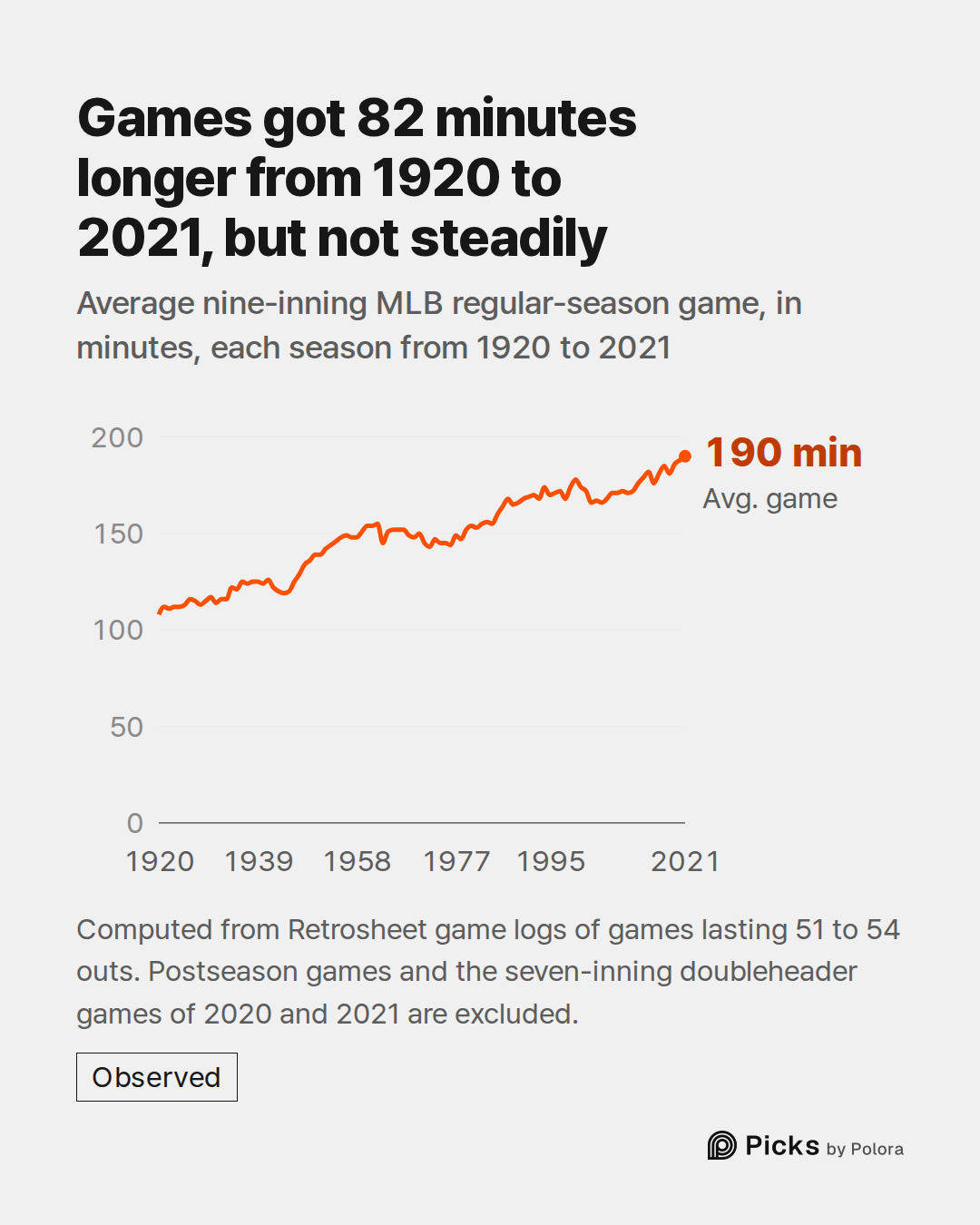
In 1920, the average nine-inning Major League Baseball regular-season game lasted 108 minutes. Over the next hundred years that number climbed, but not steadily. Games crossed two and a half hours in 1959, and then two decades went by with little to show : the 1980 average (153.8 minutes) was almost exactly the 1960 one (153.5). The climb picked up again from the 1980s. The average went past three hours in 2014 and peaked in 2021 at 190 minutes. That year, 67% of nine-inning games ran three hours or more. In total, games got 82 minutes longer between 1920 and 2021.
These averages were computed from Retrosheet's game-by-game logs. They cover the American and National League regular-season games with a recorded time that lasted 51 to 54 outs. That is the length of a nine-inning game, or eight and a half innings when the home team leads and skips its last turn at bat. The outs count stands in for a regulation game, but it cannot show why each game ended. Games with more outs (extra innings) or fewer (most games cut short) fall outside that range, and the seven-inning doubleheader games of 2020 and 2021 are left out too. Postseason games are not included. For 2021 through 2025, the averages round to the same hours and minutes as MLB's own published figures, as reported by the Associated Press. The two disagree on when three hours was first passed : AP reports that MLB's average first passed three hours in 2016. In the logs, 2014 was already at 182 minutes, before a dip to 176 in 2015 and a return to 181 in 2016.
Why games got longer
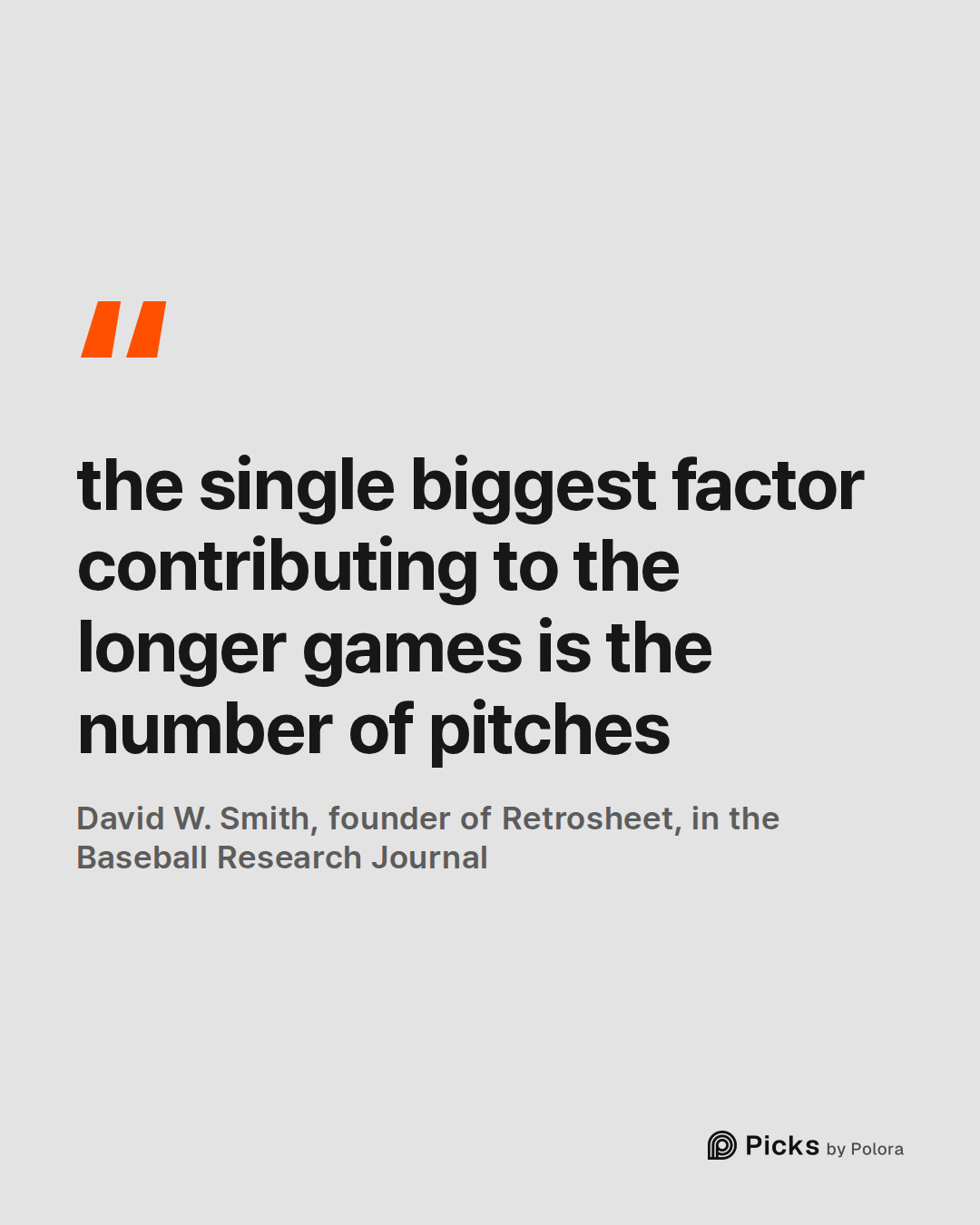
One long look at this question is by David W. Smith, founder of Retrosheet, in the Society for American Baseball Research's Baseball Research Journal. He concluded that "the single biggest factor contributing to the longer games is the number of pitches," and that the rise in strikeouts, along with fewer outs on balls in play, "accounts for much of the difference over time." In his data, the number of pitches explained nearly three quarters of the variation in game time, and a strikeout takes about 1.5 more pitches than other outs.
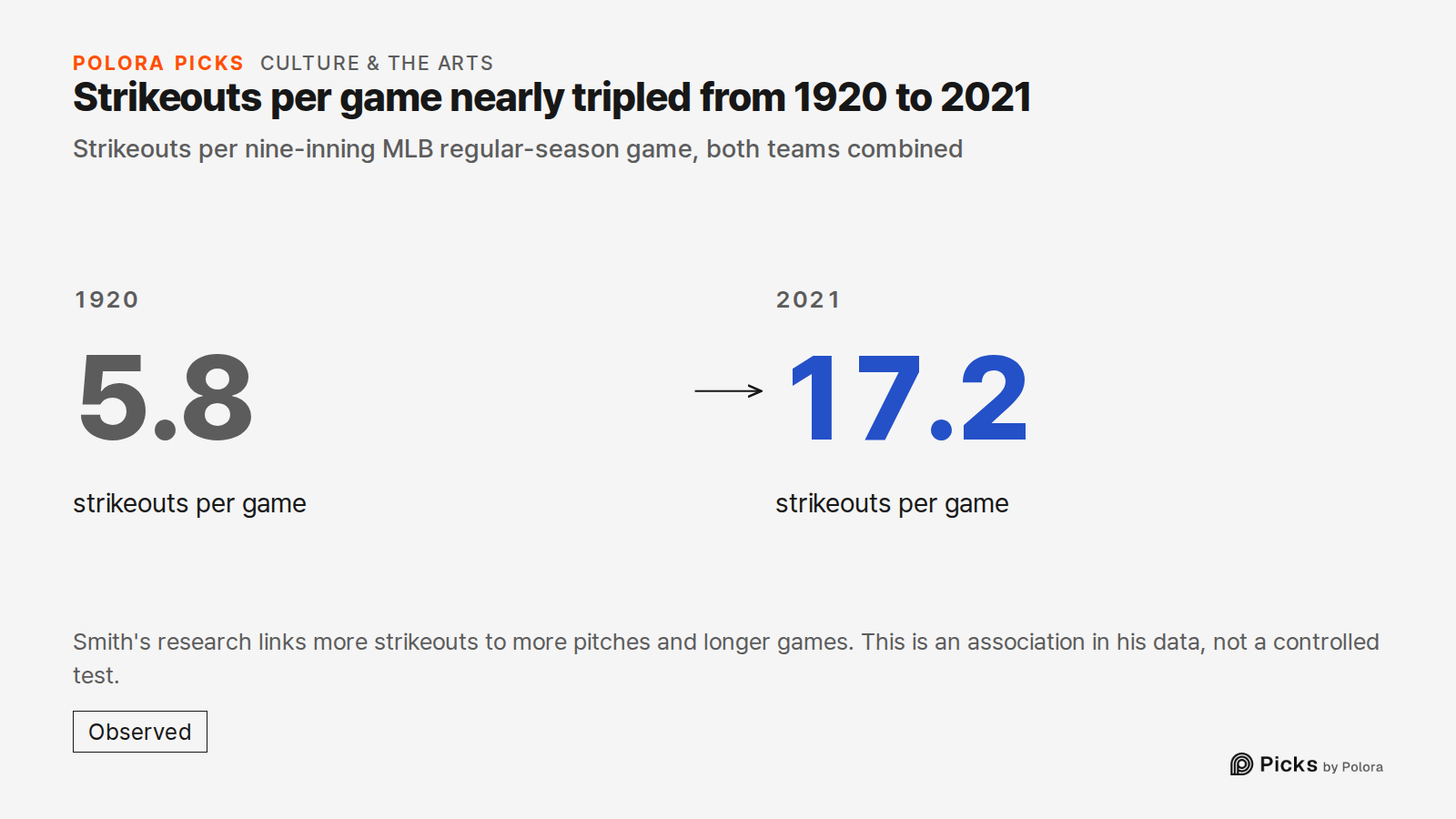
The game logs show that strikeout trend. Strikeouts per game, counting both teams, went from 5.8 in 1920 to 17.2 in 2021, almost three times as many. Smith also pointed to the time between pitches, which FanGraphs measurements showed had grown in the decade before his study. In his account, more pitches and more time between them both added to the length of games. His figures describe associations in the data he studied, not a controlled test.
MLB had tried before. Before the 2015 season it brought in rules meant to speed up play, such as keeping batters in the batter's box. Games averaged 6 minutes less that season, but they were back over three hours in 2016.
The clock
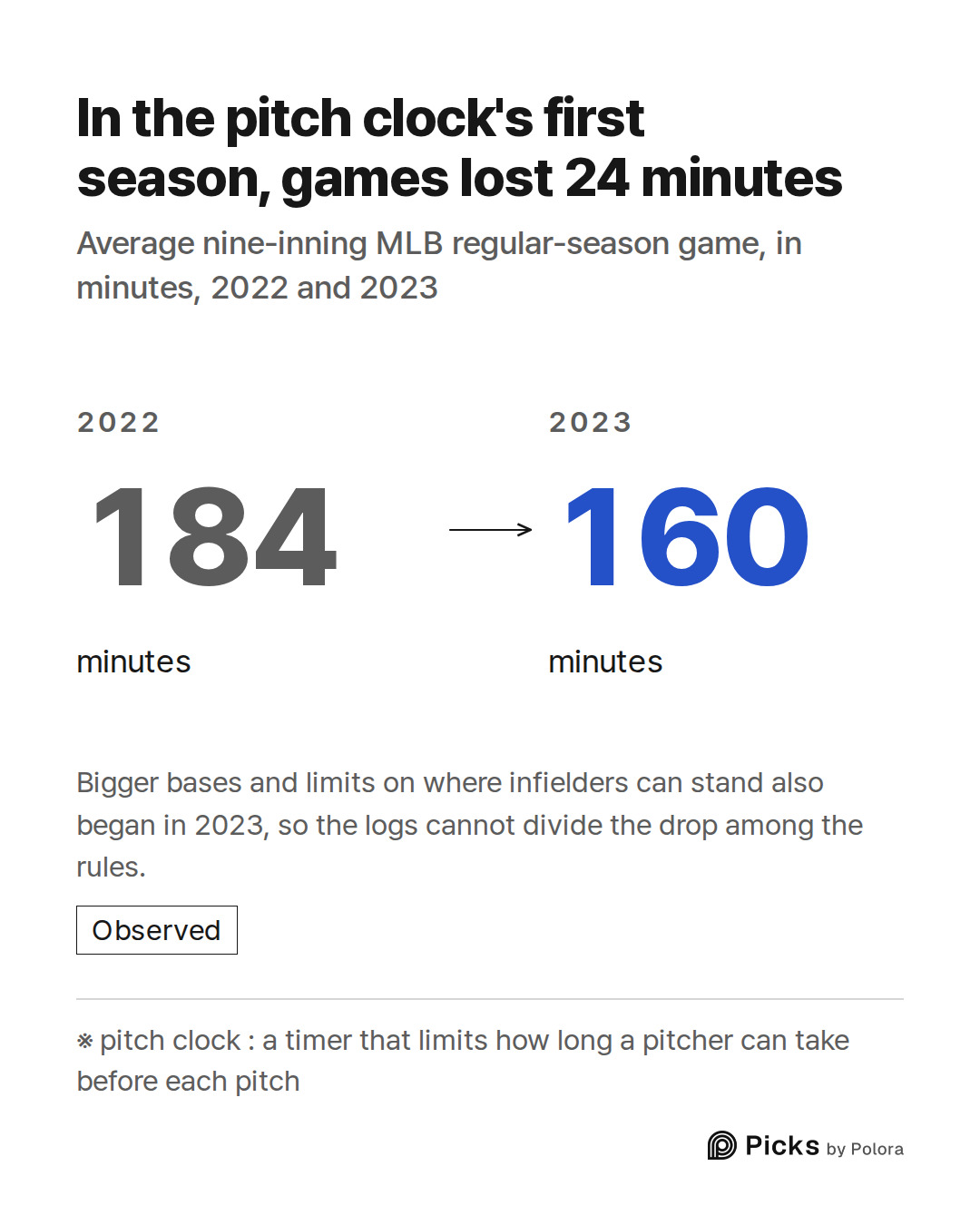
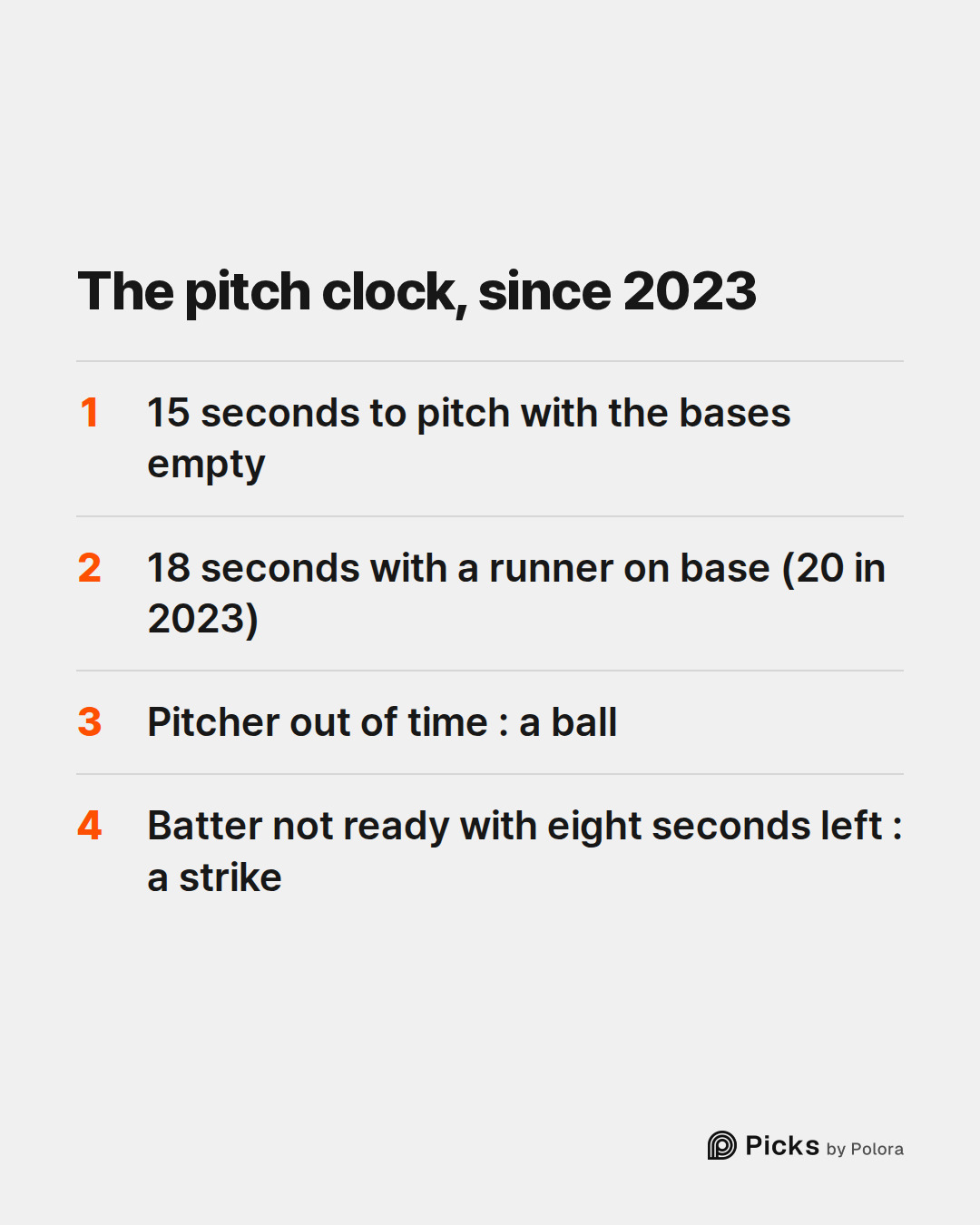
For 2023, MLB introduced a pitch clock. Once a pitcher gets the ball, he has 15 seconds to throw with the bases empty, or 20 seconds with a runner on base. The 20 seconds became 18 in 2024. A pitcher who runs out of time is charged a ball. The batter must be in the box and alert to the pitcher with at least eight seconds left on the clock, or is charged a strike. Pitchers are also limited to two pickoff throws or step-offs per batter; a third that does not get an out is a balk, and the count resets when a runner advances. Other changes arrived the same season : bigger bases and limits on where infielders can stand. According to Wikipedia's account of the rules, those were meant to put more balls in play and get runners moving, not explicitly to shorten games.
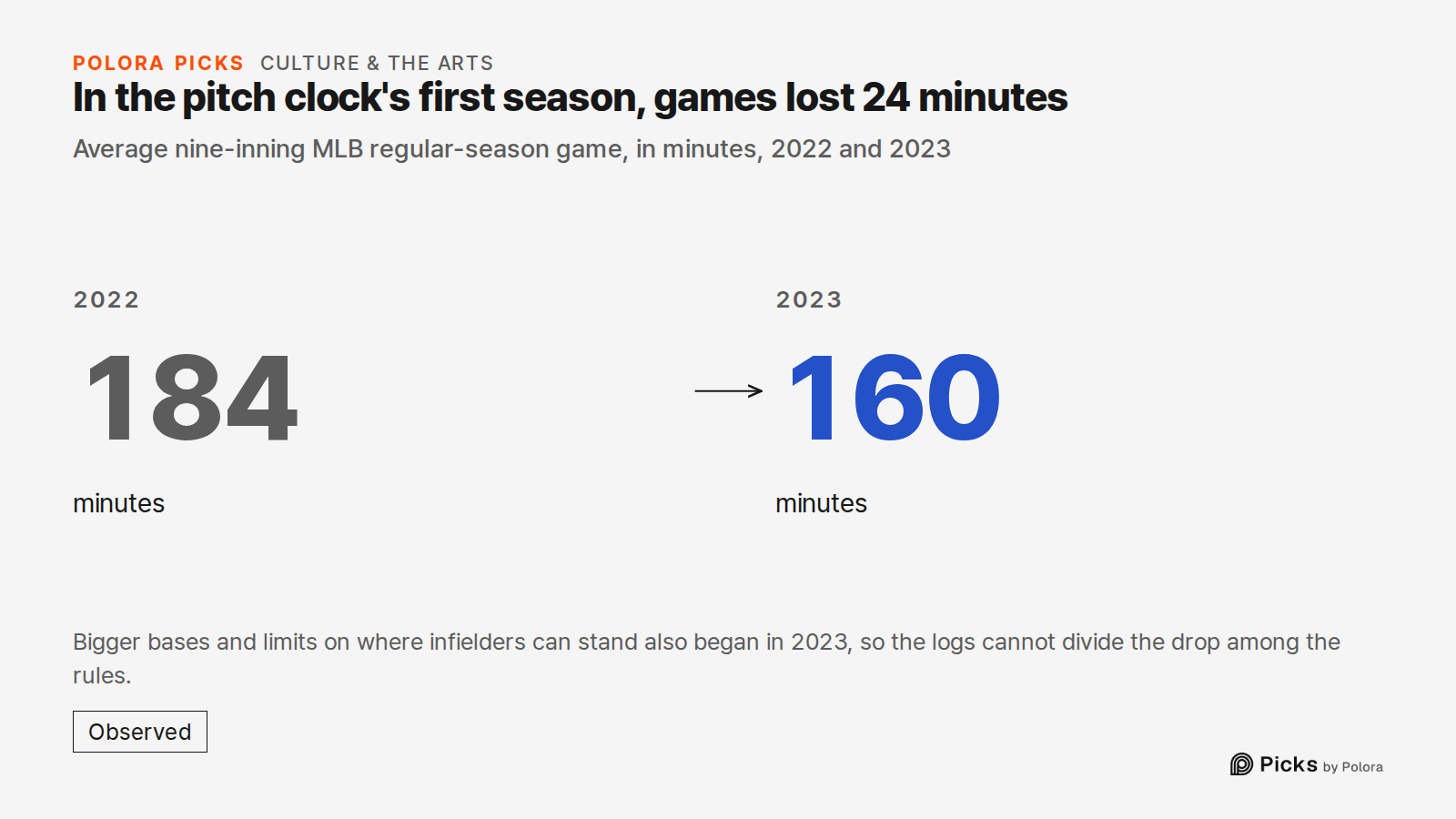
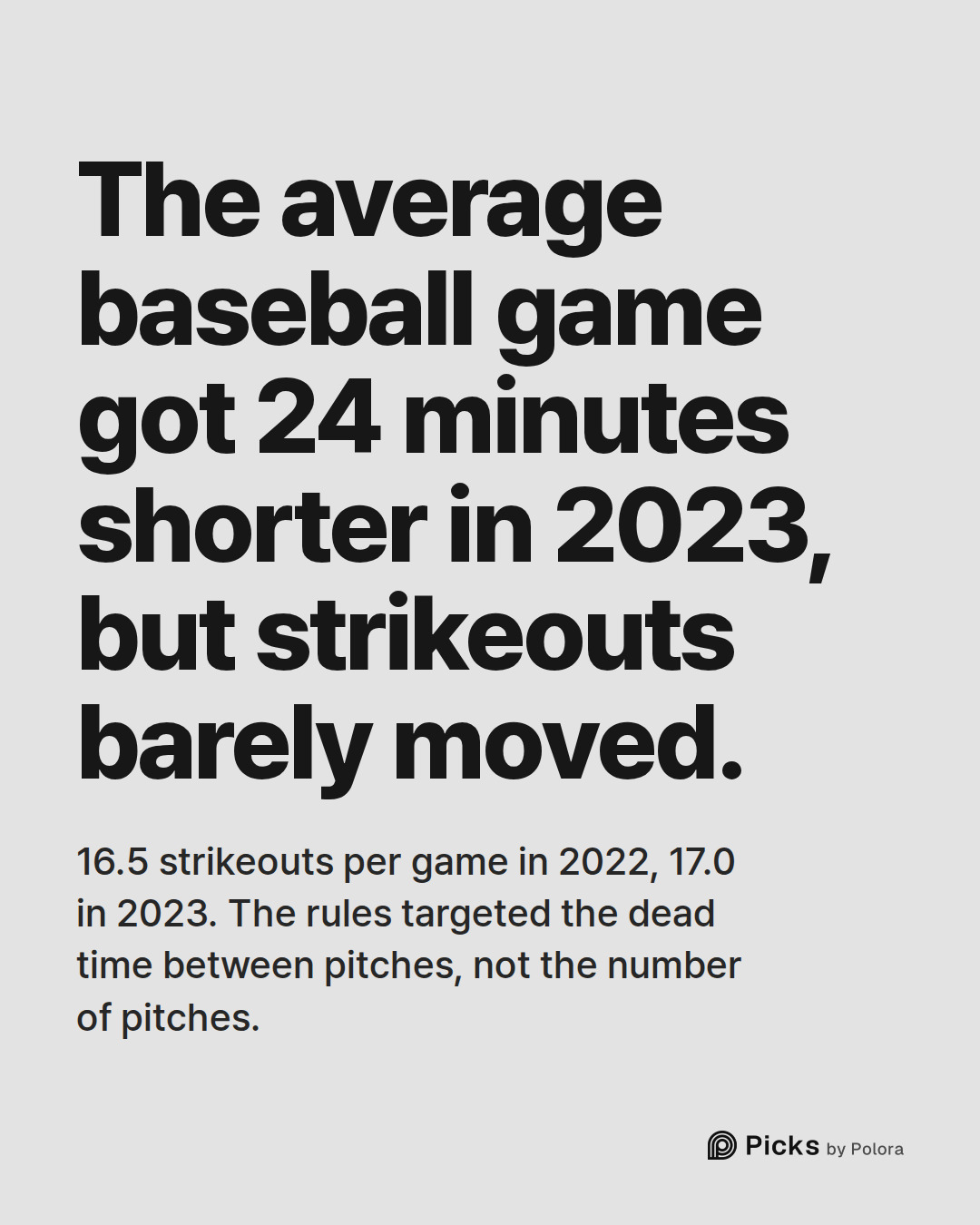
The average nine-inning game fell from 184 minutes in 2022 to 160 in 2023. The 24-minute drop is about two and a half times the next-largest one-season drop since 1920, which was 9 minutes in 1963. The share of games lasting three hours or more fell from 57% to 13%.
One thing barely moved. Strikeouts per game went from 16.5 in 2022 to 17.0 in 2023. Games still had about as many strikeouts as before. The rules targeted the dead time between pitches, not the number of pitches. The game logs show when the drop happened, not which rule caused it. Because several rules started together, the data cannot divide the 24 minutes among them.
Where it stands
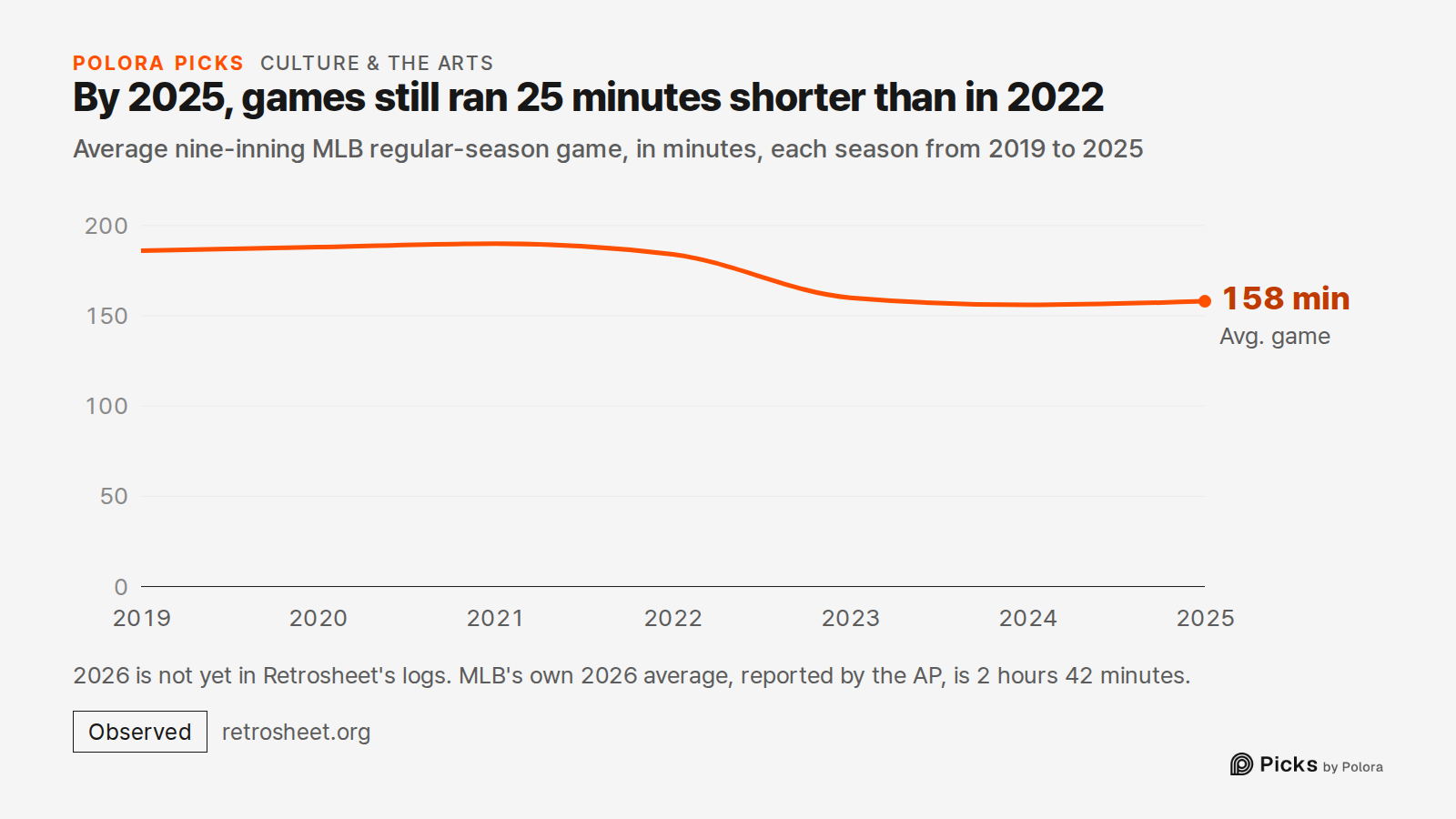
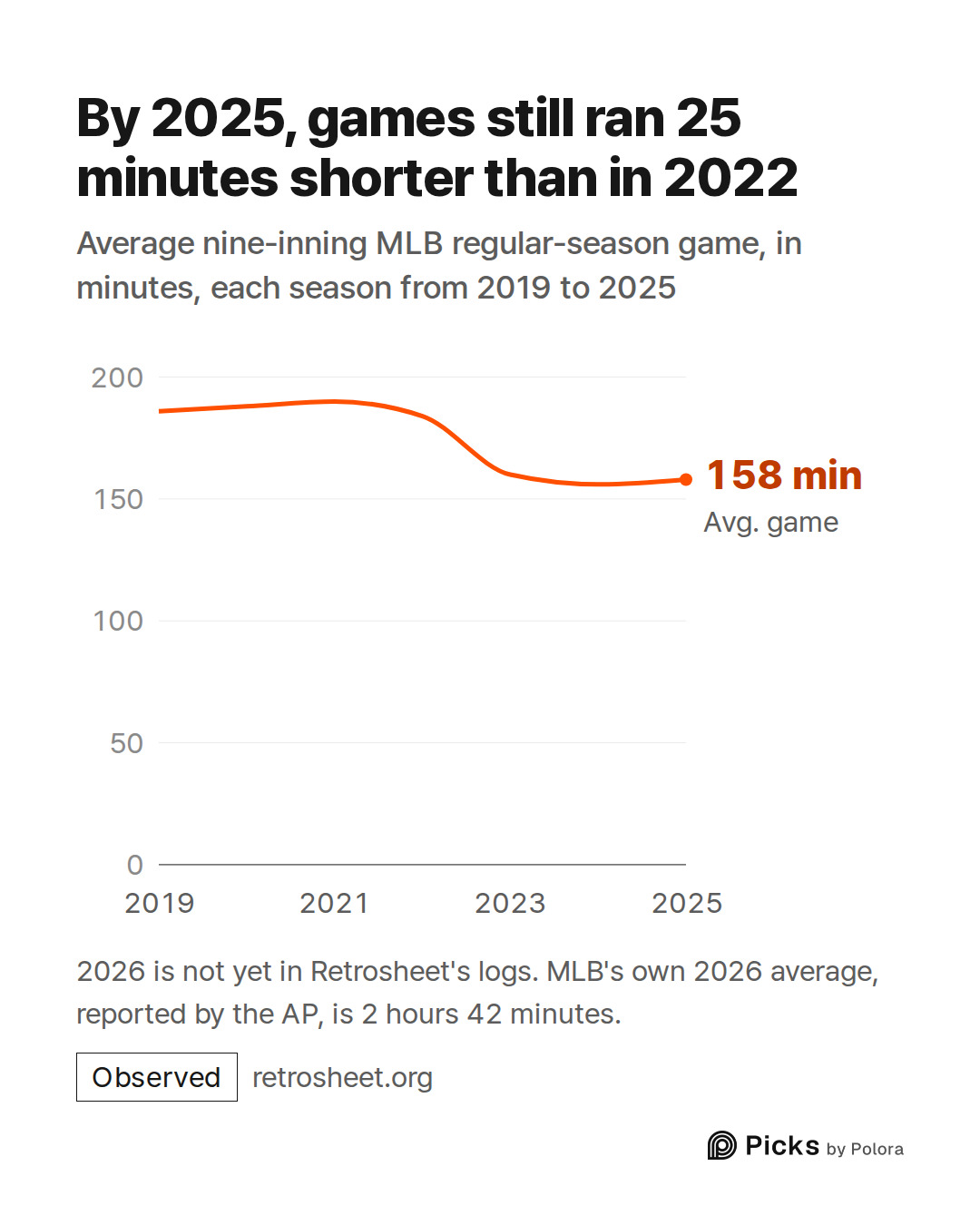
In 2024, the average fell to 156 minutes (2 hours 36 minutes), the shortest since 1984. In 2025 it edged up to 158, with about 11% of games running three hours or more. That is still 25 minutes shorter than 2022.
The 2026 season is not yet in Retrosheet's logs. MLB's own figure, reported by the AP in September, is 2 hours 42 minutes, an increase of 3 minutes 43 seconds over 2025. MLB attributed 61 seconds of that increase to the new Automated Ball-Strike Challenge System, which lets players appeal ball and strike calls to a computer. Even so, by MLB's numbers, 2026 games were 22 minutes shorter than in 2022.
The information used here was obtained free of charge from and is copyrighted by Retrosheet. Interested parties may contact Retrosheet at "www.retrosheet.org".
- Retrosheet game logs, MLB regular seasons 1920–2025
- David W. Smith, "Why Do Games Take So Long?", Baseball Research Journal (SABR), Fall 2018
- Wikipedia, "Pace of play"
- Wikipedia, "Pitch clock"
- Associated Press, "MLB average game time up nearly 4 minutes to 2:42, partly because of robot umpires" (via Fox Sports), September 28, 2026
- Wikipedia, "2020 Major League Baseball season" (seven-inning doubleheaders)
![Sources 6 : retrosheet.org · Retrosheet game logs, MLB regular seasons 1920–2025: [, sabr.org · David W. Smith, "Why Do Games Take So Long?", Baseball Research Journal (SABR), Fall 2018: [, en.wikipedia.org · Wikipedia, "Pace of play": [ + 3](https://media.cdn.polora.ai/picks/2026/10/pickrun_c8172b027fed44e8/xY_PIEkjflcpVRrW-slide-08--why-did-baseball-games.jpg)