What is being measured
Every game time Polora worked out here is the length of a nine-inning, regular-season Major League game, as recorded by Retrosheet, which keeps a game-by-game record of the major leagues. Extra-inning games and games cut short are left out, so these averages can differ from figures that count every game. For each season, Polora averaged every nine-inning game, and did the same for each team, counting its home and away games.
The league average built this way matches the averages Major League Baseball publishes, as printed by The Associated Press, to the minute in 42 of the 45 seasons from 1981 to 2025. The team figures were worked out by Polora from Retrosheet's game records; no other public source of team-by-team game times could be checked.
Four decades of longer games
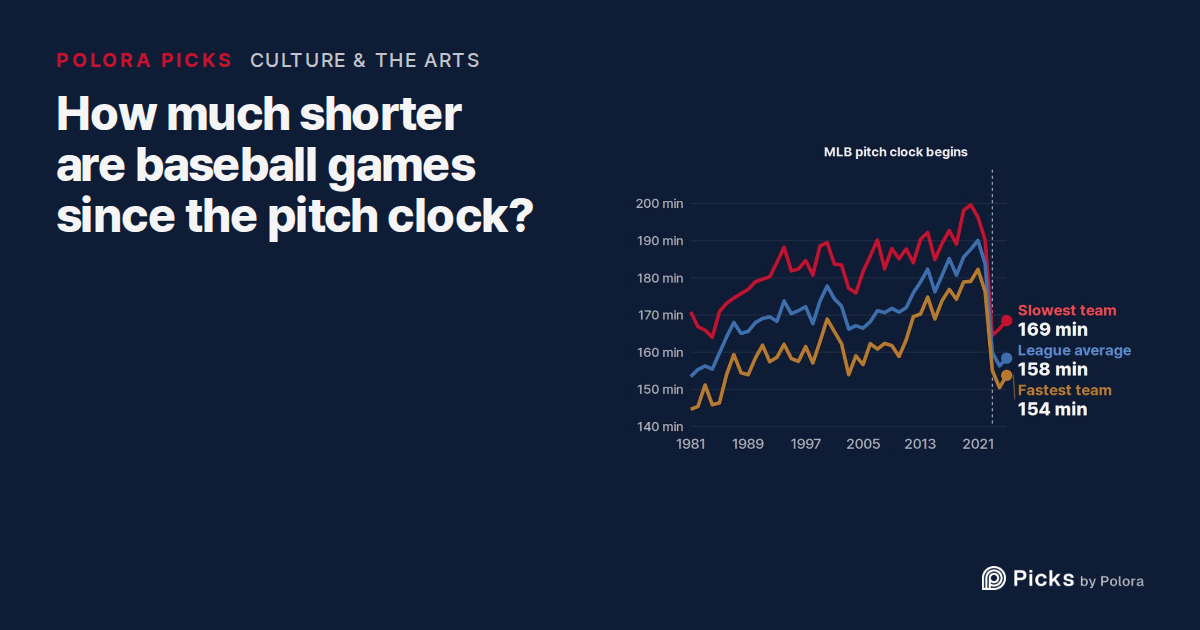
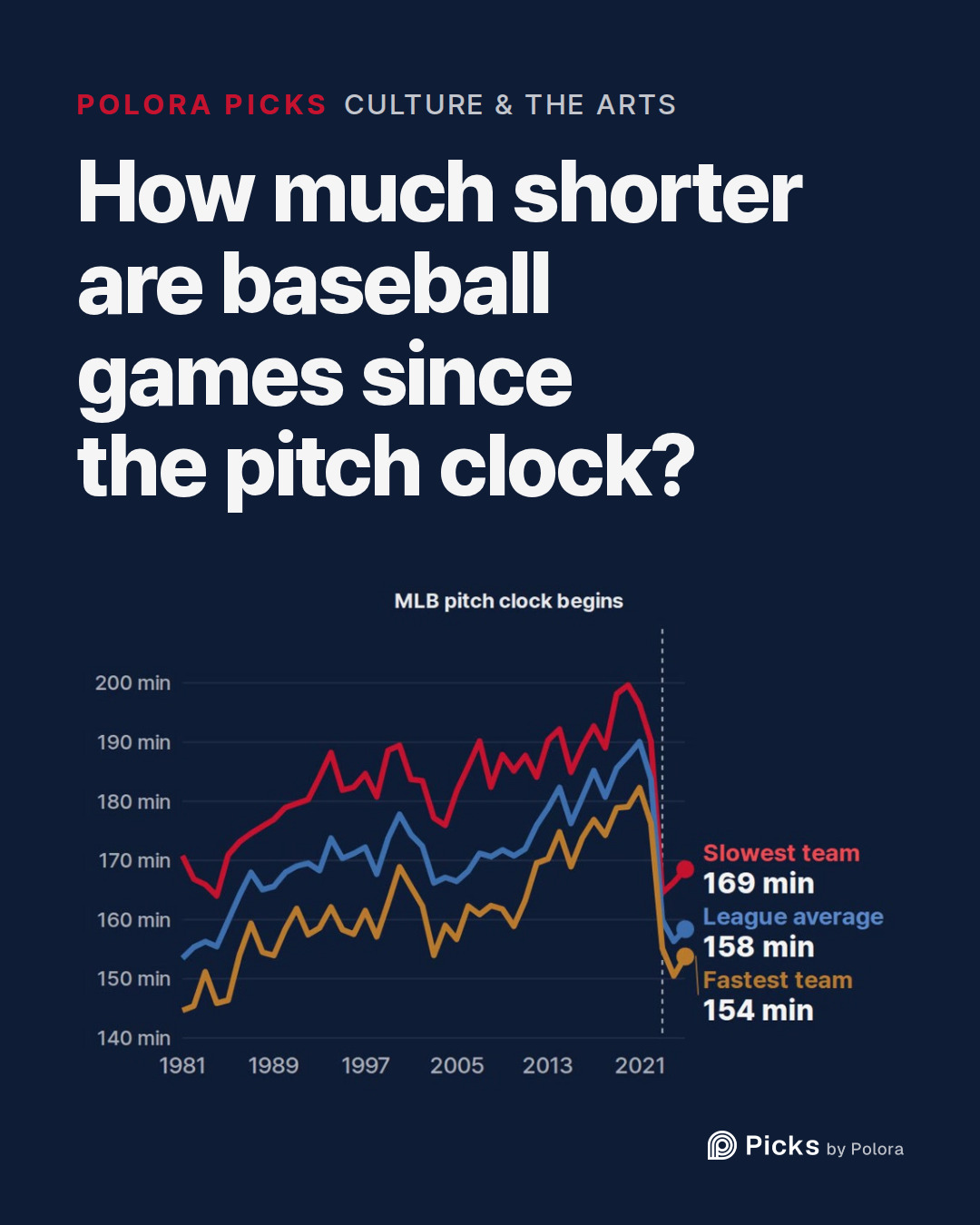
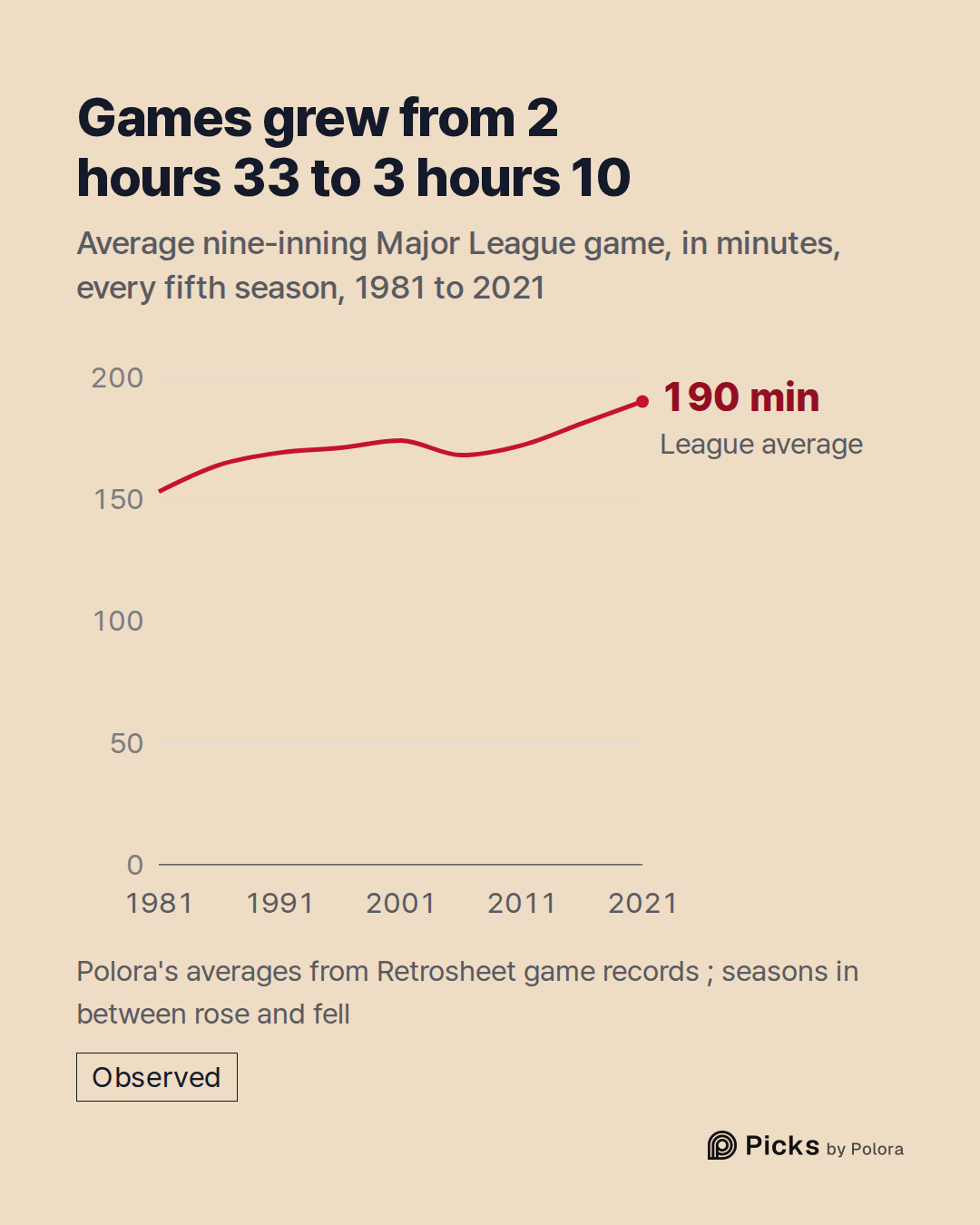
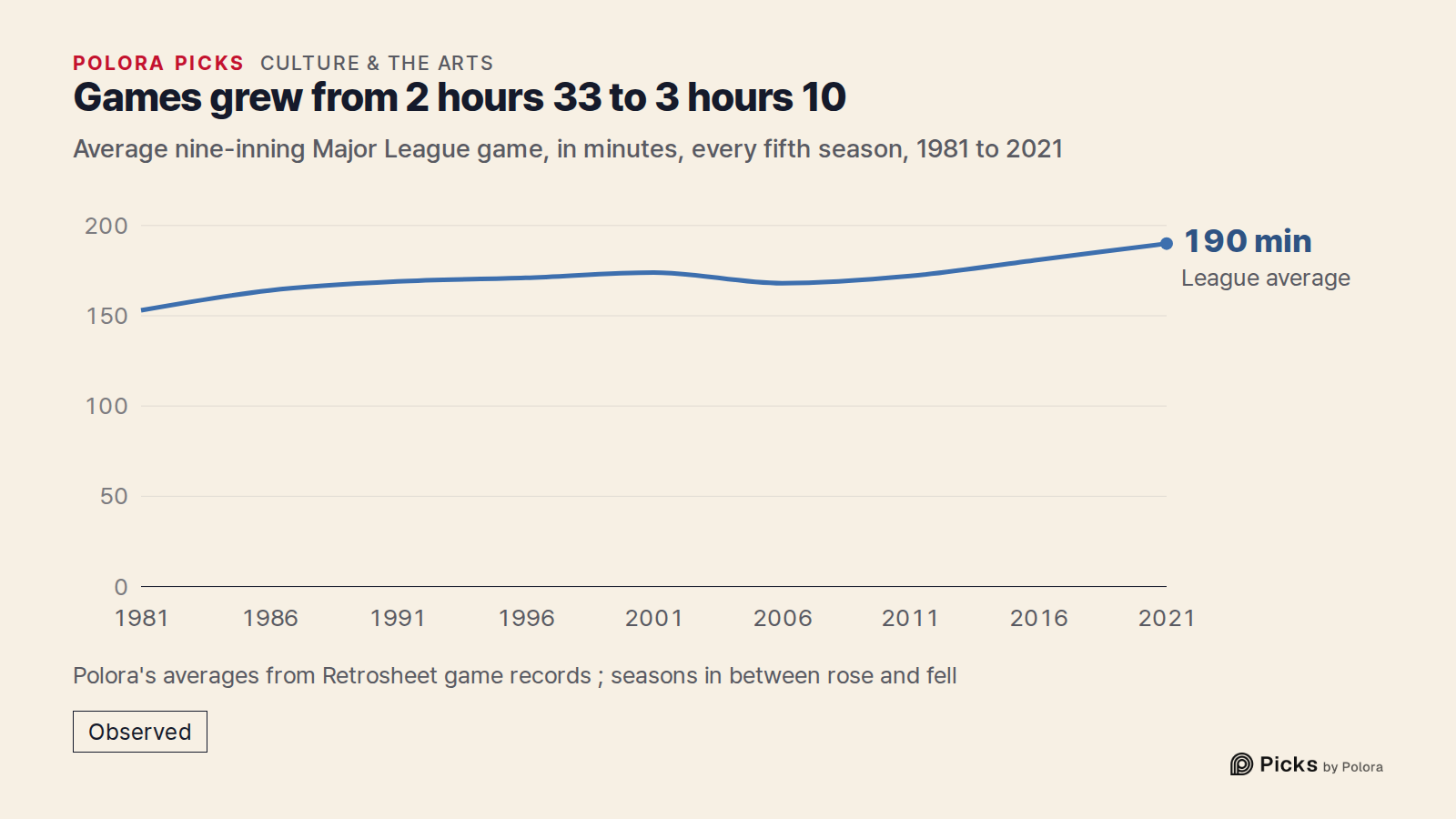
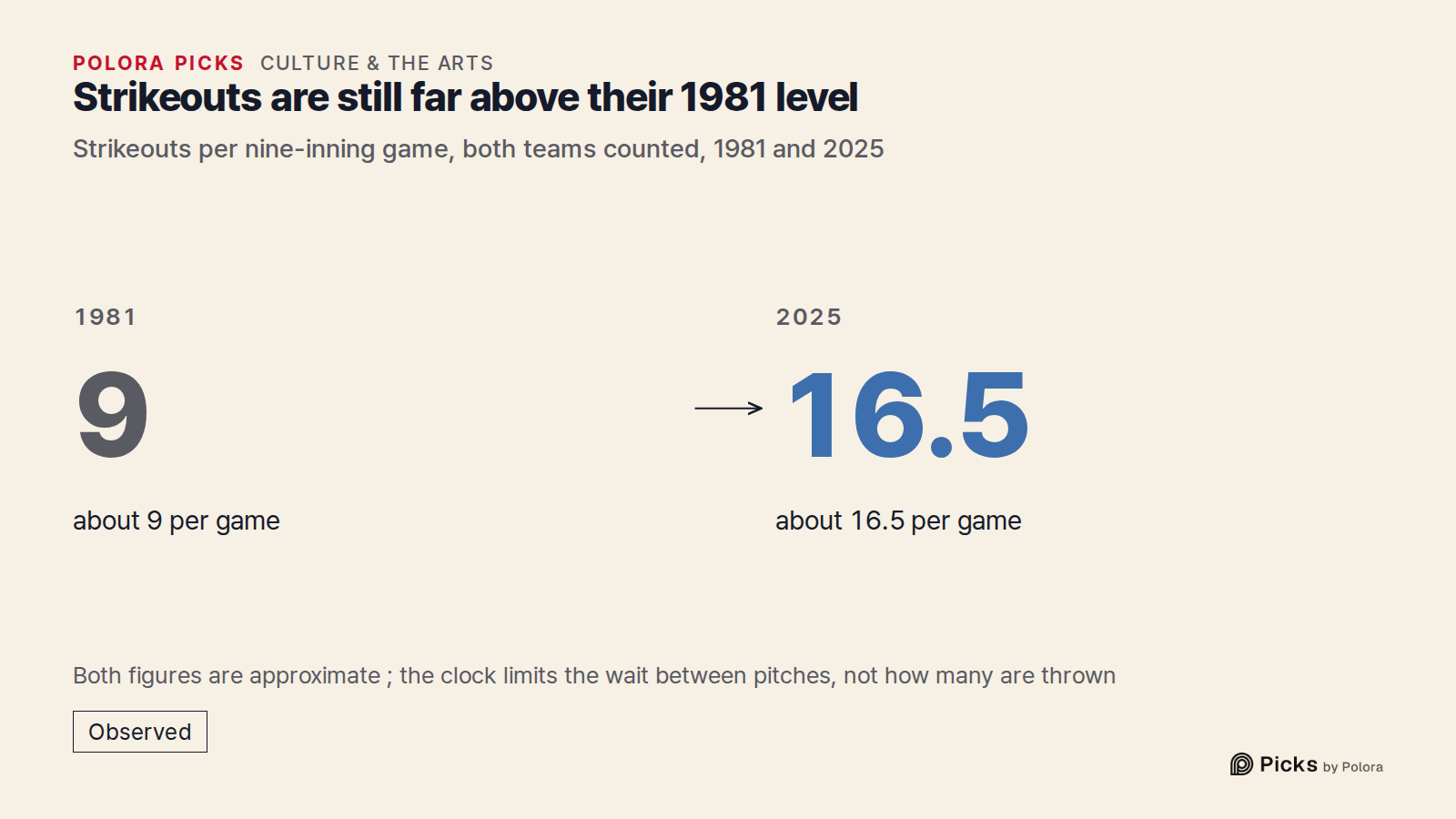
In 1981 the average nine-inning game took 2 hours 33 minutes. It did not rise every year, but the direction was clear : by 2021 the average was 3 hours 10 minutes. Over the same years, strikeouts nearly doubled, from about 9 per nine-inning game, counting both teams, to about 17.
Analysts who have studied the long climb point to two things : how many pitches are thrown, and how long players wait between them. David W. Smith, Retrosheet's founder, writing for the Society for American Baseball Research (SABR) in 2018, concluded that the number of pitches is the single biggest factor in longer games. A strikeout takes more pitches than other kinds of out, he found, so trading balls in play for strikeouts adds time. He also pointed to data from FanGraphs showing the wait between pitches growing from 2008 to 2017. In 2016, Dave Cameron at FanGraphs reckoned that longer waits between pitches, together with more pitches per batter, accounted for almost all of the rise in the first weeks of that season.
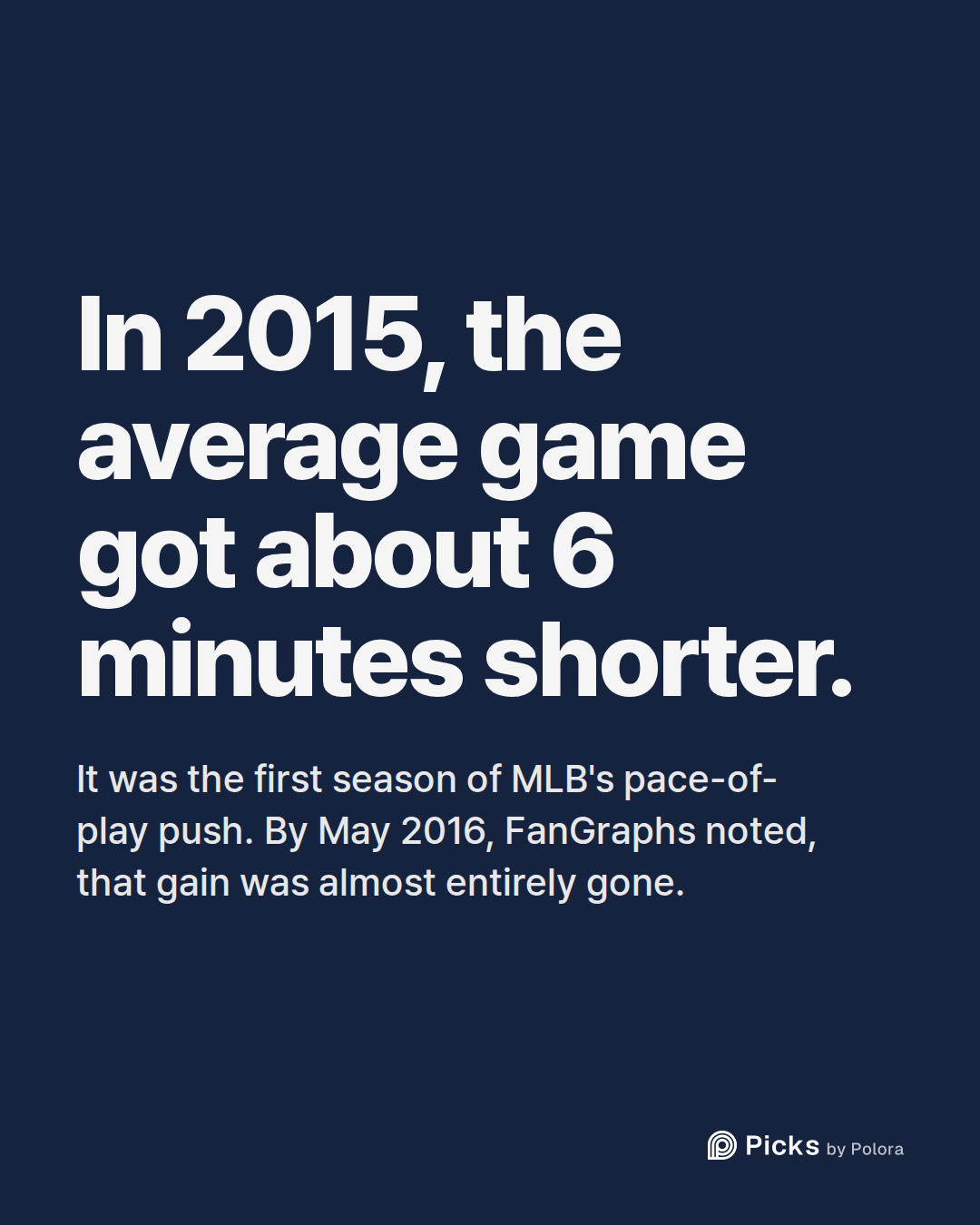
The league had tried before. In 2015, the first season of MLB's pace-of-play push, the average game got about 6 minutes shorter; by May 2016, FanGraphs noted, that gain was almost entirely gone. Before 2023, no change from one season to the next in this record was much bigger than that, up or down.
The 2023 change
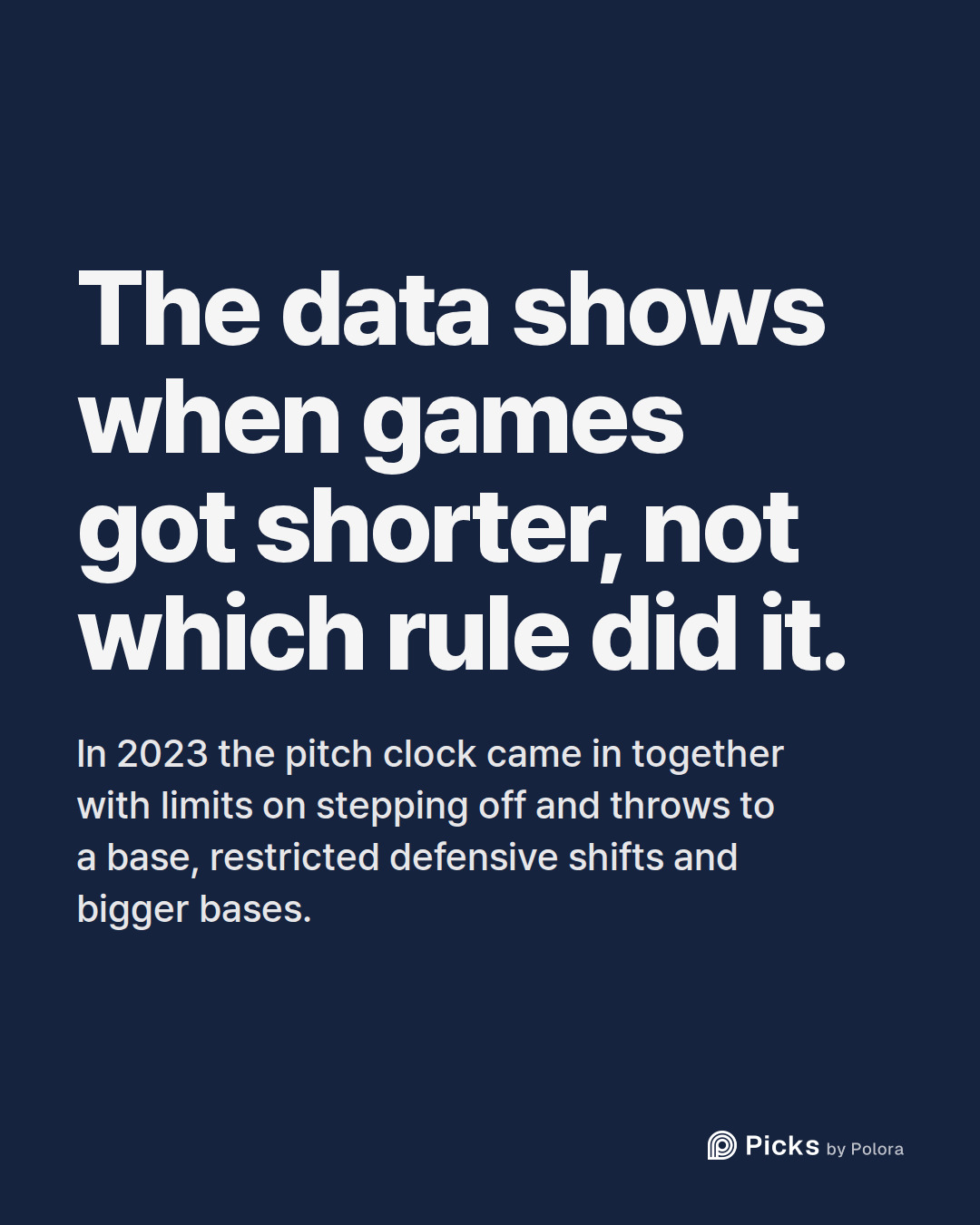
In September 2022, MLB announced new rules for 2023. The best known was a pitch clock : the pitcher had 15 seconds to start his delivery with the bases empty and 20 seconds with a runner on base, or the batter was awarded a ball. Batters had to be in the box and alert to the pitcher while there was still time on the clock, or be charged a strike. The same package limited how often a pitcher could step off or throw to a base, restricted defensive shifts and made the bases bigger.
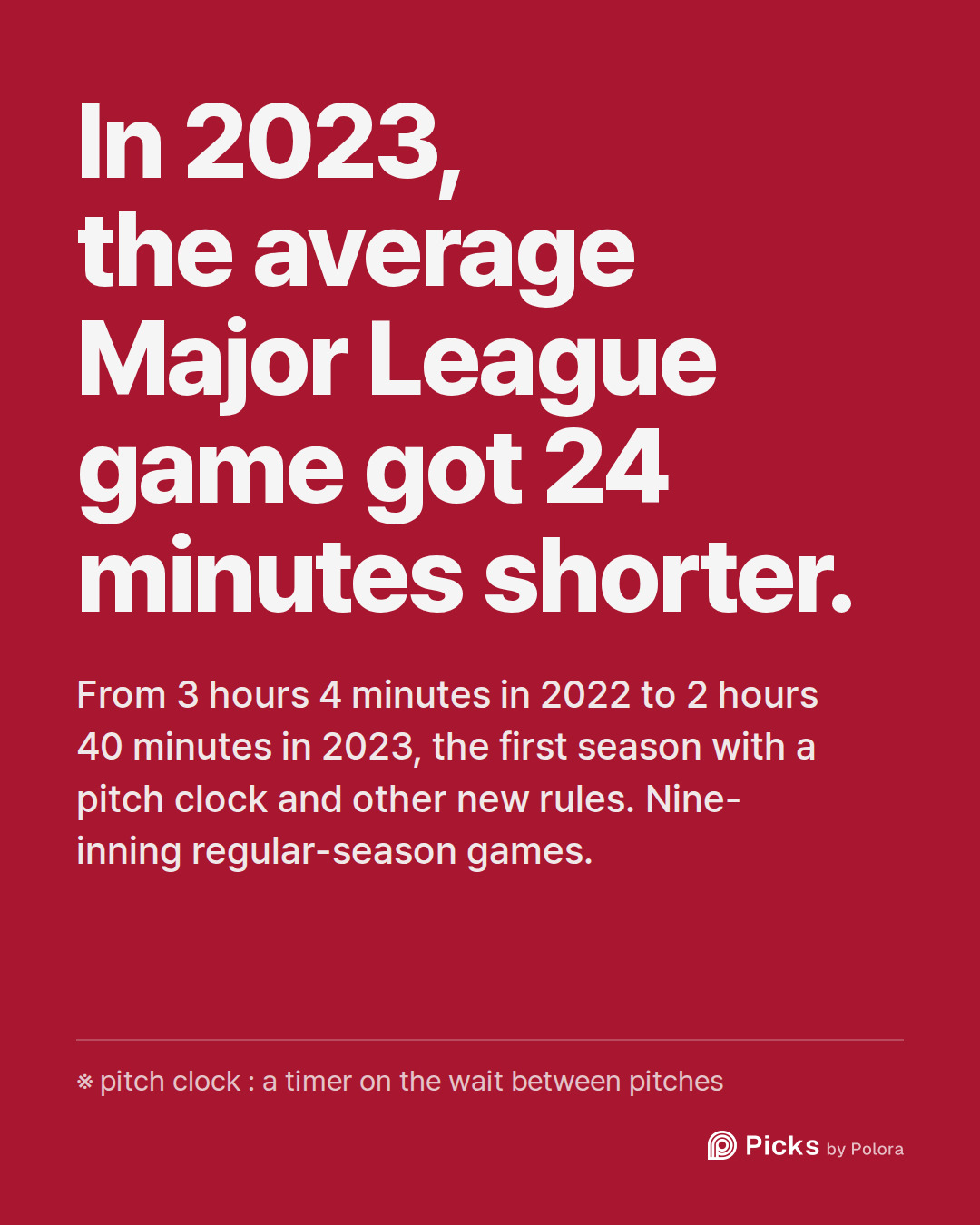
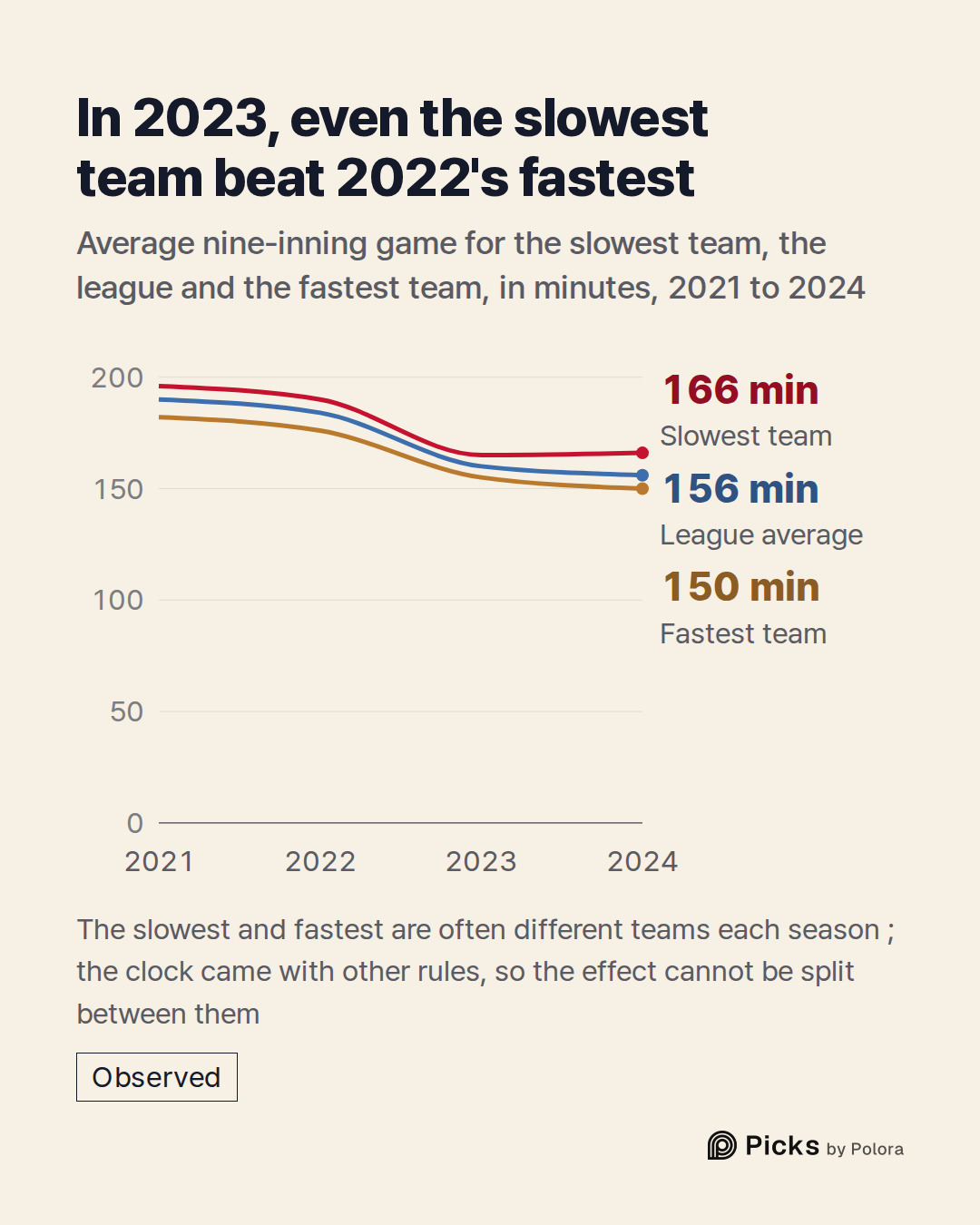
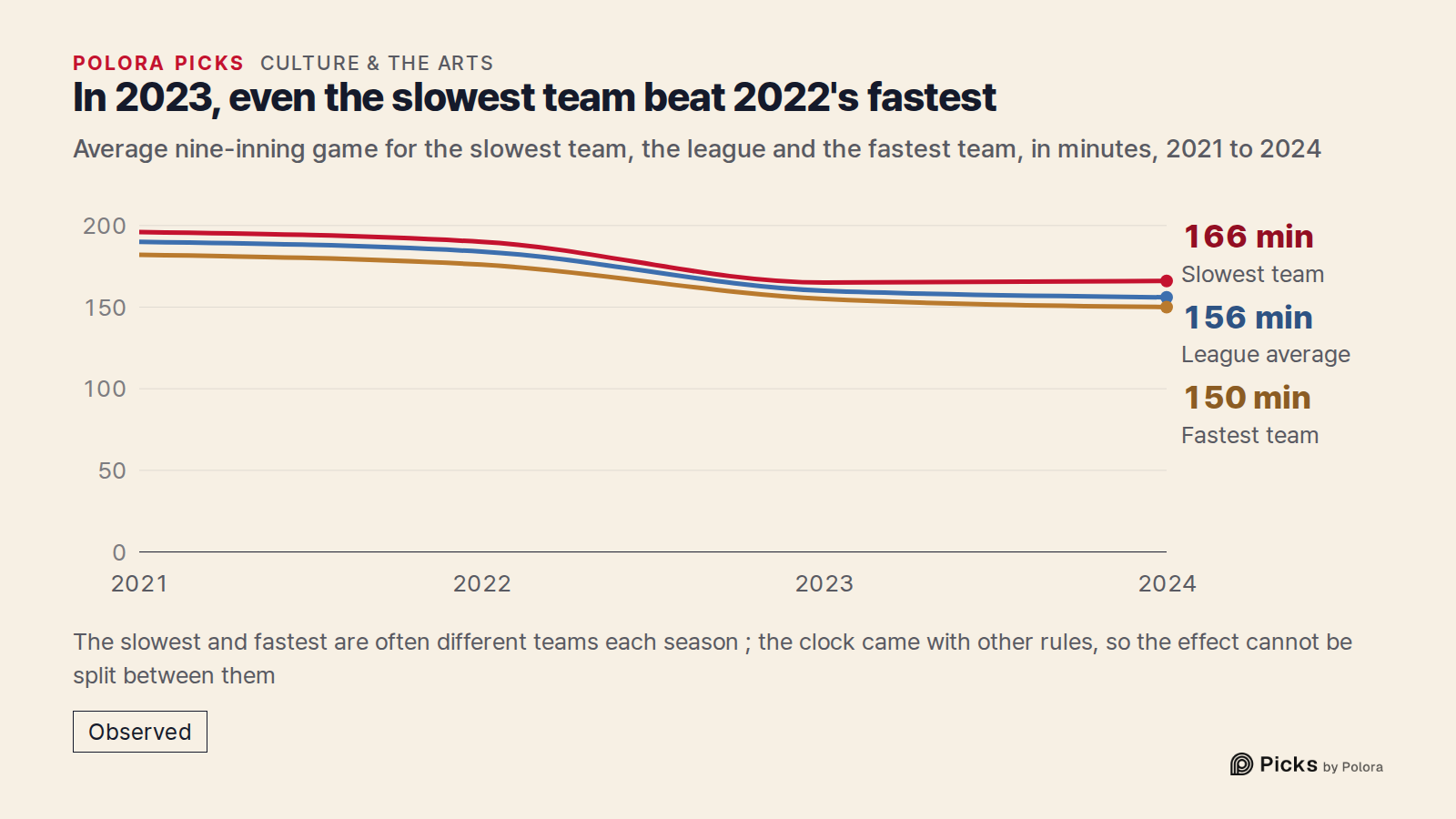
The 2022 season, before any of this, averaged 3 hours 4 minutes. In 2023 the average was 2 hours 40 minutes, 24 minutes shorter, by far the largest one-season change in these 45 years. And it was not a few teams pulling down the average : every team's average game got shorter, by 18 to 30 minutes. Even the slowest team of 2023 was quicker than the fastest team of 2022.
The data shows when the change happened, not which rule did it. The clock came in together with the other rules, so this series cannot split the effect between them.
Did it last?
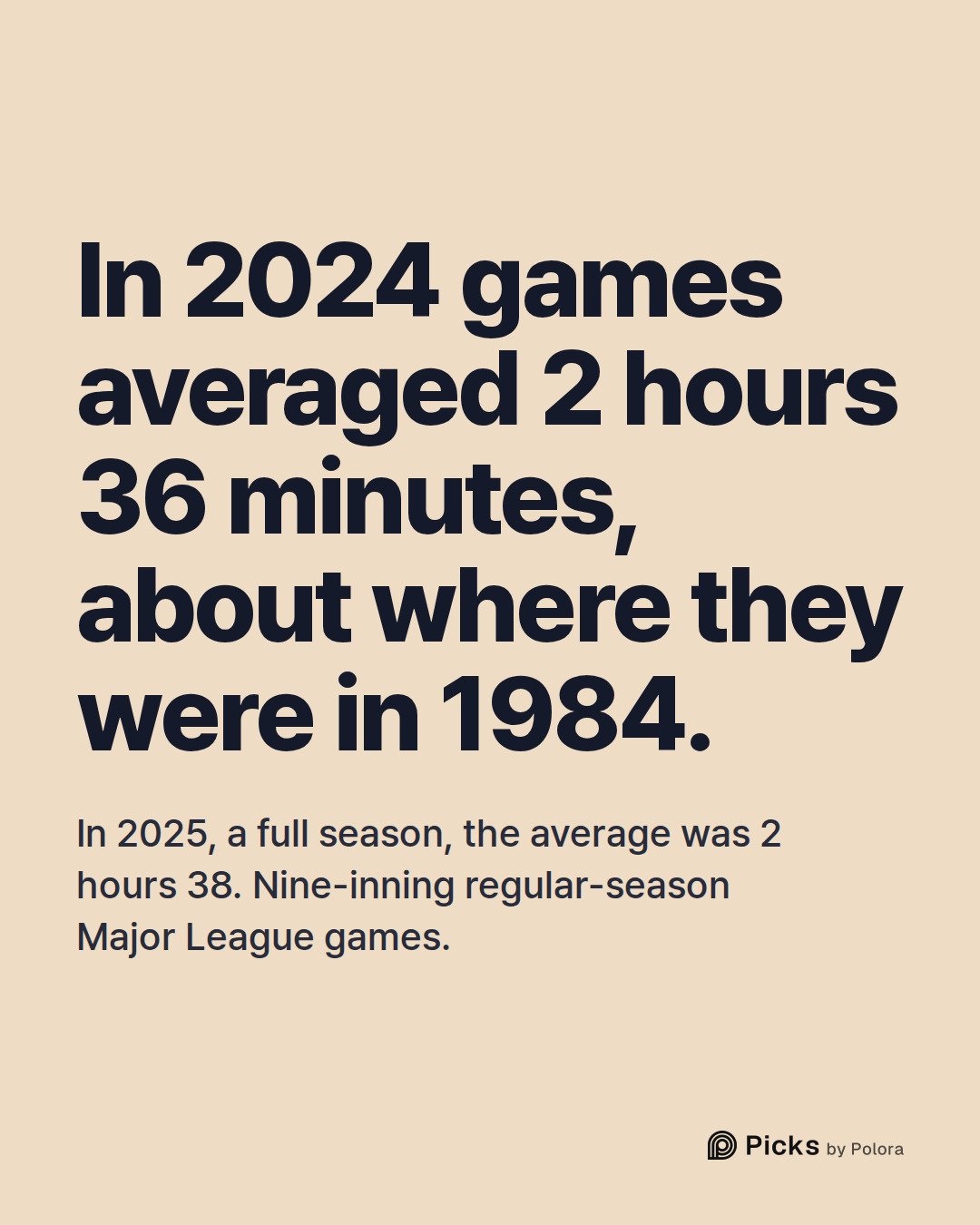
For 2024, MLB trimmed the clock with runners on base by two seconds. The 2024 average was 2 hours 36 minutes, about where games were in 1984, when they averaged 2 hours 35. In 2025, a full season, it was 2 hours 38.
Strikeouts, the out that takes the most pitches, stayed far above their 1981 level, at about 16.5 per game in 2025. What the clock limits directly is time : the waiting between pitches, not how many are thrown. MLB brought it in, with the other rules, to speed up the pace of play.
What to keep in mind
The slowest and fastest team are usually different teams from one season to the next, so those figures describe the spread, not any one club. The league had fewer teams before the late 1990s, and 2020 was a shortened season. In three seasons, 1982, 1992 and 2020, Polora's average and MLB's published figure differ slightly. The published table does not list the games behind MLB's figures, so the reason cannot be checked here. None of the times quoted above is from those seasons.
Game-time data : Retrosheet. The information used here was obtained free of charge from and is copyrighted by Retrosheet. Interested parties may contact Retrosheet at www.retrosheet.org.
- Retrosheet, game logs (time of game for every Major League game)
- The Associated Press via theScore, Average time of nine-inning games, 1981-2025
- David W. Smith, SABR Baseball Research Journal, Why do games take so long?
- Dave Cameron, FanGraphs (May 18, 2016), The cause of lengthening MLB games
- Wikipedia, 2023 Major League Baseball season (rule changes)
- Wikipedia, 2024 Major League Baseball season (rule changes)
- Wikipedia, Pitch clock