What Tesla is selling
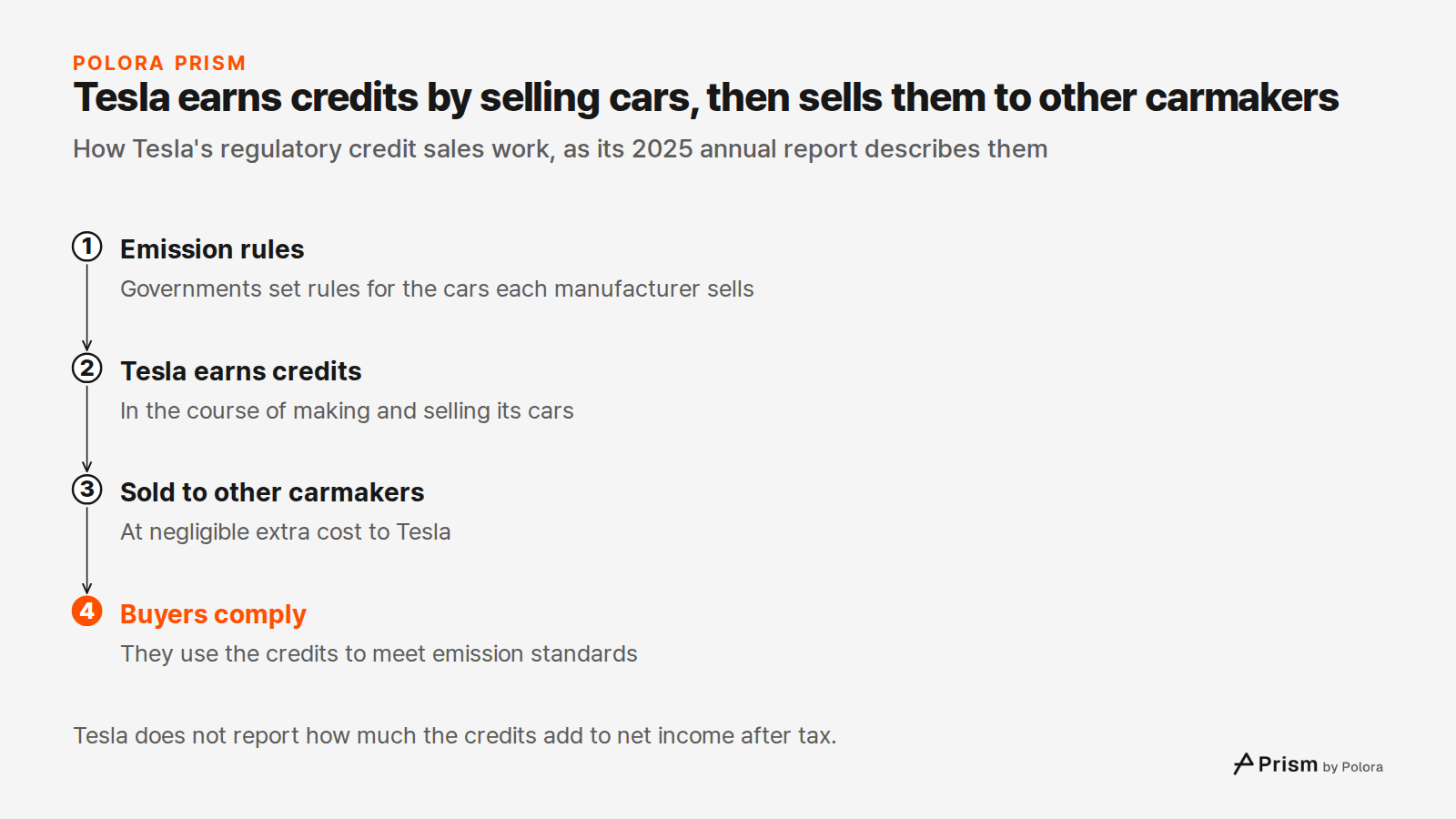
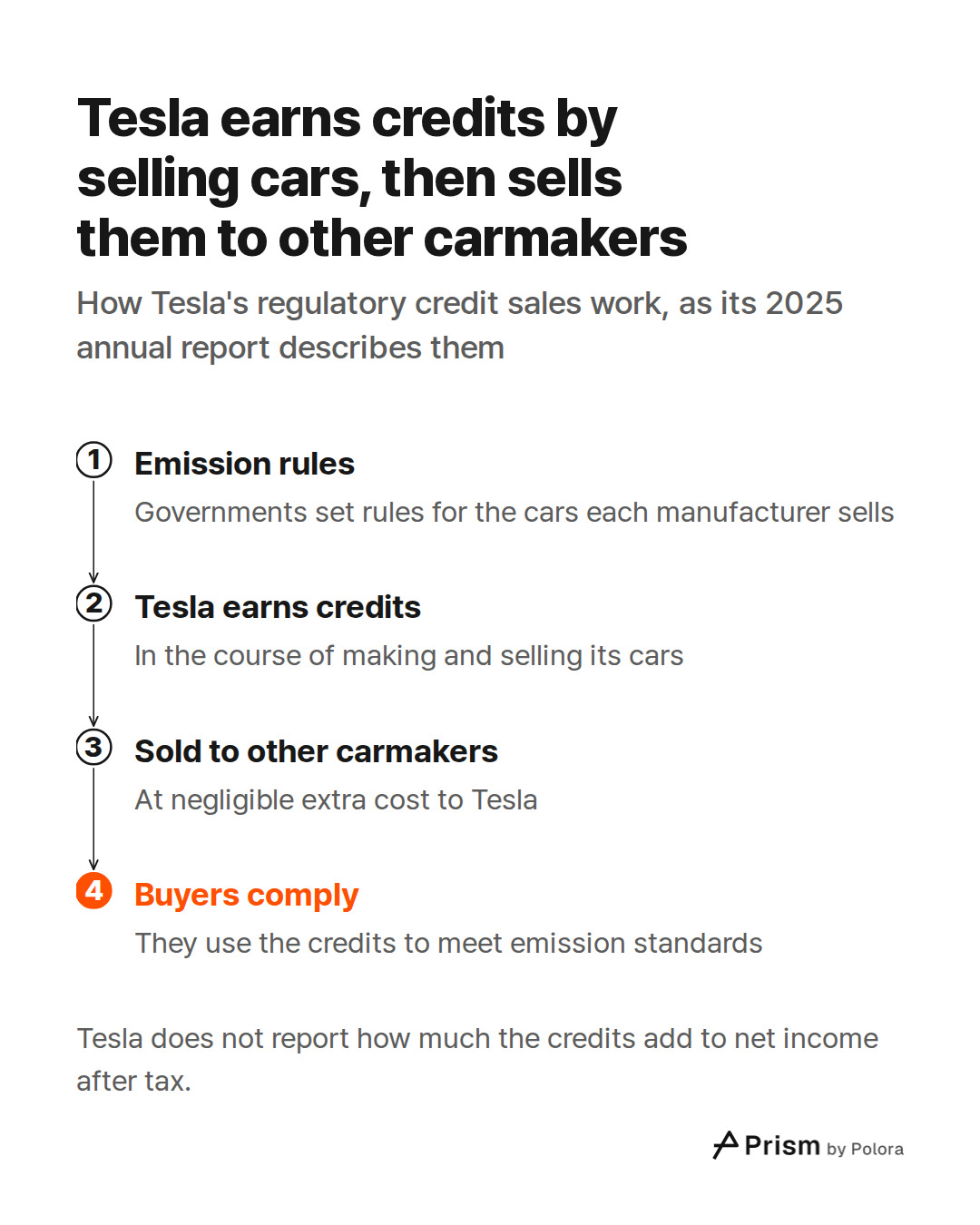
Governments set emission rules for the cars a manufacturer sells. Under various regulations, Tesla earns tradable credits in the course of making and selling its cars. Its 2025 annual report says it sells them "to other regulated entities who can use the credits to comply with emission standards and other regulatory requirements", and describes the revenue as "sales of regulatory credits to other automotive manufacturers". Tesla reports the proceeds on a revenue line of their own, "automotive regulatory credits".
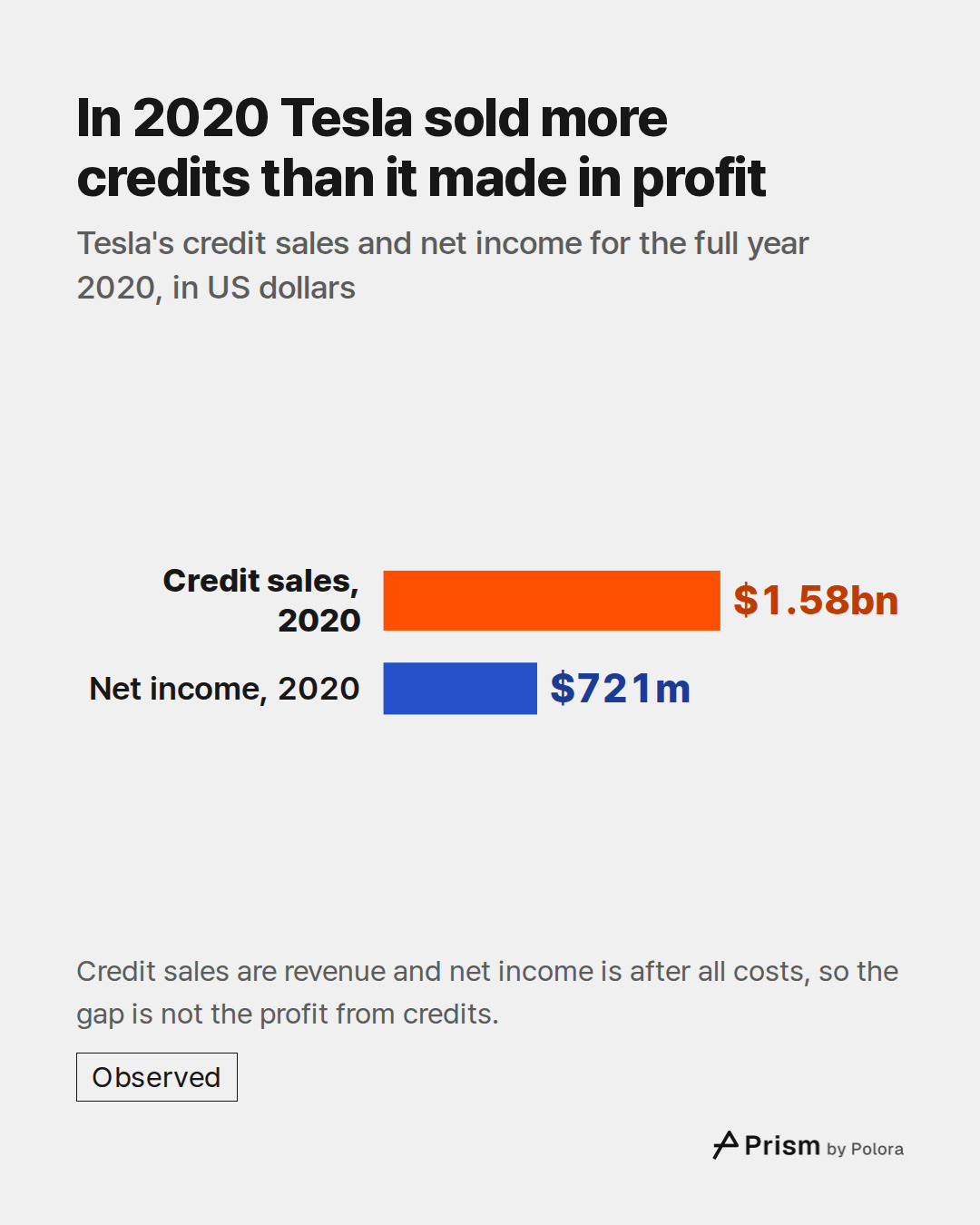
These sales cost Tesla almost nothing to make : the same report says the credits "have negligible incremental costs associated with them". It does not say how much they add to net income once tax and everything else is counted. So this piece, like the short film made from the same data, compares sizes only. Credit sales are revenue. Net income is what is left for Tesla's shareholders after all costs. The two are measured differently, and the gap between them is not "the profit from credits".
When credits were bigger than the profit
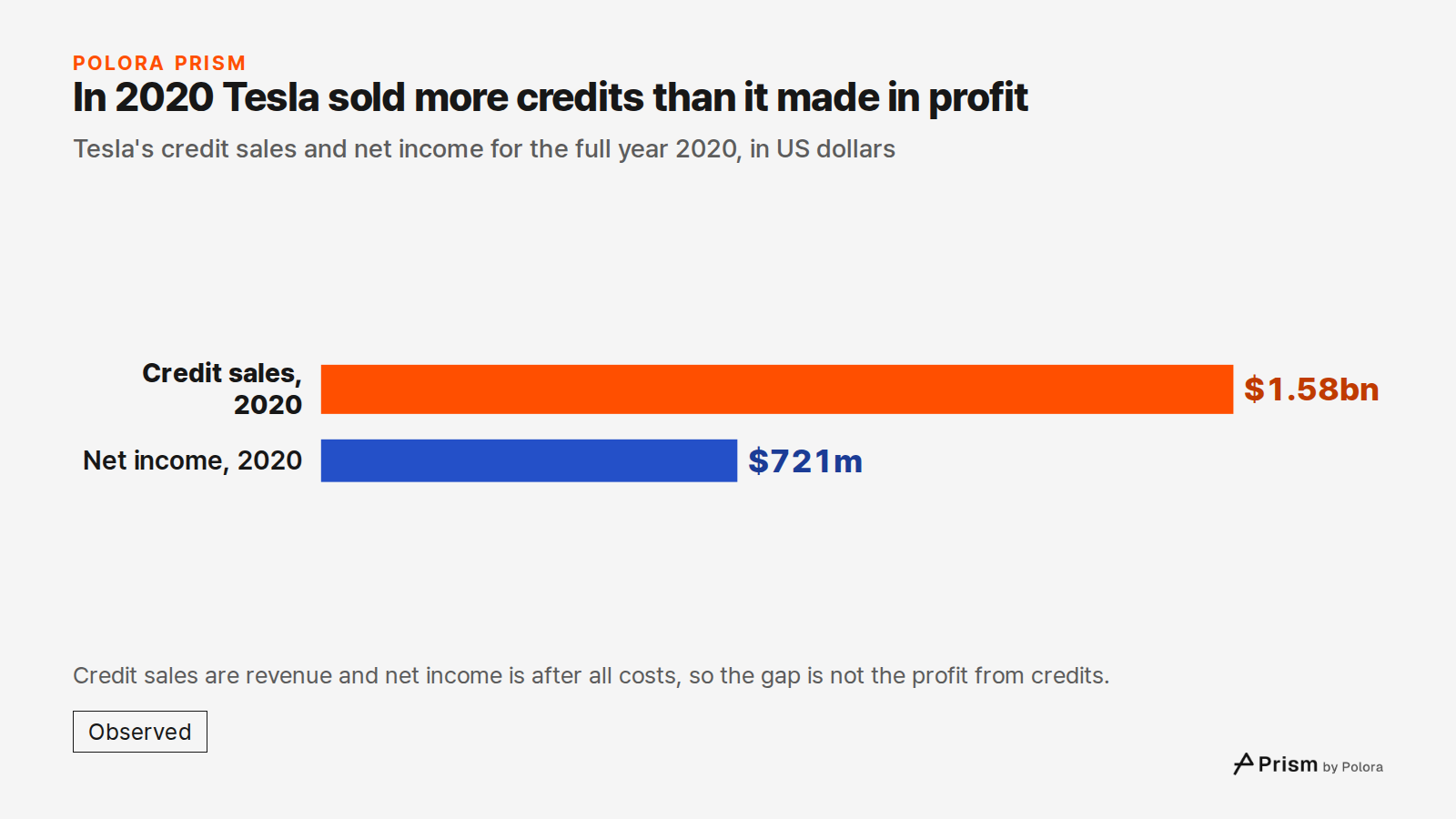
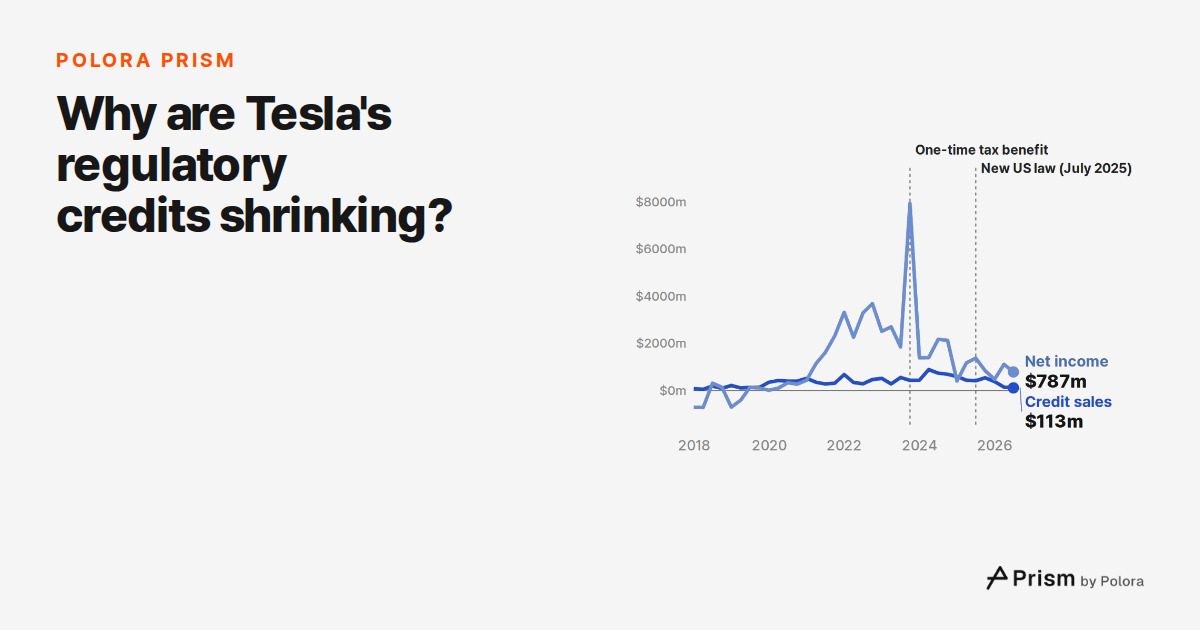
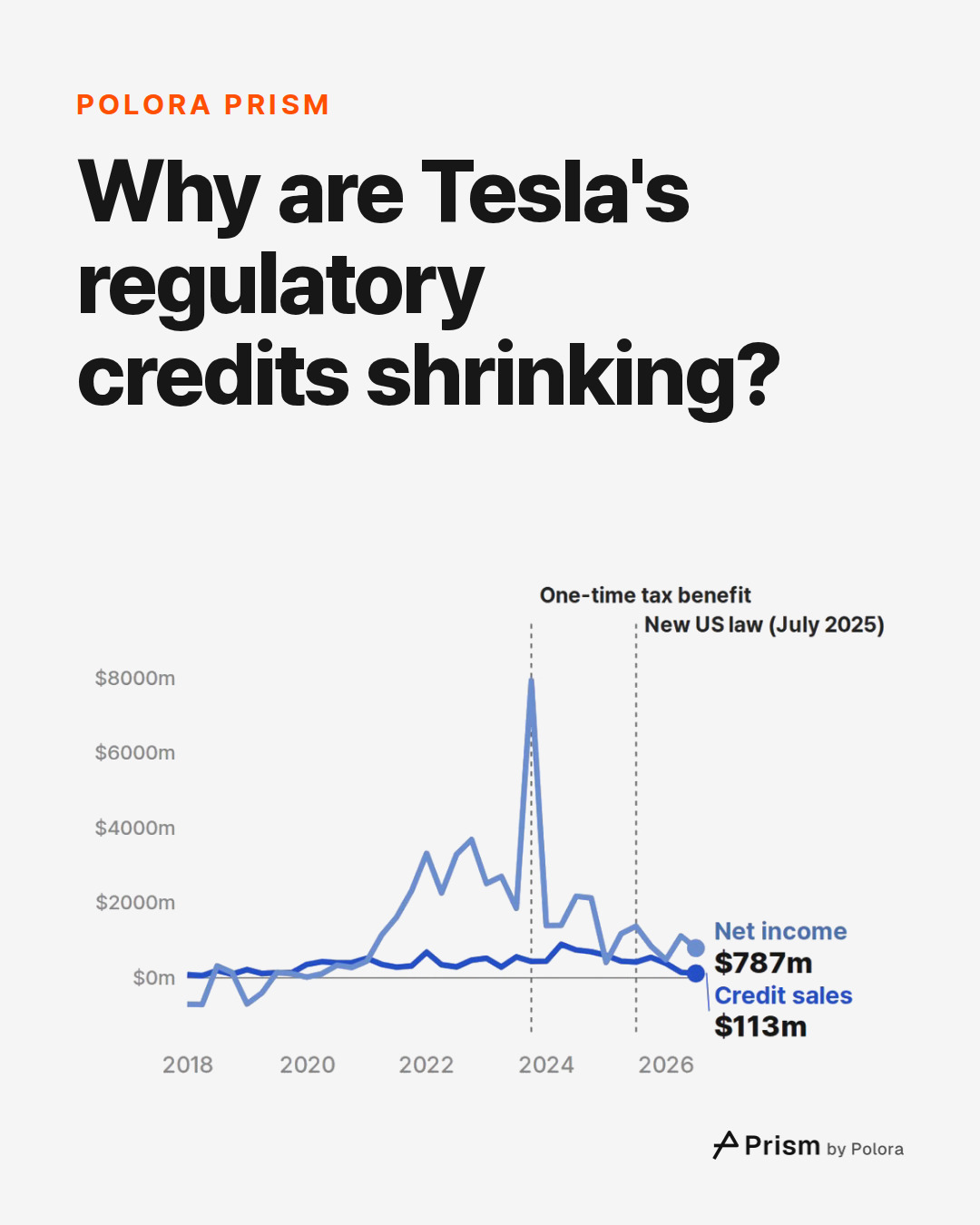
Tesla lost money over 2018 as a whole and over 2019. In 2020, its first profitable year in this record, it sold $1.58 billion of credits, while its net income for the whole year was $721 million. Quarter by quarter, credit sales were larger than net income in 11 of the 35 quarters from early 2018 to September 2026. In four of those, Tesla made a loss. The other seven ran from late 2019 to early 2021, plus the first quarter of 2025.
None of this shows that Tesla would have lost money without credits, because Tesla does not report what the credits contribute after tax. What the numbers do show is how large this line was next to the company's bottom line at the time.
Profit took off, credits held up
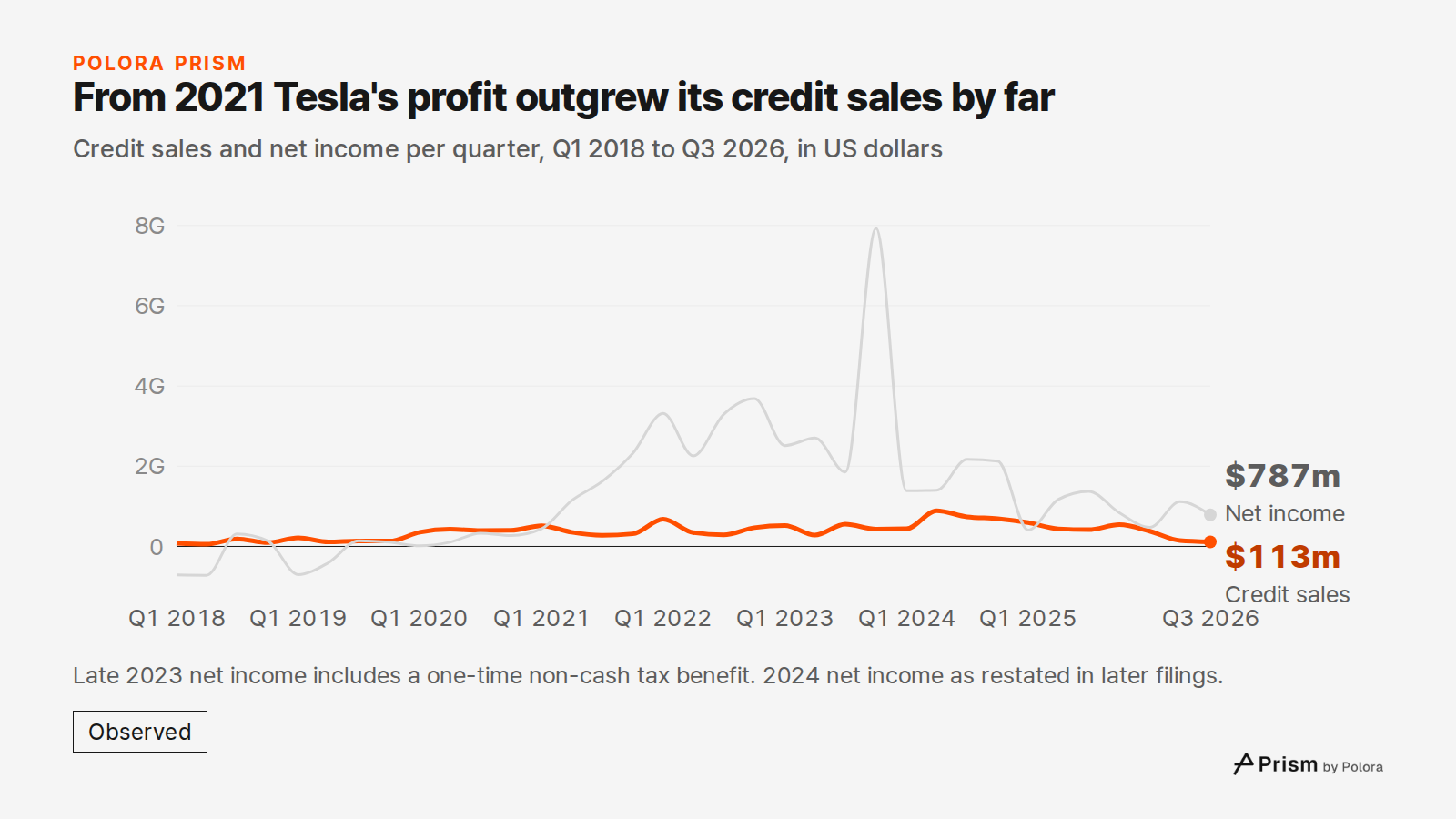
From mid-2021, net income rose far above credit sales. The jump in net income at the end of 2023 includes what Tesla's 2023 annual report calls a "one-time non-cash tax benefit", booked when it released a valuation allowance it had kept against certain deferred tax assets.
Credit sales kept growing anyway. They totalled $2.76 billion in 2024, and in the second quarter of that year reached $890 million, the most in any quarter since 2018. For 2024, this piece uses net income as Tesla's later filings print it, after an accounting change for crypto assets that Tesla adopted with effect from the start of 2024. In the first quarter of 2025, credit sales of $595 million were again larger than net income of $409 million.
Then the credits shrank
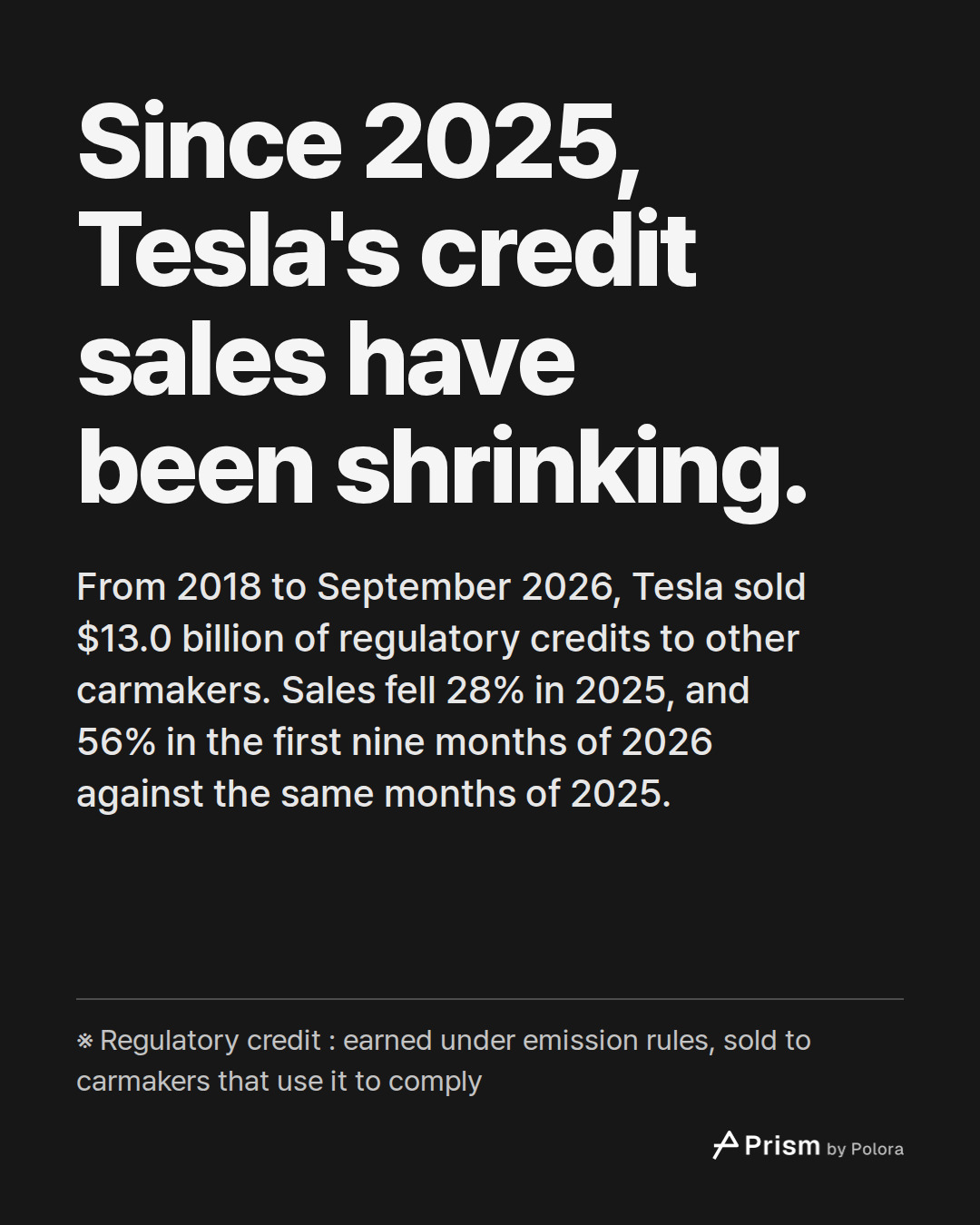
Credit sales fell to $1.99 billion in 2025, 28% below 2024. In the first nine months of 2026 they came to $639 million, against $1,451 million in the same months of 2025, a fall of 56%. The fall has been uneven, with a rebound to $542 million at the end of 2025.
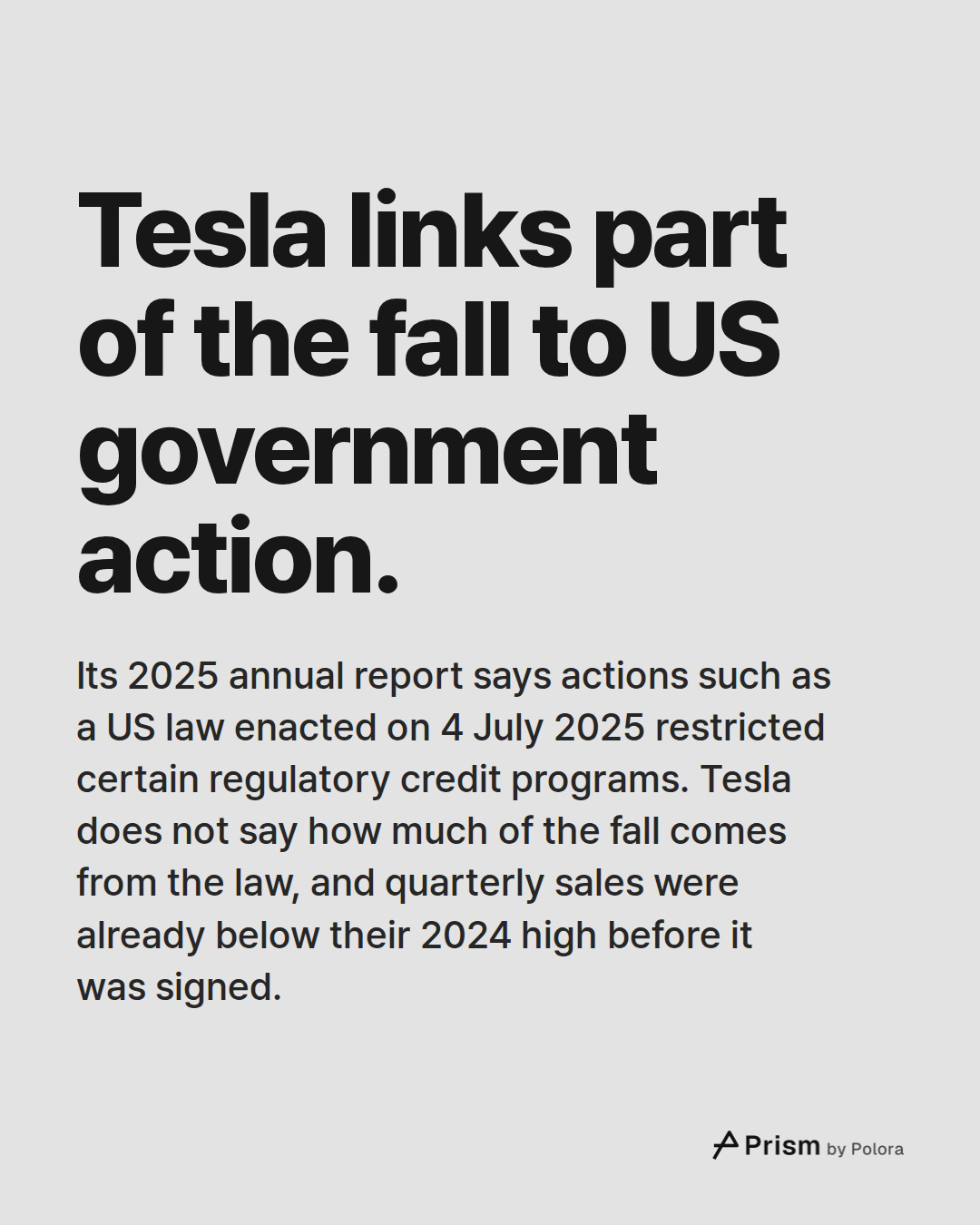
Tesla names several things that move this line : its "supply of credits, subject to changes in regulation, production and sales", and "the demand for credits by other automobile manufacturers". For 2025 it adds that "governmental and regulatory actions, such as OBBBA, have restricted certain regulatory credit programs tied to our products". OBBBA is the US law enacted on 4 July 2025. Tesla's 2025 annual report says it includes the "elimination of certain penalties for violations of certain regulatory credit programs", and that Tesla will keep evaluating its effects, including the "loss of certain regulatory credit sales". Tesla does not put a figure on how much of the fall comes from the law, and its quarterly credit sales were already below their 2024 high in the first half of 2025, before the law was signed.
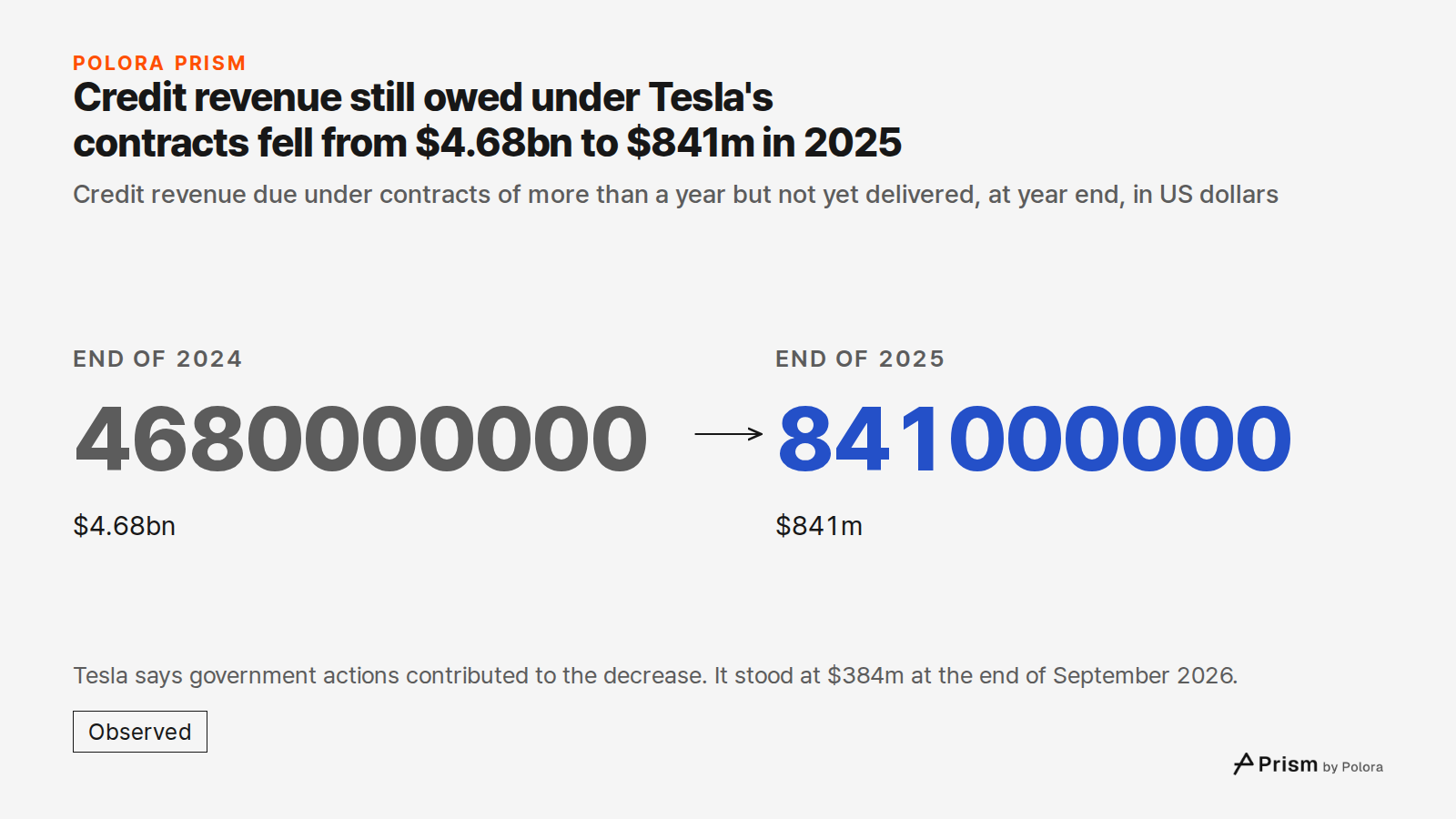
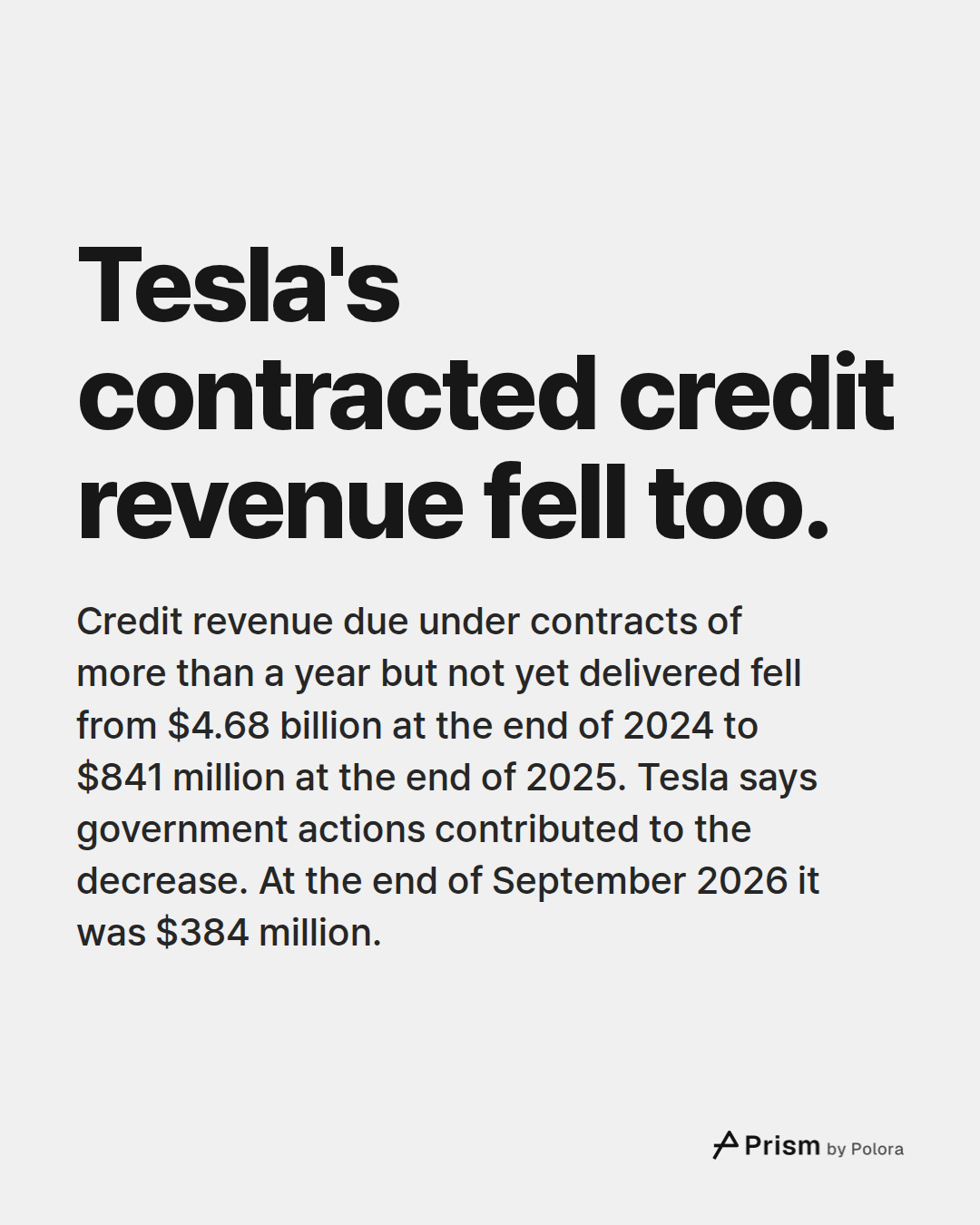
Tesla's contracts point the same way. It reports how much credit revenue it is due under contracts lasting more than a year but has not yet delivered. That amount fell from $4.68 billion at the end of 2024 to $841 million at the end of 2025, and Tesla says the government actions contributed to the decrease. At the end of September 2026 it was $384 million, higher than at the end of June.
In the latest quarter, buyers handed credits back
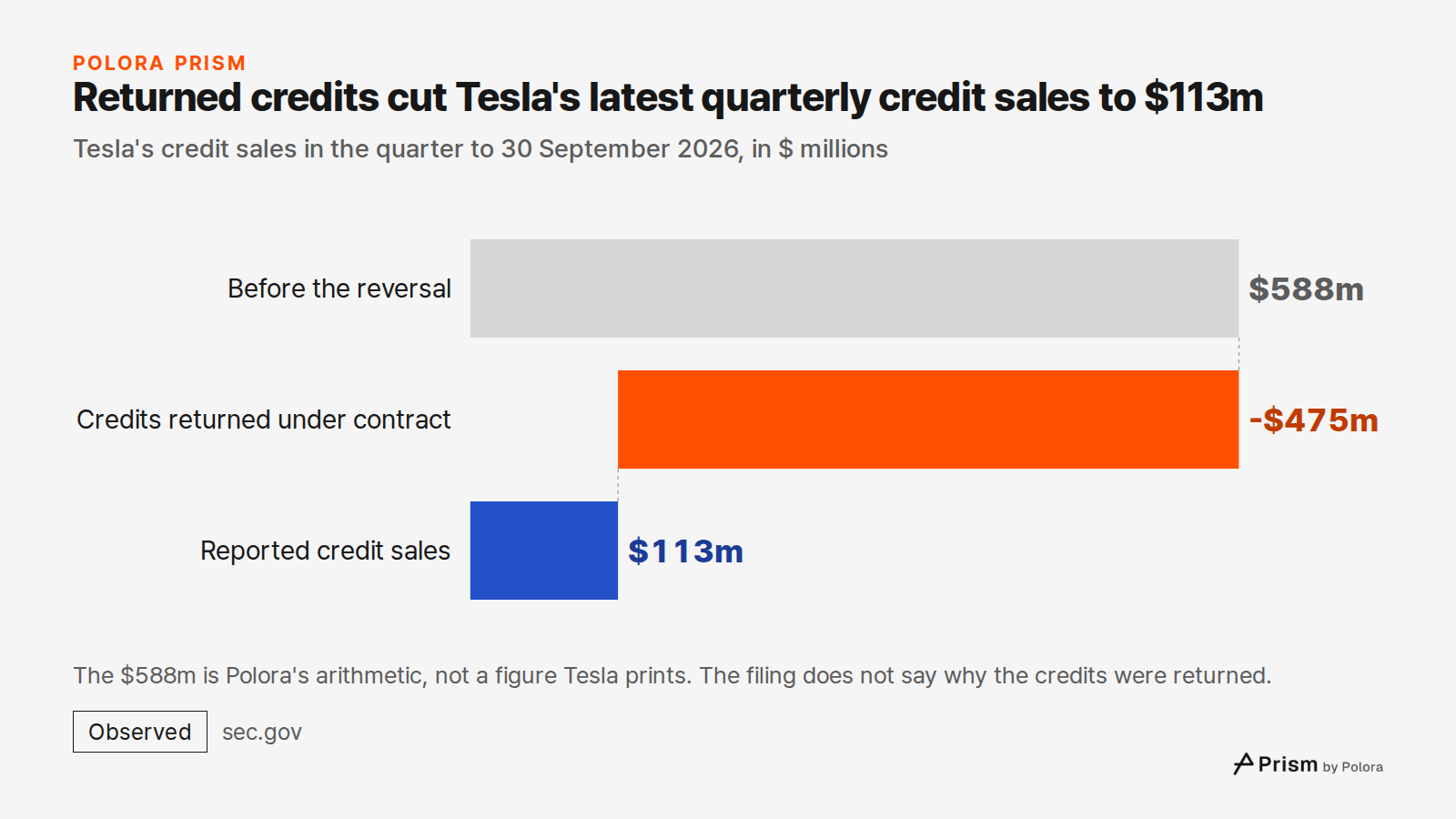
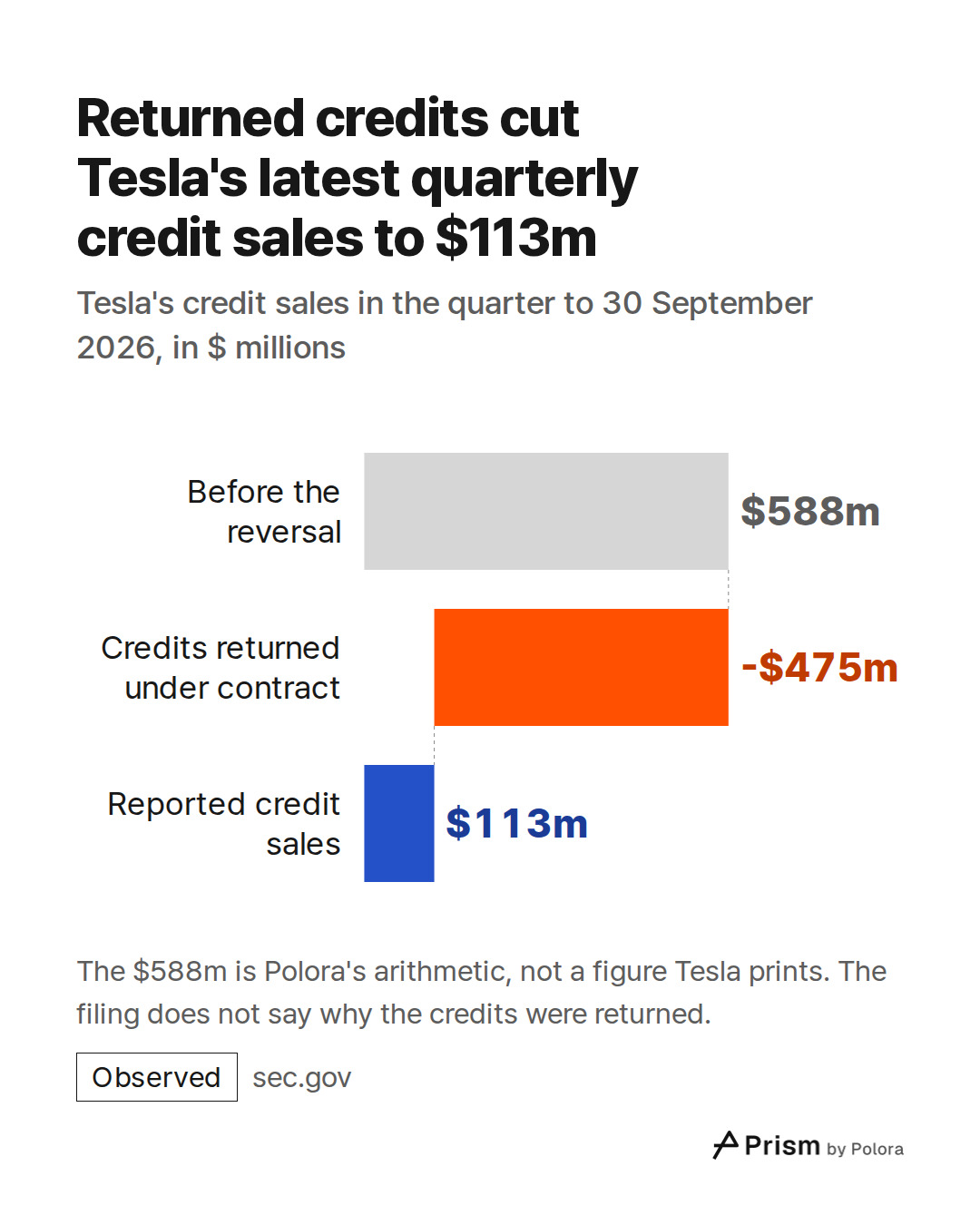
In the quarter to September 2026, credit sales were $113 million, 73% less than a year earlier. That figure is what remained after Tesla "reversed $475 million of automotive regulatory credits revenue for contractual return of previously delivered credits", in the words of its quarterly report. In plain terms, buyers handed back credits they had already received under their contracts, and Tesla took the revenue back out. Before that subtraction, the quarter's credit sales come to $588 million by our own arithmetic ; Tesla does not print that figure. The filing places the reversal right after the sentence on government actions restricting credit programs, but it does not say why the credits were returned.
Net income in the same quarter was $787 million. The $13.0 billion total since 2018 is Tesla's credit revenue as reported, after that reversal. All figures are in dollars of their day, not adjusted for inflation, and net income here is net income attributable to Tesla's common stockholders.
- Tesla, annual report on Form 10-K for 2025 (filed 29 January 2026), SEC EDGAR]
- Tesla, quarterly report on Form 10-Q for the quarter to 30 September 2026 (filed 22 October 2026), SEC EDGAR]
- Tesla, Q3 2026 update, exhibit 99.1 to Form 8-K (filed 21 October 2026), SEC EDGAR]
- Tesla, annual report on Form 10-K for 2024 (filed 30 January 2025), SEC EDGAR]
- Tesla, annual report on Form 10-K for 2023 (filed 29 January 2024), SEC EDGAR]
- Tesla, quarterly reports on Form 10-Q and annual reports on Form 10-K, 2018 to 2026, SEC EDGAR company filings]
![Sources 6 : sec.gov · Tesla, annual report on Form 10-K for 2025 (filed 29 January 2026), SEC EDGAR], sec.gov · Tesla, quarterly report on Form 10-Q for the quarter to 30 September 2026 (filed 22 October 2026), SEC EDGAR], sec.gov · Tesla, Q3 2026 update, exhibit 99.1 to Form 8-K (filed 21 October 2](https://media.cdn.polora.ai/picks/2026/11/pickrun_f18b78c3df8a49a4/0ZgBhfBnt8_QnY3W-slide-08--tesla-s-regulatory-credits.jpg)